



The Eco-Friendly Work-From-Home Upgrades Everyone Should Use
/Those advocating for an increase in remote-friendly roles often highlight the environmental benefits of working from home. Some benefits include reductions in car traffic and associated emissions, and lower quantities of beverage and snack-related waste in office buildings.
Many remote workers take additional steps to improve their workspaces, making them more energy-efficient and less resource-dependent. These pursuits can position green living as the default and inspire others to follow suit. This article discusses seven sustainable upgrades that should be considered and outlines how they can improve both sustainability and productivity.
1. Smart LED Bulbs
Although many people who work from home take advantage of natural light, most also need artificial light. Lighting innovations have come a long way, and light-emitting diodes (LEDs) are among the best examples. These are widely available and incredibly energy-efficient, helping people conserve resources. Some LEDs are up to 90% more efficient than their counterparts and can last at least 15 times longer.
Whether used as overhead lights or installed in desk lamps, LED lights offer excellent brightness, making it easier to read, make lists or do other detail-oriented tasks without eye strain. Some LED bulbs also offer smart connectivity, allowing people to turn them on and off or adjust color and brightness via an app.
Consider tracking your overall lighting and energy usage on a weekly or monthly basis. This can provide a clearer picture of your home office’s overall sustainability and help you identify areas for improvement.
2. Filtered Water Dispenser and Hydration Monitor
Staying hydrated throughout the workday supports improved focus and maintains high energy levels. Although many office workers have access to water coolers, that is not often the case for remote team members. Fortunately, residential filtered water dispensers are widely available and affordable.
Consumers can purchase water filters in many styles, including pitchers or faucet attachments. Along with providing safe drinking water, these can reduce the waste that accumulates over time from drinking water consumed from disposable containers.
Dehydration is considered a silent threat that affects millions daily. Researchers at The University of Texas at Austin are developing a wireless, noninvasive sensor that monitors hydration levels in real time and alerts people when to take action. It could be particularly useful for workers who need to be reminded to refill their water bottles.
3. Fiber-Optic Internet
The internet enables people to host meetings, attend interviews and collaborate with peers without leaving their homes. These possibilities have led to numerous sustainable advancements, mainly because people can significantly reduce or eliminate traveling and the associated emissions.
However, not all internet access can offer the same sustainability benefits. Statistics show that fiber-optic cables transferring data at 50 megabits per second emit 1.7 tons of CO2 annually, compared to 2.7 tons for copper wire.
Signals sent over copper wire can weaken over distances, so the infrastructure must include energy-intensive amplifiers and repeaters to achieve the desired performance. The copper cables used for some internet infrastructure also require large quantities of mined copper, which is a finite and nonrenewable material. Harvesting activities also contribute to deforestation, toxic byproducts and erosion.
Silica, largely sourced from quartz sand, is the primary ingredient in fiber-optic cables. While energy is required to harvest this sand, it is widely available and naturally renewable. These characteristics make fiber-optic internet a better choice than copper wire for eco-friendly remote work.
4. Furniture and Setup
When furniture shopping for a home workspace, look for pieces made from sustainable materials, such as bamboo or reclaimed wood. Sustainable furniture is designed and manufactured for longevity, limiting the need for repairs or replacements. You can also shop for desks, chairs, organizers and other home office furniture at secondhand shops. This keeps the items in use for longer and can be a more cost-effective solution.
Choose and customize furniture based on your work-from-home needs. Many individuals opt for multifunctional or modular options, especially if home office space is limited. An ergonomic desk chair is a worthwhile investment, as it can keep you comfortable and prevent muscle strain.
An item’s finish also influences its overall sustainability. Many household paints, wood preservatives and disinfectants contain volatile organic compounds. Choosing furniture made with low-VOC products is an excellent way to reduce harmful chemical emissions and even improve your indoor air quality.

Jakub Żerdzicki @unsplash
5. Digital Notebook and Smart Pen
Look for sustainable versions of office staples. Most employees, whether they work in corporate offices or from home, likely find it hard to imagine getting through the day without jotting down something in a planner or notebook. Even when they buy ones to use for the whole year, the paper and ink still add up.
It is now easy to buy digital versions that are more sustainable. Digital notebooks can also be more convenient and portable because the notes they take can then be automatically uploaded to the cloud, allowing users to access the material from multiple devices. The notes can even be shared with fellow employees for enhanced collaboration.
Some digital notebooks also enable users to multitask by seamlessly switching between writing and typing capabilities. This offers flexibility for various tasks and note-taking preferences.
6. Smart Thermostat
Maintaining a comfortable temperature in a home office is essential for productivity. A smart thermostat is an easy way for people to keep their residences at optimal temperatures without wasting energy. It can work seamlessly in the background without requiring manual adjustments.
While specific features differ by manufacturer, it is often easy to find smart thermostats that automatically learn user habits over time. Smart thermostats can keep temperatures pleasant when residents are home and reduce heating or cooling when the space is unoccupied. This can prevent energy waste and reduce the associated costs.
Most smart home devices also have data-collection capabilities, enabling users to see how much energy they typically use and to set goals that encourage positive changes, which is helpful because 77% of people want to learn about sustainable lifestyles, according to Forbes magazine. Smart thermostats can be an easy sustainability win, especially because they are affordable and easy to install.
Qeis Ismail @unsplash
7. Multicompartment Trash and Recycling Bin
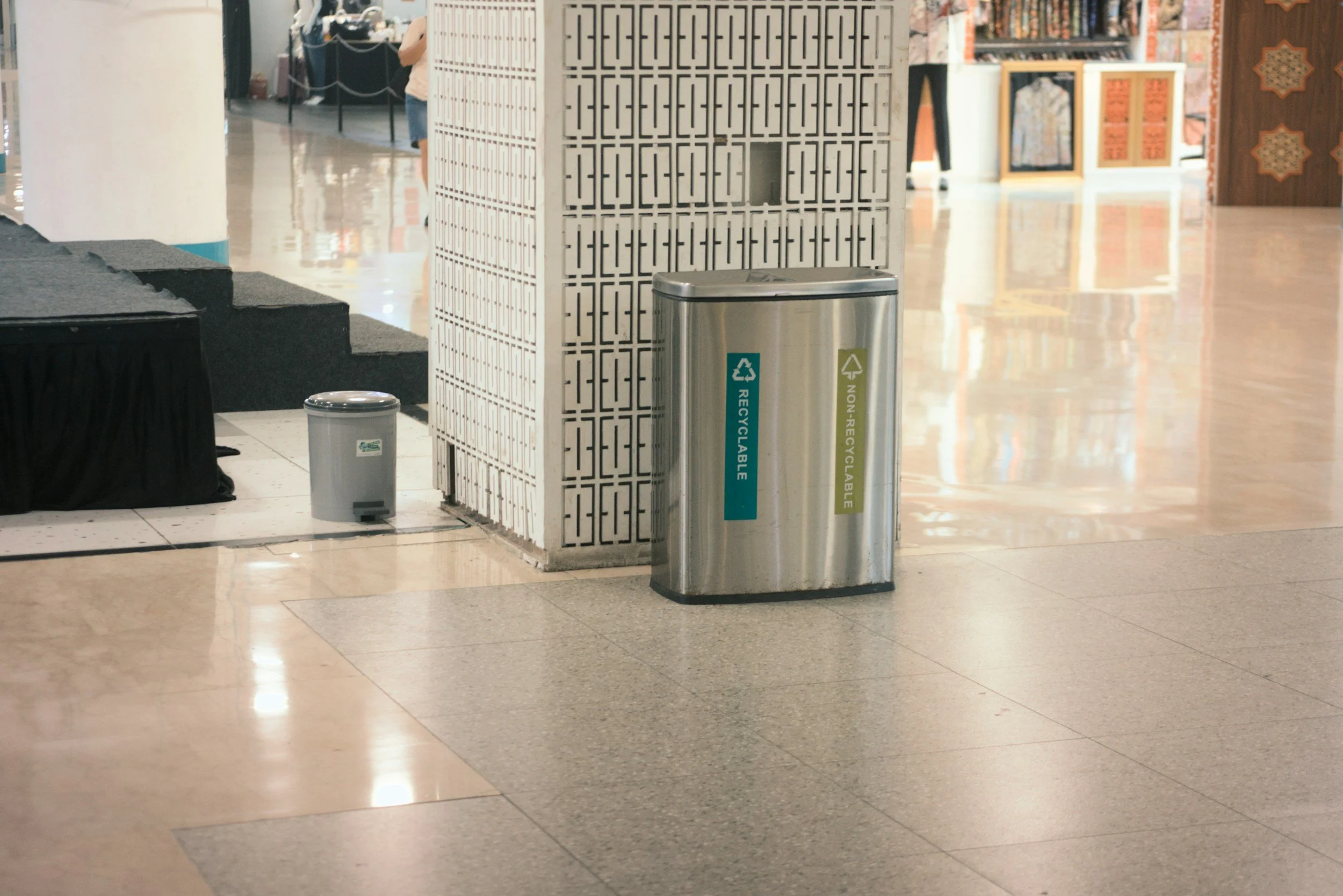
Many office buildings have separate containers for recyclable and nonrecyclable waste, helping workers get into the habit of naturally separating waste products. Those who mostly work from home can purchase multicompartment trash and recycling bins. The designs vary slightly by manufacturer, but most are spacious and sleek.
Some multicompartment bins have thoughtful features, such as foot pedals opening the lid. Those are ideal for users who want these products close to their work areas while limiting exposure to potential odors. Look for containers made of responsibly sourced and manufactured materials.
Workers who do not live in single-stream recycling areas may consider purchasing bins with distinct compartments for each type of recyclable material, such as paper and glass. Real-time separation simplifies the process of removing waste from the home.
like this? please pin!
Enjoy Eco-Friendly Work-From-Home Enhancements
Adopting sustainable remote work practices is easy with a few mindful upgrades. Most can offer long-lasting improvements, both during and beyond working hours, which justifies any associated expenses. Start with one or a few eco-friendly remote work upgrades and notice the difference they can make to your energy consumption and productivity.
About the Author:
Lou Farrell is the senior editor of environmental science and technology for Revolutionized Magazine. With over five years of experience, he follows his passion for writing while crafting engaging and educational articles that aim to inform readers on how to live more sustainable lives.
You may also be interested in…



Solar panels, a complete home remodel, and smart-home technology are not compulsory to make a home eco-friendly. Minor changes that make the best use of existing materials; save energy, water and create better indoor air quality; and extend the life of materials already installed can be some of the most beneficial and sustainable upgrades.