



How Sustainable Supply Chains Are Transforming Global Trade
/What does it mean to move goods around the world responsibly? And is it actually possible to build a global supply chain that's both commercially competitive and genuinely sustainable, or are those goals fundamentally in tension with each other?
The conversation around sustainable supply chains has shifted significantly in the past five years. What was once a corporate social responsibility talking point has become a strategic imperative, driven by regulatory pressure, investor expectations, consumer behaviour, and the growing recognition that supply chains built on environmental and social shortcuts carry real financial risk.
Here's a substantive look at what this transformation actually involves, and what it means for businesses navigating global trade in 2026.
The Shift From Efficiency-Only to Efficiency-Plus-Responsibility
For much of the modern era, global supply chains have been designed around two dominant variables: cost and speed. Businesses sourced from the lowest-cost suppliers and moved goods along the fastest available routes. This model delivered highly efficient global trade systems, but it also shifted environmental and social costs onto communities, ecosystems, and future generations.
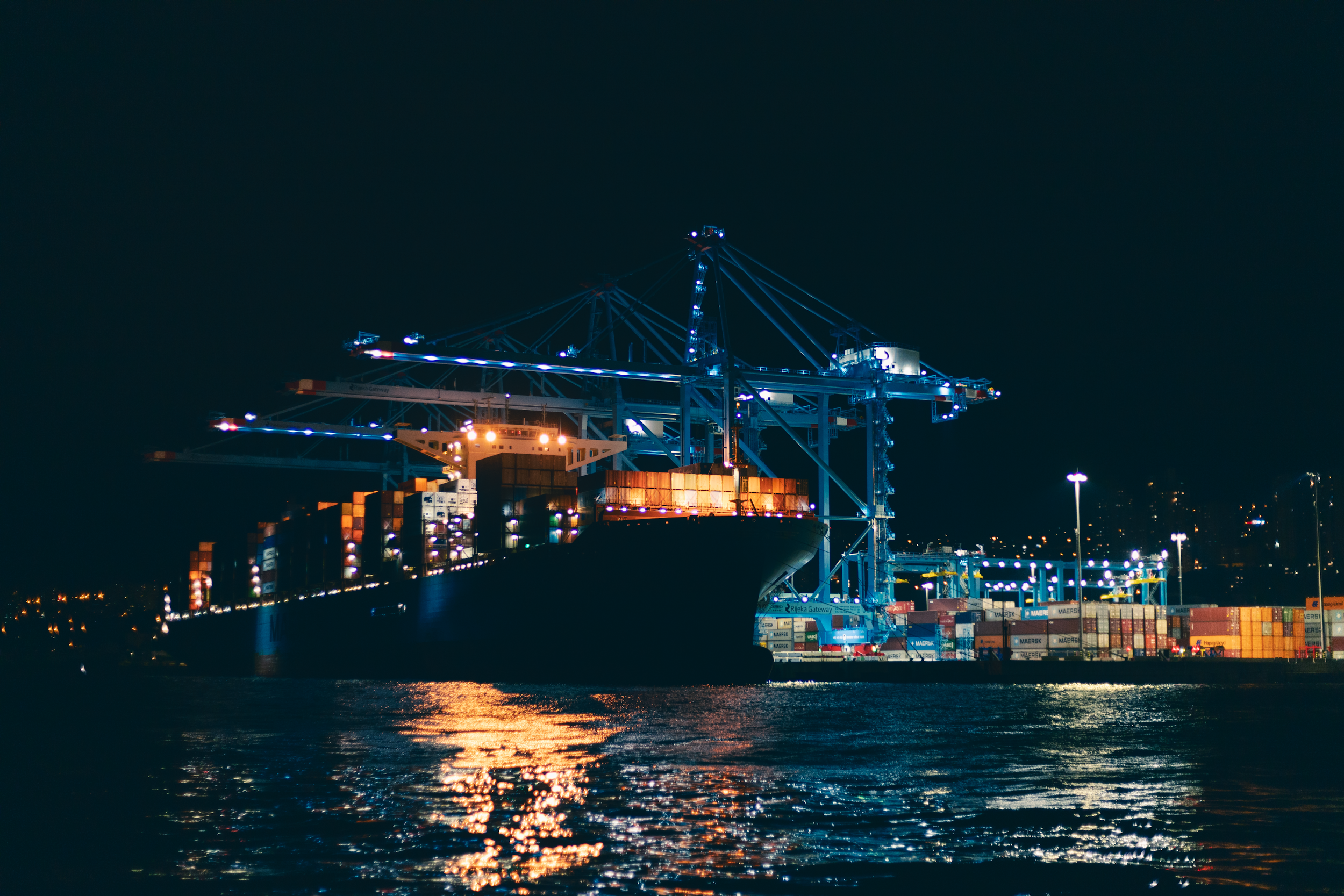
Ozren Cuculic @unsplash
That approach is now under sustained pressure from multiple directions. Regulatory frameworks in regions such as the EU and UK are expanding corporate accountability across entire supply chains. The EU’s Corporate Sustainability Due Diligence Directive, for instance, requires large companies to identify and address environmental and human rights impacts beyond their direct operations. At the same time, consumer expectations are evolving, with growing demand for transparency and responsible sourcing. Institutional investors are also integrating ESG criteria into risk assessments, influencing both reputation and access to capital.
As a result, supply chain design is undergoing a structural shift. The focus is moving away from single-minded efficiency toward a more complex model that balances cost and speed with environmental impact, social responsibility, resilience, and transparency.
What Sustainable Supply Chain Design Actually Looks Like
Understanding what's changing requires getting specific about what sustainable supply chain design involves in practice, because the term is used so broadly that it risks becoming meaningless.
Scope 3 emissions measurement and reduction
For most companies, the majority of carbon emissions occur within the supply chain, across raw material extraction, component manufacturing, transportation between locations, and the end-of-life disposal of products. These are known as Scope 3 emissions, and they are typically far greater than a company’s direct operational emissions.
In many cases, supply chain emissions account for the largest share of a company’s total carbon footprint, making them the most critical area for meaningful climate action. Addressing this begins with accurately measuring emissions and then systematically reducing them through better supplier selection, more efficient transportation choices, improved packaging, and thoughtful product design.
Supplier transparency and traceability
A sustainable supply chain requires knowing what's actually happening at every tier of the supply chain, not just with direct suppliers, but with the suppliers of suppliers and the raw material sources at the chain's origin. This level of traceability has historically been difficult and expensive to achieve. New technology, blockchain-based supply chain tracking, satellite monitoring of deforestation and land use, and AI-powered supplier risk assessment, is making it increasingly achievable.
The practical implication is that companies can no longer claim ignorance of conditions in their extended supply chains as a defence against regulatory scrutiny or reputational risk. The tools to see deeply into supply chains exist, and the companies that aren't using them are accepting a risk that their more sophisticated competitors are managing.
Circular economy principles in procurement
Traditional linear supply chains, extract, produce, use, dispose, create waste at every stage. Circular supply chains are designed to close these loops by rethinking how products are made and used. This includes designing for easy disassembly, establishing take-back systems for end-of-life materials, using recycled inputs as primary resources, and turning one process’s waste into another’s raw material.
For companies that have adopted circular principles, the results have often gone beyond expectations. Materials once treated as waste become valuable inputs, reducing costs and opening new revenue streams. At the same time, relying less on virgin resources helps shield operations from volatile commodity prices, making the supply chain more stable and resilient.
The Role of Trade Compliance in Sustainable Supply Chains
The intersection of sustainability and trade compliance is becoming increasingly important, and more complex. New regulations are layering environmental requirements onto already demanding compliance frameworks.
The EU Carbon Border Adjustment Mechanism (CBAM) requires importers to account for the carbon emissions embedded in certain goods, while the EU Deforestation Regulation mandates proof that key commodities are not linked to post-2020 deforestation, supported by traceability to origin. These evolving regulatory demands have created a new set of operational and compliance challenges for companies engaged in international trade and global sourcing, including:
Ensuring accurate measurement and reporting of embedded carbon emissions under regulations like CBAM.
Enabling end-to-end traceability to verify compliance with deforestation and sourcing requirements.
Integrating sustainability data with traditional compliance processes such as tariff classification, duties, and rules of origin.
Managing increased data complexity, documentation, and verification across global supply chains.
Reducing regulatory risk while supporting more transparent and resilient supply chain operations.
For businesses managing this complexity, Livingston customs brokerage solutions provide the compliance expertise that allows companies to navigate both traditional and sustainability-driven trade requirements accurately. This ensures that sustainability commitments made at the supply chain design stage are effectively translated into compliant execution at the border.

Shubham Dhage @unsplash
Technology as the Enabler of Supply Chain Transparency
The gap between the aspiration of transparent, sustainable supply chains and the practical ability to achieve them has historically been filled by technology, and the technology is improving rapidly.
Real-time visibility platforms now allow companies to track shipments, monitor supplier conditions, and identify disruptions across multi-tier supply chains in ways that were genuinely impractical a decade ago. The combination of IoT sensors, satellite data, and AI-powered analytics produces a continuous picture of supply chain conditions rather than a periodic snapshot.
Blockchain-based traceability is being deployed in industries from coffee to diamonds to pharmaceuticals to create immutable records of supply chain provenance. The practical value is twofold: it provides companies with the documentation they need to substantiate sustainability claims, and it makes fraudulent provenance claims significantly harder to perpetuate.
Supplier ESG assessment platforms allow procurement teams to evaluate suppliers against sustainability criteria systematically rather than relying on self-reported questionnaires. These platforms aggregate data from satellite imagery, news sources, regulatory filings, and third-party audits to produce a more complete and more objective picture of supplier sustainability performance.
Resilience Benefits of Sustainable Supply Chains
One of the most underappreciated advantages of sustainable supply chains is the resilience they create. Supply chains that rely on limited suppliers, concentrated geographies, or climate-sensitive resources are inherently vulnerable to disruption.
Sustainable design reduces this risk by diversifying sourcing, lowering dependence on virgin materials, and strengthening supplier practices. Circular inputs and responsible sourcing also help protect against price volatility and supply shocks.
While difficult to measure upfront, these resilience benefits become clear when disruptions occur.
What Forward-Looking Companies Are Doing Now
The companies that are genuinely ahead of the sustainability curve in supply chain management share several characteristics worth noting:
They measure Scope 3 emissions with the same rigour they apply to direct operational emissions, and set science-based reduction targets that cover the full supply chain
They have visibility beyond their direct suppliers into at least the second tier of their supply chain, with multi-tier transparency as a stated medium-term goal
They're engaging with new sustainability trade regulations proactively rather than reactively, mapping which products and which supply chains are affected and building compliance capability before enforcement ramps up
They're treating sustainability performance as a supplier selection criterion with real commercial consequences, not as a box-ticking exercise that doesn't affect purchasing decisions
They're building internal capability for sustainability-related trade compliance, understanding that the intersection of sustainability and customs is becoming a significant area of regulatory complexity
The Honest Challenges
Sustainable supply chain transformation is not easy, and the barriers are real, not just organizational.

Markus Winkler @unsplash
Measuring Scope 3 emissions across complex, multi-tier supply chains remains technically difficult and costly, especially for companies with large supplier networks. Achieving traceability in commoditized industries, where materials pass through multiple intermediaries, is equally challenging, even with strong intent and better tools. At the same time, compliance with sustainability-driven regulations often places a heavier burden on smaller companies that lack the infrastructure of larger organizations.
These challenges don’t weaken the case for sustainable supply chains, they highlight the need for better tools, clearer regulations, and more balanced compliance requirements. Acknowledging them leads to more practical and realistic implementation.
Reshaping the Future of Global Trade
Sustainable supply chains are reshaping global trade as the conditions that once supported traditional models, externalized costs, limited regulation, and low consumer scrutiny continue to disappear. This shift is being driven by tighter regulations, rising investor expectations, changing consumer behavior, and a growing recognition that sustainable supply chains are more resilient and future-ready.
Companies that approach this transition proactively are building long-term competitive advantages, while those that treat it as a minimal compliance requirement risk falling behind as the shift accelerates.
About the Author:
Livingston International is a leading provider of customs brokerage, trade compliance, freight forwarding, and global trade management solutions, helping businesses navigate complex international trade requirements across North America and global markets. With decades of experience in customs clearance and supply chain compliance, Livingston supports companies in building more efficient, compliant, and resilient trade operations.
You may also be interested in…





Sustainability is no longer a niche concern or a branding strategy reserved for mission-driven startups. It is becoming a structural feature of modern markets. Regulatory changes, investor scrutiny, and shifting consumer expectations are converging in ways that make environmental and social responsibility central to long-term business viability.