



Green Business & Sustainable Work: The Ultimate Guide to Building an Eco-Conscious Career or Company
/Sustainability is no longer a niche concern or a branding strategy reserved for mission-driven startups. It is becoming a structural feature of modern markets. Regulatory changes, investor scrutiny, and shifting consumer expectations are converging in ways that make environmental and social responsibility central to long-term business viability.
Across multiple jurisdictions, governments are introducing climate disclosure requirements, supply chain due diligence laws, and expanded reporting obligations. At the same time, capital markets increasingly evaluate environmental risk as part of financial performance. Sustainability is moving from voluntary signaling to enforceable accountability.
Yet there is a persistent tension. Consumers frequently express strong intentions to support sustainable products, but intention alone doesn’t consistently translate into action.
Research suggests that sustainable behavior depends not only on motivation, but also on capability and opportunity: whether people understand their options, can access them affordably, and trust the claims being made.
For businesses, the implication is direct. Sustainability can’t rest on marketing language alone. It has to be embedded into operations, supply chains, and governance systems in ways that reduce friction and build credibility.
This guide explores what that integration looks like in practice. We’ll examine what qualifies as a green business, how sustainable work practices operate across industries, and how organizations can design models that are environmentally responsible, economically resilient, and structurally aligned with emerging regulatory and market realities.
What Is a Green Business?
A green business is defined not by marketing language or aesthetic cues, but by structural alignment between operations and environmental responsibility. Sustainability is integrated into decision-making processes, supply chains, and governance systems rather than layered onto a conventional model.
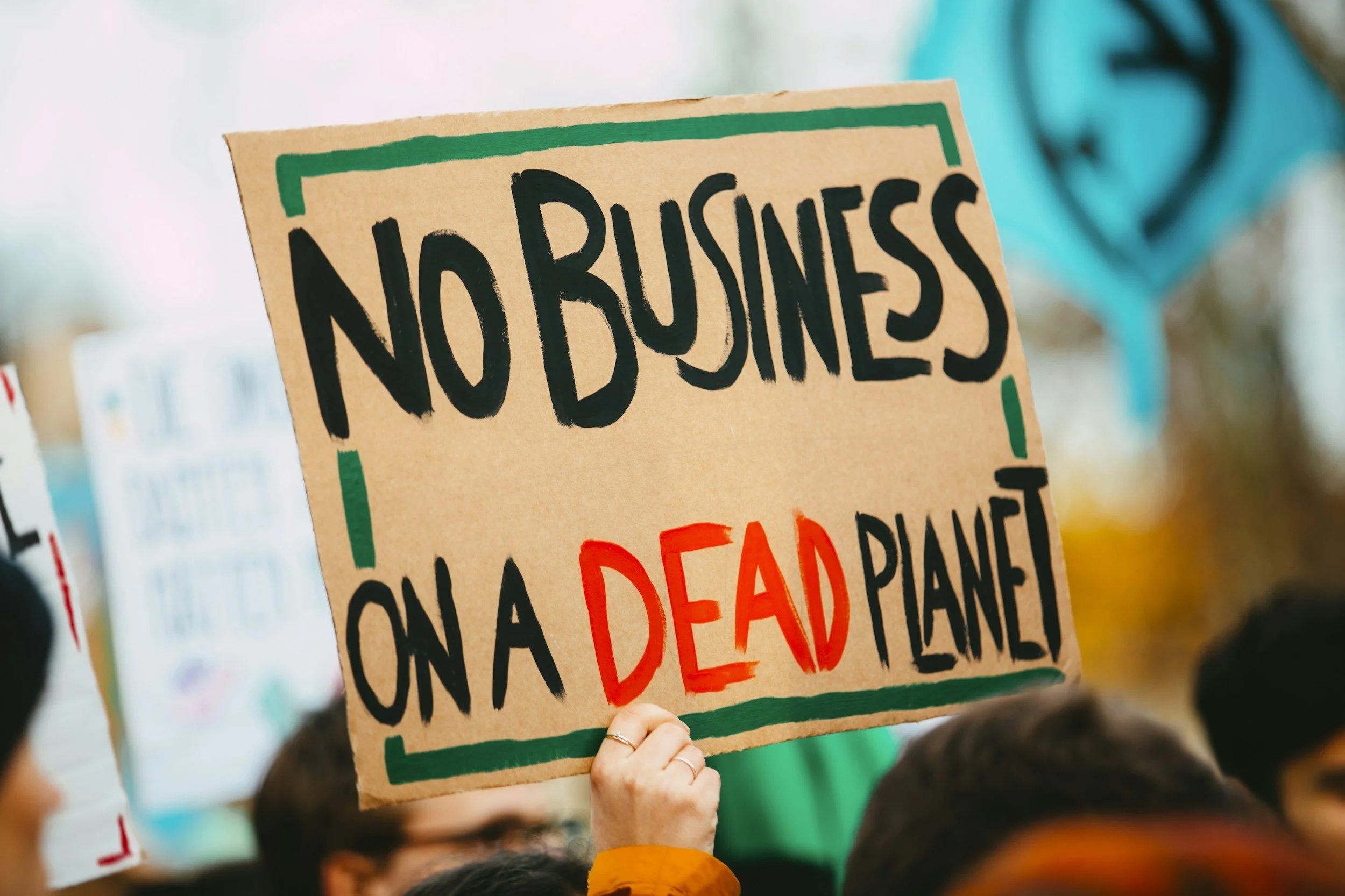
Markus Spiske @unsplash
This integration appears in how products are designed, how materials are sourced, how waste is managed, and how environmental claims are substantiated. A company that sells reusable products but relies on opaque suppliers can’t credibly claim sustainability. Likewise, a brand that offsets emissions while ignoring energy use or labor conditions may improve optics without changing impact.
Increasingly, this distinction matters because sustainability is no longer purely voluntary. Regulatory frameworks are expanding to require climate disclosures, supply chain due diligence, and environmental risk reporting. Even smaller companies can be indirectly affected as larger firms pass transparency requirements down through procurement networks. In this environment, sustainability becomes a matter of compliance readiness as well as reputation.
A credible green business therefore does three things consistently. It
· reduces environmental harm where possible
· communicates trade-offs honestly rather than overstating impact, and
· builds transparency into operations so that claims can withstand scrutiny.
Profitability and responsibility are not opposing goals. Resource efficiency, regulatory preparedness, and stakeholder trust increasingly support long-term financial resilience. Businesses that recognize this alignment position themselves not only as environmentally responsible, but as structurally prepared for the future.
Why Sustainable Work Matters in 2026 and Beyond
Sustainable work extends beyond the products a company sells. It encompasses how organizations structure operations, manage digital infrastructure, design supply chains, and shape workplace culture. It also applies to independent professionals and remote workers whose daily practices influence energy use, resource consumption, and purchasing patterns.
As sustainability expectations rise, one critical insight from behavioral research becomes particularly relevant: motivation alone does not reliably produce sustainable action
People may care about environmental issues, but action depends on whether they have the capability to understand their options, the opportunity to access practical alternatives, and confidence that their choices make a difference
This principle applies equally to organizations. Communicating environmental values is insufficient if sustainable practices are difficult to implement, operationally inefficient, or financially inaccessible. Systems must be designed to reduce friction. This includes
· Clear metrics, transparent reporting, and straightforward processes that reinforce perceived effectiveness
· Building trust: when sustainability claims are perceived as exaggerated or unsubstantiated, stakeholders hesitate
When these factors are not present, consumers delay purchases, employees disengage from internal initiatives, and investors question governance practices. Credibility is nowadays a structural asset.
Sustainable work in 2026 therefore requires alignment across multiple layers. Environmental messaging must reflect operational reality. Supply chains must withstand scrutiny. Digital systems must be evaluated for efficiency. Organizational culture must support measurable progress rather than symbolic gestures.
Businesses that integrate these elements are best positioned to adapt to a landscape in which regulatory oversight, market expectations, and environmental risk are increasingly intertwined. Sustainable work is no longer peripheral, but an integral part of institutional resilience.
Green Business Ideas That Align Profit with Sustainability
When people search for green business ideas, they are often looking for something simple: a product to sell or a service to offer. But the more important question is structural. What kinds of business models are most compatible with long-term sustainability?
Not all industries are equally adaptable. Some rely heavily on extractive resource chains, high energy inputs, or opaque supply networks. Others are naturally lower impact or can be redesigned to minimize waste and improve transparency.
The strongest green businesses tend to fall into four broad categories:
· product-based ventures that reduce environmental harm,
· service-based models that help others operate more sustainably,
· digital businesses with low physical footprints, and
· community-based enterprises that strengthen local resilience.
Let’s examine each more closely.
Product-Based Green Businesses: Redesigning Consumption
Product-based green businesses focus on improving what people already buy. Instead of trying to eliminate consumption entirely, these companies redesign everyday goods to reduce environmental impact.
This includes reusable household items, low-tox personal care products, sustainably sourced textiles, refill systems, compostable packaging alternatives, and regenerative agricultural goods. The opportunity here lies in substitution. Consumers already spend money in these categories. The green entrepreneur competes not by inventing demand, but by offering a more responsible alternative.
However, research on sustainable consumption makes one point clear: consumer motivation alone is not sufficient. If the product is difficult to access, significantly more expensive, or surrounded by ambiguous claims, adoption slows. Capability and opportunity must be built into the model. That means clear labeling, transparent sourcing, and pricing strategies that narrow the gap between conventional and sustainable options.
The most resilient product-based green businesses invest in supply chain verification, lifecycle analysis, and straightforward communication. In a marketplace increasingly wary of greenwashing, credibility becomes part of the value proposition.
Service-Based Sustainable Businesses: Enabling Transition
Some of the most powerful green businesses do not sell products at all. They provide services that help other individuals or companies reduce environmental impact.
This category includes
· energy efficiency consulting
· sustainable landscaping
· waste reduction audits
· circular economy consulting
· green building design
· environmental compliance advisory services, and
· sustainability reporting support.
Service-based sustainability businesses operate at the structural level. Instead of influencing individual purchasing decisions, they help organizations build capability and opportunity, the same behavioral conditions that drive consumer action.
Because these services often reduce costs over time through efficiency improvements, they align financial and environmental incentives. This alignment makes them especially attractive in periods of economic uncertainty.
Digital and Low-Impact Businesses: Reducing Physical Footprint
Digital business models often have a lower environmental footprint compared to manufacturing or logistics-heavy enterprises. Online education platforms, sustainability-focused content businesses, digital consulting firms, and software tools that track environmental performance can operate with minimal material input.
Alexandre Viard@unsplash
This does not mean digital businesses are impact-free. Data centers consume energy, and digital infrastructure has a measurable carbon footprint. However, the scalability of digital platforms allows for relatively low marginal environmental cost per additional customer.
For entrepreneurs already operating online, such as educators, consultants, and content creators, the transition to a green-aligned model may not require new infrastructure. It may require reframing offerings around sustainability themes, auditing digital energy use, or partnering with responsible hosting providers.
Importantly, digital businesses are uniquely positioned to strengthen perceived effectiveness. Research shows that people act more consistently when they believe their individual choices matter.
Platforms that provide feedback, measurable progress tracking, or visible impact metrics can reinforce this belief and increase engagement.
Community-Based and Local Green Enterprises: Building Resilience
Local food cooperatives, repair cafés, tool libraries, urban farming initiatives, and zero-waste retail stores represent another category of green enterprise. These models reduce transportation emissions, strengthen local economies, and create social cohesion around sustainability practices.
Community-based green businesses often succeed because they increase opportunity. Sustainable options become visible and accessible in daily life. Instead of abstract environmental ideals, customers encounter practical alternatives embedded in their neighborhoods.
Trust also tends to be stronger in local systems. In research on sustainable purchasing, perceived greenwashing significantly weakens behavior
Smaller, community-rooted enterprises can sometimes counteract this skepticism through transparency and direct relationships.
These models may not scale globally in the traditional venture capital sense. But they scale horizontally across communities, contributing to distributed resilience rather than centralized growth.
Choosing the Right Green Business Model
Selecting a green business idea is not primarily about trend analysis. It is about alignment. Entrepreneurs should consider:
Where do I have capability or expertise?
Where is there structural opportunity in my region or industry?
Can I build credibility into the business from the start?
Will this model reduce harm, or merely rebrand existing practices?
Sustainable business models that thrive over time share several features. They reduce friction for customers. They lower cognitive burden by clarifying claims. They design transparency into operations. And they recognize that trust, once lost, is difficult to rebuild.
In the next section, we will move from ideas to implementation and examine how to start a green business, with attention to regulatory trends, operational design, and long-term resilience.
How to Start a Green Business
Starting a green business requires more than selecting an environmentally themed product or service. It requires designing a business model that aligns sustainability with operational reality from the outset. Many ventures fail not because the mission is flawed, but because environmental intention is layered onto a conventional structure rather than integrated into it.
The first step is not branding. It is clarity.
Sustainable businesses that endure begin by identifying a specific environmental or social problem they are equipped to address. This problem must be concrete and verifiable. Vague ambitions to “help the planet” are not operational strategies. A green business needs a defined friction point in the system: waste in packaging, inefficiency in energy use, opacity in sourcing, or lack of access to low-impact alternatives.
From there, validation matters. Behavioral research reminds us that motivation alone does not drive consistent action
Even customers who care deeply about sustainability will hesitate if options are too expensive, too confusing, or too difficult to access. Before launching, entrepreneurs must assess whether their solution reduces friction rather than adding it.
A strong green startup framework typically includes the following elements:
A clearly defined environmental or social problem
A solution that measurably reduces harm or increases efficiency
Transparent sourcing and supply chain documentation
A pricing model that narrows the gap between sustainable and conventional alternatives
Verifiable claims supported by data, not aesthetic cues
A plan for impact measurement and reporting
Each of these elements reinforces trust. And trust is not an abstract asset. Research shows that perceived greenwashing significantly weakens the likelihood that consumers will follow through on sustainable purchasing intentions
Businesses that cannot substantiate claims risk eroding the very market they seek to serve.
Design for Capability and Opportunity
One of the most overlooked aspects of starting a green business is designing for user capability and opportunity. In behavioral research, sustainable action depends not just on values, but on whether individuals feel equipped and able to act
Translating this insight into startup design means asking practical questions. Does your customer understand why your product or service is different? Is the benefit easy to grasp? Are sustainability claims explained in plain language? Is your offering accessible within normal purchasing patterns, or does it require unusual effort?
Green businesses that succeed reduce cognitive burden. They make sustainable choices feel normal rather than exceptional. They remove ambiguity around environmental claims. And they communicate trade-offs honestly, rather than presenting perfection.
Build a Lean and Low-Waste Model
Early-stage green businesses benefit from lean operational design. Overbuilding inventory, overinvesting in packaging, or scaling before supply chains are stable can create unnecessary environmental and financial strain.
A lean model prioritizes:
Small batch production or phased rollouts
Local or regional sourcing where feasible
Energy-efficient digital infrastructure
Waste minimization from the outset
This approach does not simply reduce environmental impact. It improves resilience. In an environment of tightening regulations and fluctuating resource costs, efficiency becomes a competitive advantage.
Embed Transparency from Day One
Regulatory frameworks are increasingly focused on disclosure and due diligence. Organizations that treat transparency as an afterthought may struggle to adapt later. Embedding documentation systems, supplier audits, and impact tracking early reduces long-term compliance risk.
Transparency also reinforces perceived effectiveness. When customers and stakeholders can see measurable outcomes, they are more likely to believe their participation matters
That belief strengthens loyalty and engagement.
Launch With Integrity, Not Perfection
A common misconception is that green businesses must launch as fully optimized sustainability models. In reality, few startups can achieve complete lifecycle neutrality from the beginning. What matters more is integrity in communication.
Launching with clear disclosures about current limitations, improvement goals, and measurable targets often builds more trust than overstated claims. Sustainability is a process. Customers and stakeholders increasingly recognize this, but they expect honesty.
Starting a green business is not about attaching environmental language to a conventional venture. It is about designing systems where environmental responsibility, economic viability, and stakeholder trust reinforce one another.
In the next section, we will examine sustainable business practices in more depth, focusing on how small and growing companies can reduce operational impact while maintaining profitability and resilience.
Regulations and Compliance: The New Reality for Green Businesses
For many years, sustainability functioned primarily as a voluntary commitment. Companies issued corporate responsibility reports, set aspirational targets, and adopted internal standards. That era is shifting. Increasingly, sustainability is shaped by enforceable regulations rather than discretionary initiatives.
Around the world, governments are introducing frameworks that require greater transparency in environmental and social performance. Climate-related financial disclosures are becoming mandatory in several jurisdictions. Supply chain due diligence laws now hold companies accountable not only for their direct operations, but also for upstream labor and environmental risks. Extended producer responsibility policies require businesses to manage the lifecycle impacts of packaging and products.
These developments reflect a broader policy trend toward what some sustainability organizations describe as “just and sustainable business,” a model in which environmental performance, human rights, and corporate governance are interconnected rather than siloed. Regulatory systems are increasingly asking companies to demonstrate how they identify, mitigate, and disclose risk across their value chains.
For entrepreneurs and small businesses, this can feel distant. Yet even smaller enterprises are affected indirectly. Large corporations subject to disclosure rules often require sustainability documentation from suppliers. Retailers may request environmental impact data before listing products. Investors may evaluate ESG exposure before committing capital.
In practical terms, this means that green business is no longer defined solely by mission. It is shaped by compliance readiness.
Companies that proactively understand regulatory trends gain several advantages. They reduce future adaptation costs. They avoid reputational damage linked to non-compliance. And they position themselves as credible partners within increasingly scrutinized supply networks.
Importantly, regulation is not solely a constraint. It can also create opportunity. Businesses that help others comply through consulting, reporting tools, lifecycle analysis, or impact tracking operate within a growing market driven by legal necessity rather than consumer preference alone.
Understanding the regulatory landscape is therefore not optional for sustainable entrepreneurs. It is part of strategic planning.
Certifications and Verification: Building Credibility in a Skeptical Market
If regulation establishes minimum standards, certification systems often function as credibility signals.
In a marketplace saturated with environmental claims, third-party verification helps reduce uncertainty. Research on sustainable purchasing consistently shows that trust is central to conversion. When consumers perceive greenwashing, the relationship between intention and behavior weakens
Certifications can partially counteract that skepticism by providing standardized benchmarks.
However, certification is not a shortcut to sustainability. It is a signaling mechanism that works only when supported by genuine operational alignment.
Well-known certification pathways include:
B Corp certification, which evaluates governance, workers, community impact, and environmental performance.
Fair Trade and similar sourcing certifications, focused on labor and supply chain equity.
Organic certification systems for agricultural and food products.
Green building certifications such as LEED.
Industry-specific eco-labels that verify material standards or lifecycle impact.
Each certification varies in scope, cost, and administrative burden. Some are appropriate for early-stage businesses. Others require scale and formal reporting systems.
Entrepreneurs should evaluate certification strategically. Questions worth considering include whether the certification aligns with core business activities, whether customers recognize its value, and whether the verification process strengthens internal systems rather than functioning solely as external marketing.
Certification also interacts with perceived effectiveness. When stakeholders see standardized benchmarks, they are more likely to believe sustainability claims are substantive. This reinforces engagement and loyalty
That said, certifications are not universally necessary. In some cases, radical transparency, including detailed sourcing explanations, lifecycle disclosures, and impact reporting, may serve similar credibility functions at lower cost. The key variable is trust.
Ultimately, the most resilient green businesses combine three elements: regulatory awareness, operational integrity, and credible signaling. When these align, sustainability becomes a structural feature of the enterprise rather than a peripheral claim.
Transition to Operations
Regulation and certification define external expectations. The next question is internal.
How does a small or growing business translate sustainability into daily operations? What changes reduce environmental impact without undermining profitability? And how can sustainable practices strengthen rather than strain organizational resilience?
In the next section, we will examine sustainable business practices in operational terms, focusing on energy use, supply chains, labor practices, digital infrastructure, and long-term efficiency.
Sustainable Business Practices for Small and Growing Companies
Sustainability becomes meaningful at the operational level. Mission statements and certifications may signal intent, but day-to-day practices determine impact.
For small and growing companies, the goal is not perfection. It is integration. Sustainable practices should reduce environmental harm while strengthening financial resilience and organizational stability.
Energy and Resource Efficiency
Energy use remains one of the most visible operational levers for sustainability. Offices, warehouses, production facilities, and digital infrastructure all carry measurable footprints.
For physical spaces, improvements often begin with efficiency rather than innovation. LED lighting, smart thermostats, insulation upgrades, and energy audits frequently deliver measurable cost savings alongside emissions reductions. For product-based businesses, attention to material efficiency and waste reduction during manufacturing can lower both input costs and environmental impact.
Digital operations deserve equal scrutiny. Websites, cloud storage, and online platforms rely on energy-intensive data centers. While the footprint of an individual site may seem small, scale amplifies impact. Businesses can reduce digital intensity by choosing energy-conscious hosting providers, minimizing redundant data storage, and optimizing site performance to reduce server load.
Efficiency is not simply an environmental strategy. It is risk management. As energy costs fluctuate and climate-related regulations expand, resource-intensive operations become financial liabilities.
Supply Chain Transparency and Risk Management
Supply chains often account for the majority of a company’s environmental and social footprint. Yet they are also the least visible.
Operational sustainability requires mapping supplier relationships, understanding sourcing practices, and assessing environmental and labor risks. Even small businesses benefit from documenting supplier standards and requesting basic transparency disclosures.
Regulatory trends increasingly require larger corporations to conduct supply chain due diligence. Smaller firms that prepare for this environment may gain a competitive advantage when seeking partnerships or retail placement.
Transparency also intersects with consumer trust. Research demonstrates that perceived greenwashing weakens follow-through on sustainable purchasing
Clear, verifiable supply chain information reduces ambiguity and strengthens credibility.
Labor Practices and Organizational Culture
Sustainability is not limited to environmental metrics. Social responsibility, workplace equity, and employee well-being form part of sustainable business practice.
Companies that invest in fair wages, safe working conditions, and transparent governance reduce reputational risk and strengthen retention. Internal culture matters because sustainable initiatives often require behavioral participation. Employees are more likely to engage in energy-saving, waste-reduction, or reporting efforts when leadership demonstrates consistency and integrity.
Moreover, perceived effectiveness plays a role internally as well
When employees can see measurable outcomes from sustainability initiatives — reduced waste volumes, energy savings, supplier improvements — engagement becomes durable rather than symbolic.
Waste Reduction and Circular Thinking
Linear models of extraction, production, and disposal are increasingly unstable. Circular approaches — designing for reuse, repair, refill, or recycling — extend product lifecycles and reduce material dependency.
For product businesses, this may involve redesigning packaging or offering take-back programs. For service or digital businesses, circularity may appear in resource sharing, modular design, or reducing redundant processes.
Waste reduction is often framed as environmental altruism. In practice, it frequently improves margins by lowering material costs and reducing disposal expenses.
Practical Operational Priorities
For small businesses beginning this transition, operational sustainability can feel overwhelming. A focused starting point often includes:
Conducting a basic energy and resource audit
Mapping key suppliers and identifying transparency gaps
Reviewing packaging and material waste streams
Establishing simple impact metrics
Communicating realistic improvement targets
These steps create momentum without requiring large upfront capital investment. They also align with behavioral insights suggesting that capability and opportunity must support sustainable action
Clear processes and measurable benchmarks strengthen follow-through.
The Future of Sustainable Work
Sustainable work is evolving beyond compliance and consumer preference. It is becoming a structural feature of economic resilience.
The future likely includes stronger climate disclosure laws, expanded supply chain accountability, and increasing investor attention to environmental risk. Circular business models may move from experimental to mainstream. Remote and hybrid work structures will continue to shift energy consumption patterns and digital infrastructure demands.
At the same time, skepticism toward superficial sustainability claims will grow. As markets mature, stakeholders will expect measurable impact rather than aspirational language.
The businesses that thrive will be those that treat sustainability as systems design rather than branding. They will invest in transparency, reduce operational friction, and align financial incentives with environmental responsibility.
Sustainable work, in this sense, is not a trend. It is an adaptive response to environmental, regulatory, and economic realities.
Building a Green, Prosperous Business
Green business is often portrayed as a moral choice. Increasingly, it is a strategic one.

like this? please pin!
Sustainable markets require capability, opportunity, and trust. Businesses that reduce ambiguity, strengthen transparency, and design systems that make sustainable action realistic position themselves for long-term resilience.
Starting or transforming a green business does not require perfection. It requires alignment. When environmental responsibility is integrated into operations, governance, and communication, sustainability becomes an asset rather than a constraint.
The path forward is neither purely regulatory nor purely consumer-driven. It is structural. By understanding regulatory trends, embedding credible practices, and reducing operational impact, entrepreneurs and organizations can build enterprises that are not only environmentally responsible but economically durable.
In a world of tightening expectations and expanding scrutiny, green business is not about appearing sustainable. It is about being structurally prepared for the future.
You may also be interested in…





Sustainability is no longer a niche concern or a branding strategy reserved for mission-driven startups. It is becoming a structural feature of modern markets. Regulatory changes, investor scrutiny, and shifting consumer expectations are converging in ways that make environmental and social responsibility central to long-term business viability.