


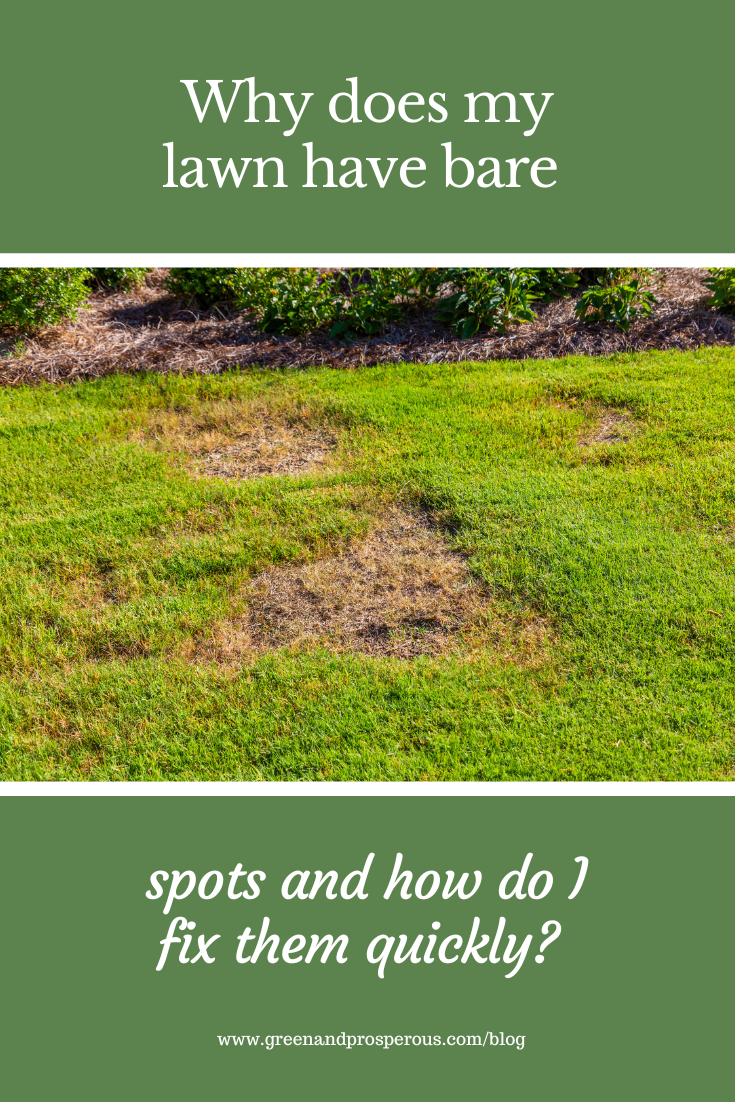
Why does my lawn have bare spots and how do I fix them quickly?
/Gazing at bare patches in your lawn? You’re not alone. Those thin, ugly spots are such a pain. They can feel especially frustrating when the rest of your yard looks healthy. Whether they were caused by pets, heavy foot traffic, pests, drought stress, or poor soil conditions, bare spots have a way of showing up at the worst possible time.
The good news is that those ugly spots can be fixed in most cases, provided you are aware of the reason behind them. What’s more, you don’t need to be a landscaping expert to make real improvements. Once you understand why the grass disappeared in the first place, you can choose the right solution and get your lawn back on track faster than you might expect. In this guide, I’ll walk you through how to identify what is wrong and show you practical, effective ways to fix bare spots quickly so that you can get your lawn to look good again.
So What Causes Bare Spots?
You can never fix anything without knowing what went wrong. Here are the usual suspects:
Foot traffic destroys your lawn. Children who walk the same path day in and day out? A shortcut everybody takes across the lawn? That grass is beaten and finally surrenders.
Dog urine leaves tell-tale yellow or brown circles. The pee contains nitrogen that literally burns the grass. When your dog has its favorite place, you will notice the damage.
Grubs consume the roots of grass. If you can pull up dead grass like a carpet, then you have grubs.
Wetness and lack of air movement are favorite conditions for fungal diseases. They create circular patches of dead grass that proliferate when you neglect them.
Compacted soil will not allow water or roots to penetrate. The ground is sometimes simply too hard to grow grass.
Tree shade is also a major culprit. Grass requires sunlight, and if a tree has grown over the years, it may be blocking too much sunlight now.
Figure Out Your Specific Problem
Just take a few minutes to closely examine your bare spots:
Are they located in places where people walk frequently?
Near where your dog hangs out?
Did you find any bugs while digging?
Is the soil rock-hard?
Is the spot super shady?
When you understand the cause, then you can select the appropriate fix.
How to Fix Bare Spots Fast
Are you eager to make those spots green? Here’s what to do.
Step 1: Prep the Area
Remove withered grass and debris. Rough up the soil with a rake—this helps the seeds stick. If the ground is tough and hard, make holes in it with a garden fork to allow the passage of water and air.
Where grass will never grow regardless, why not use Stone Surfacing as a substitute to create a pretty feature or path?
Step 2: Pick Your Repair Method
Small spots (only a few inches): Use an all-in-one patch kit that has seed, mulch, and fertilizer combined. Super easy.
Larger areas: Find grass seed that matches what you have. Sow cool-season grasses (such as fescue) during the spring or fall. Plant warm-season grasses (such as Bermuda) in late spring or summer.
Quality revegetation products can help your problem areas recover more quickly—they are designed for tough areas.
Step 3: Plant and Water
Here’s the process:
Lay on a very thin layer of topsoil or compost (approximately 1/2 inch).
Spread the grass seed evenly (15-20 seeds per square inch).
Lightly rake the seeds so they are barely covered.
Water lightly 2-3 times a day to ensure the seeds remain damp.
When grass grows to 2 inches, switch to less frequent and deeper watering.
The trick is to ensure that those seeds are moist until they sprout. Don’t let them dry out.

Prevent the Reoccurrence of Bare Spots
Fixing spots once is fine. Preventing them forever? That’s even better.
Create pathways where people usually walk. It is better to use stepping stones or mulch rather than struggle with foot traffic.
Train your dog to use one specific area, and immediately rinse urine spots with water afterwards. You can also plant tougher ground cover in their “potty” area.
Apply grub control at the beginning of the summer if you had them in previous years. Stop them before they start.
Overseed your lawn once a year to maintain health. Dense grass is resistant to weeds and disease.
Have your soil tested every couple of years and amend it. Nutrient-rich soil produces healthy grass.
Raise your mowing height (3 inches or so for most grasses). Taller grass has deeper roots and shades out weeds.
Jorien Loman @unsplash
The only way to prevent the reoccurrence of bare spots is regular gardening maintenance.
The Path to a Fuller, Healthier Lawn
Bare spots aren’t permanent. Green, healthy grass can be achieved in a matter of weeks with the right fix. The key is to find out what caused the damage in the first place and correct that underlying issue as well, not merely cover it up. Whether it’s compacted soil, pet damage, poor drainage, shade, or insects, each problem has a specific fix that makes recovery much faster and more reliable.
like this? please pin!
Yes, it takes some patience. Grass doesn’t grow overnight. But with consistent care, proper watering, and the right repair method, those thin, patchy areas will fill in. Stick with it, and before long, your lawn will look thick, even, and healthy again.
About the Author:
Harper McAllister is a Brisbane based gardening fanatic and author who has more than 10 years of experience in the practical field of sustainable backyard designing. Harper grew up surrounded by the eucalyptus trees of the coast of Queensland, and he combines pragmatic horticulture with an interest in native Australian plants. Their articles are based on low-maintenance landscaping, balcony gardening, and the use of eco-friendly methods that can be applied in the Aussie climate. Harper also spends time in the absence of writing playing with drought-resistant plants, working at a small herb garden, or cataloging local community gardens in the area.
You may also be interested in…





Establishing a lush, healthy lawn or stabilizing a bare slope has never been more achievable for homeowners and land managers alike. Thanks to advances in turf technology and application methods, more people are discovering faster, more cost-effective ways to grow grass and protect soil. Among the most significant developments in this space is hydroseeding, a method that has quietly moved from commercial construction sites to residential backyards, earning a reputation for reliable results and environmental responsibility. Understanding why this technique works so well, and when it makes the most sense to use it, can help property owners make smarter decisions about their land.