


The Best Indoor Plants for Clean Winter Air (with Science-Backed Data)
/Winter often brings a strange contradiction. Our homes feel warmer and cozier, yet the air inside can feel heavy, dry, or stale. With windows closed, heaters running, and more time spent indoors, winter is when indoor air quality quietly becomes a bigger issue.
Cooking fumes linger longer, cleaning products build up in the air, and dust circulates more frequently. Add in off gassing from furniture, flooring, and household products, and it is easy to see why winter air can feel less than fresh.
This article takes a science-backed, realistic look at how indoor plants fit into improving winter air quality. Plants are not miracle air filters, and they cannot replace ventilation or proper cleaning. But used wisely, they can support a healthier indoor environment while adding life, calm and a touch of cozy style to your home during the darkest months of the year. They’re also one of the more practical ways to live greener at home without overspending.
What the science says about plants and indoor air
Houseplants have attracted attention from scientists, and several studies have made a definitive link between houseplants and improved indoor air quality. In 1989, scientists at NASA (National Aeronautics Space Administration) found that plants were able to remove VOCs (volatile organic compounds) from the air inside sealed “biohome” chambers. Since then, numerous additional studies have confirmed this to be true.
One interesting study conducted in 2011 in a school in a primary school located in Aveiro, Portugal, found that 6 potted plants were able to significantly reduce existing levels of Carbon Dioxide (CO2), Volatile Organic Compounds (VOCs), carbonyl compounds, particulate matter of 10 micrometers or less in size (PM10), organic carbon (OC), nitrate, sulfate, ammonia, calcium, and carbonate in the school. The study ultimately concluded that common houseplants help improve overall indoor air quality.
What research actually shows
However, a healthy amount of caution is called for. A lot of the discussion around plants and air quality comes from controlled laboratory studies that demonstrated plants can absorb certain airborne compounds under specific, tightly controlled conditions. These findings are very real, but they are often misunderstood or overstated.
Annie Spratt @unsplash
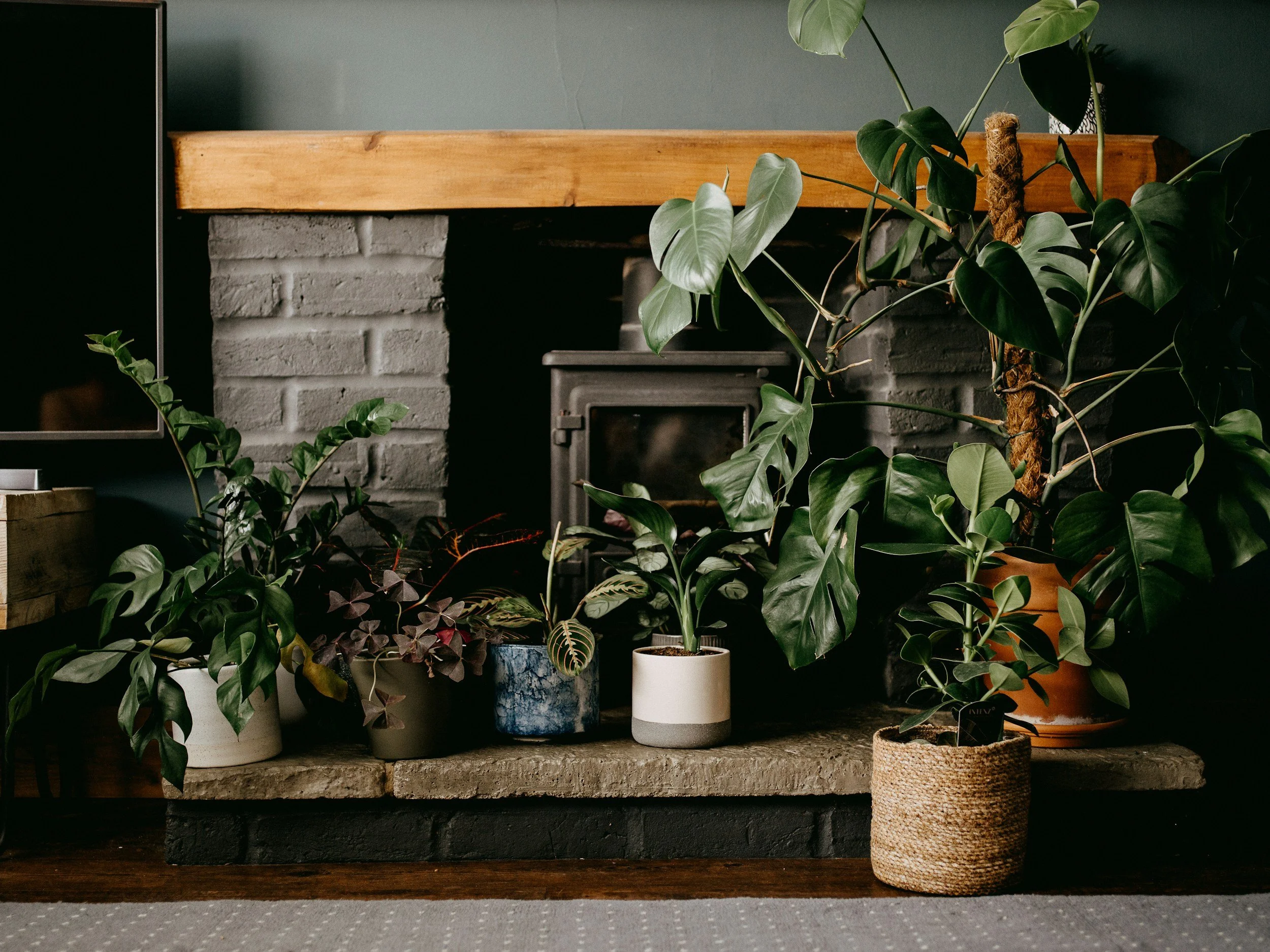
In a typical home, air exchange rates, room size, and airflow are very different from lab chambers. This means that houseplants alone cannot significantly “purify” the air in the way a mechanical filtration system can. So what can plants actually do to help improve indoor air quality, then?
The realistic benefits plants provide
Where plants do shine is in their supporting role:
They contribute modestly to odor and pollutant reduction over time
Their leaves capture dust particles, especially when kept clean
They create small microclimates of humidity, which is helpful in dry winter homes
They improve mental well-being and reduce stress, which indirectly supports overall health
Plants work best when paired with good habits: ventilation, source control, and routine cleaning.
How these plants were chosen
The plants below were selected based on four practical criteria:
Ability to tolerate low winter light
Ease of care for busy households
Relevance to air-quality research or dust capture
Compatibility with a budget-conscious, low-maintenance lifestyle
These are plants that support healthier indoor air without requiring special equipment or constant attention.
The best indoor plants for cleaner winter air
Kelly Sikkema @unsplash
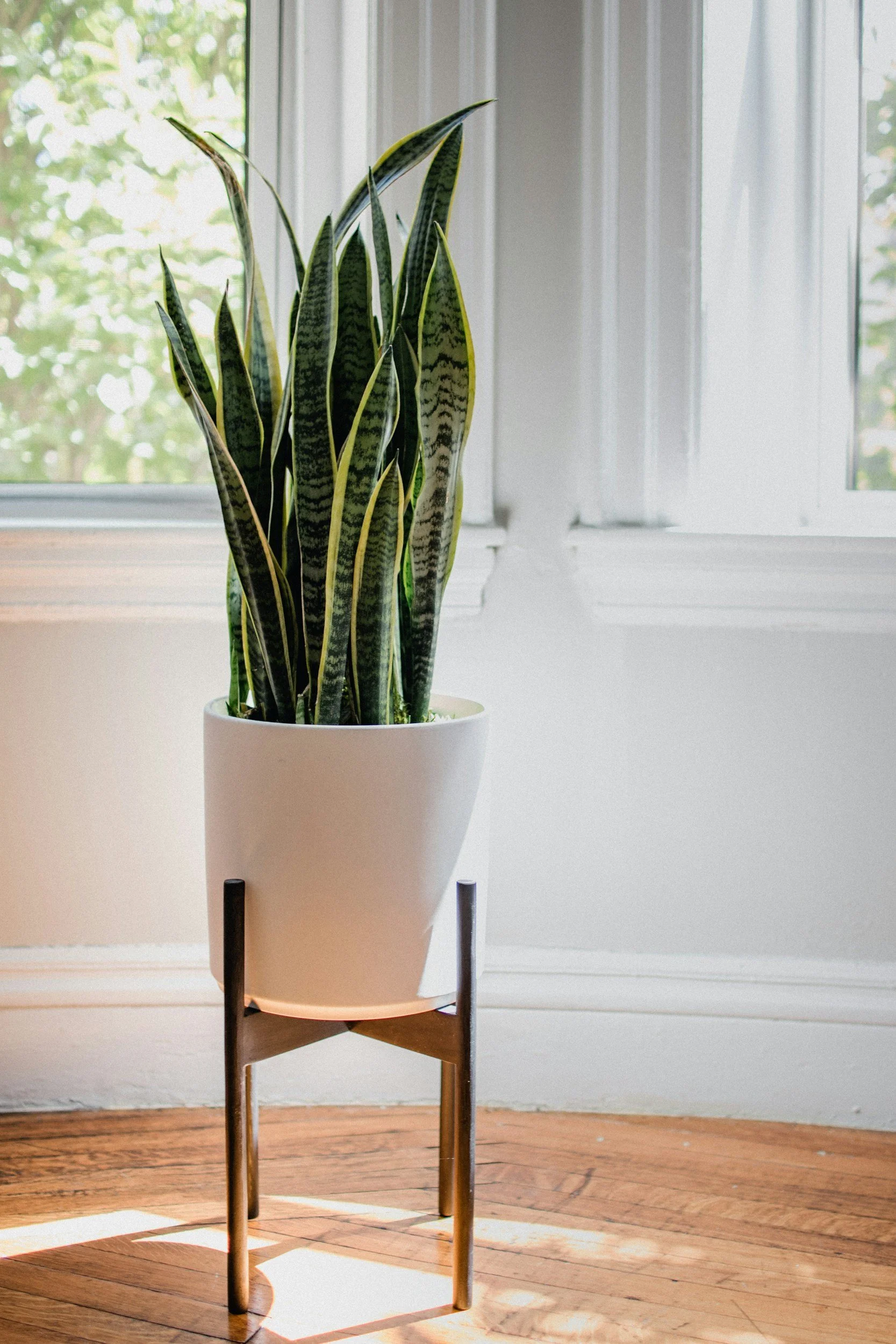
Snake plant (Dracaena trifasciata, formerly known as Sansevieria trifasciata)
Snake plants thrive in low light and need very little water. Their upright leaves take up minimal space, making them ideal for bedrooms, offices, or hallways. They are among the easiest plants to keep alive through winter. I have had one of my two snake plants for well over 10 years and it has always been pretty unfussy. My other was a gift from my partner’s elderly father; it resides in a pot that is one-fifth of the size of my other snake plant’s pot and its leaves are over 3 feet long and very healthy.
Winter care tip: Water sparingly. Overwatering is the fastest way to damage this plant. Let it almost completely dry out between waterings.
Elly M @unsplash
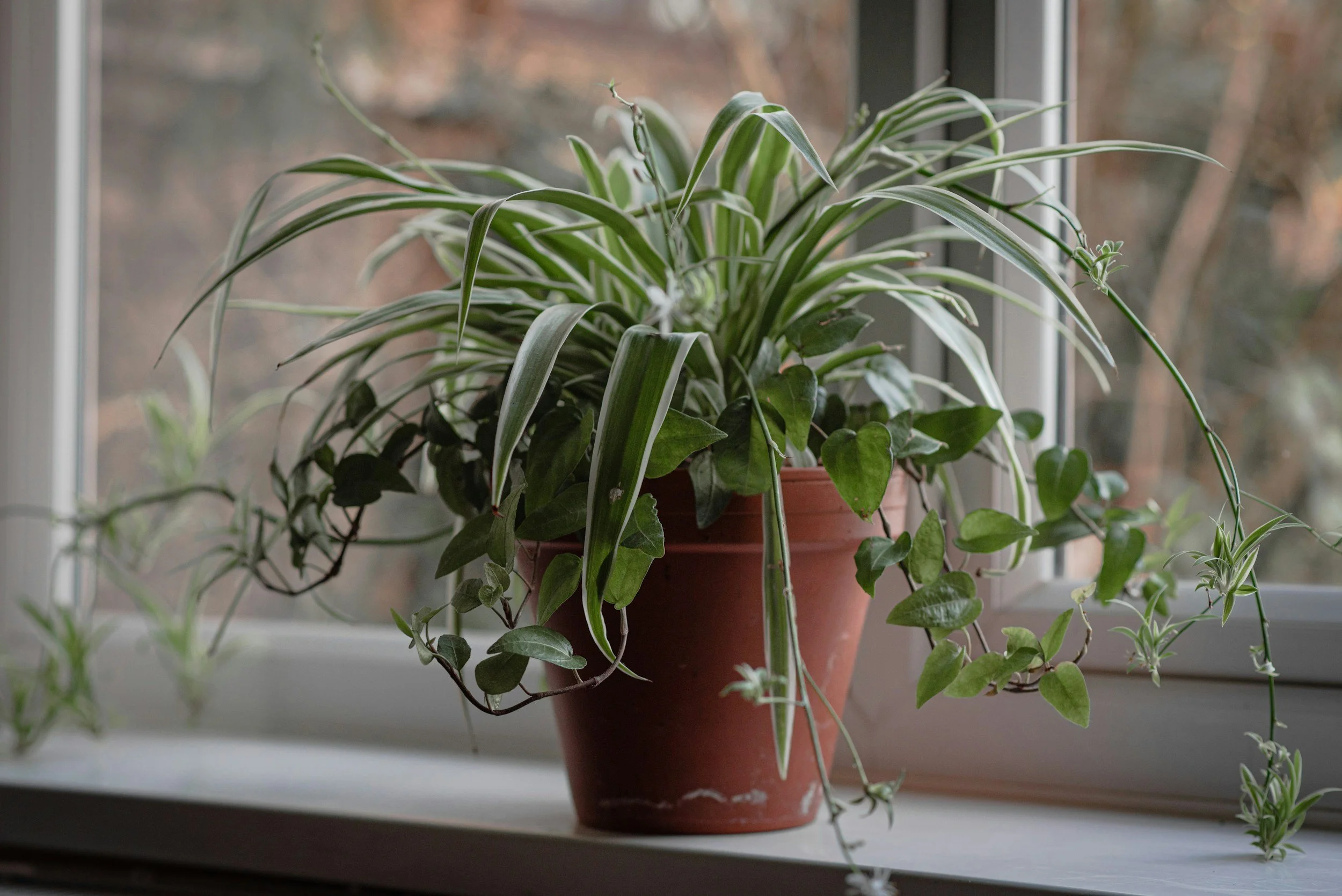
Spider plant (Chlorophytum comosum)
Spider plants are fast growers that tolerate inconsistent care. Their arching leaves help capture dust, and they do well in average indoor conditions. They prefer bright, indirect light, which encourages stronger growth, but they adapt well to medium light. They also like loamy soil with good drainage and moist but not wet soil.
Winter care tip: These plants may be sensitive to the chlorine and fluoride in tap water, so water them with distilled water or rainwater if possible.
Linmiao Xu @unsplash
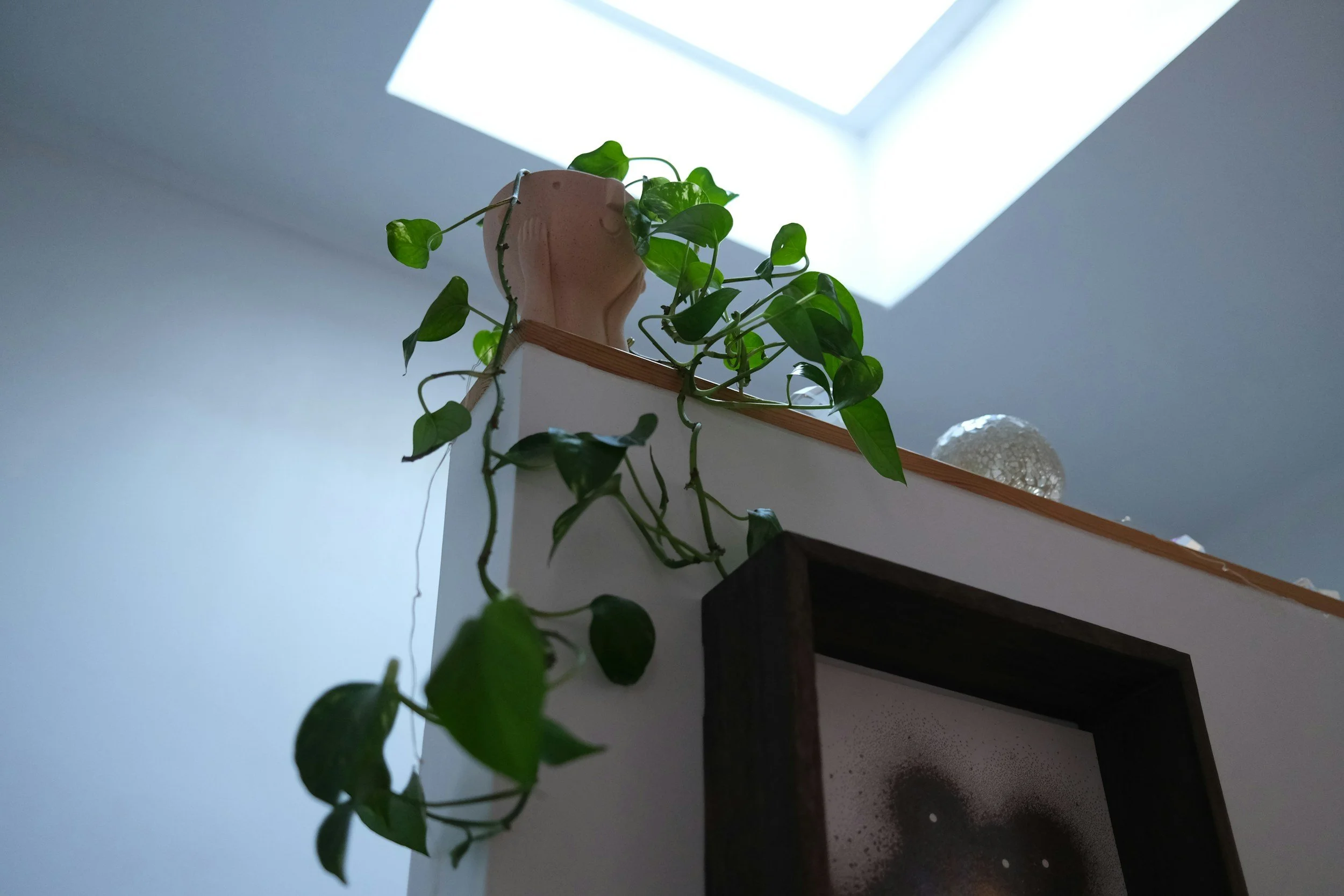
Pothos (Epipremnum aureum)
Pothos is a classic beginner plant that handles low light and missed waterings with ease. Trailing vines increase leaf surface area without taking up floor space. Pothos comes in many varieties, some of which have striking variations in leaf fenestrations (slits and holes) and variegations.
Winter care tip: Allow soil to dry slightly between waterings to prevent root rot issues.
Outi Marjaana @unsplash
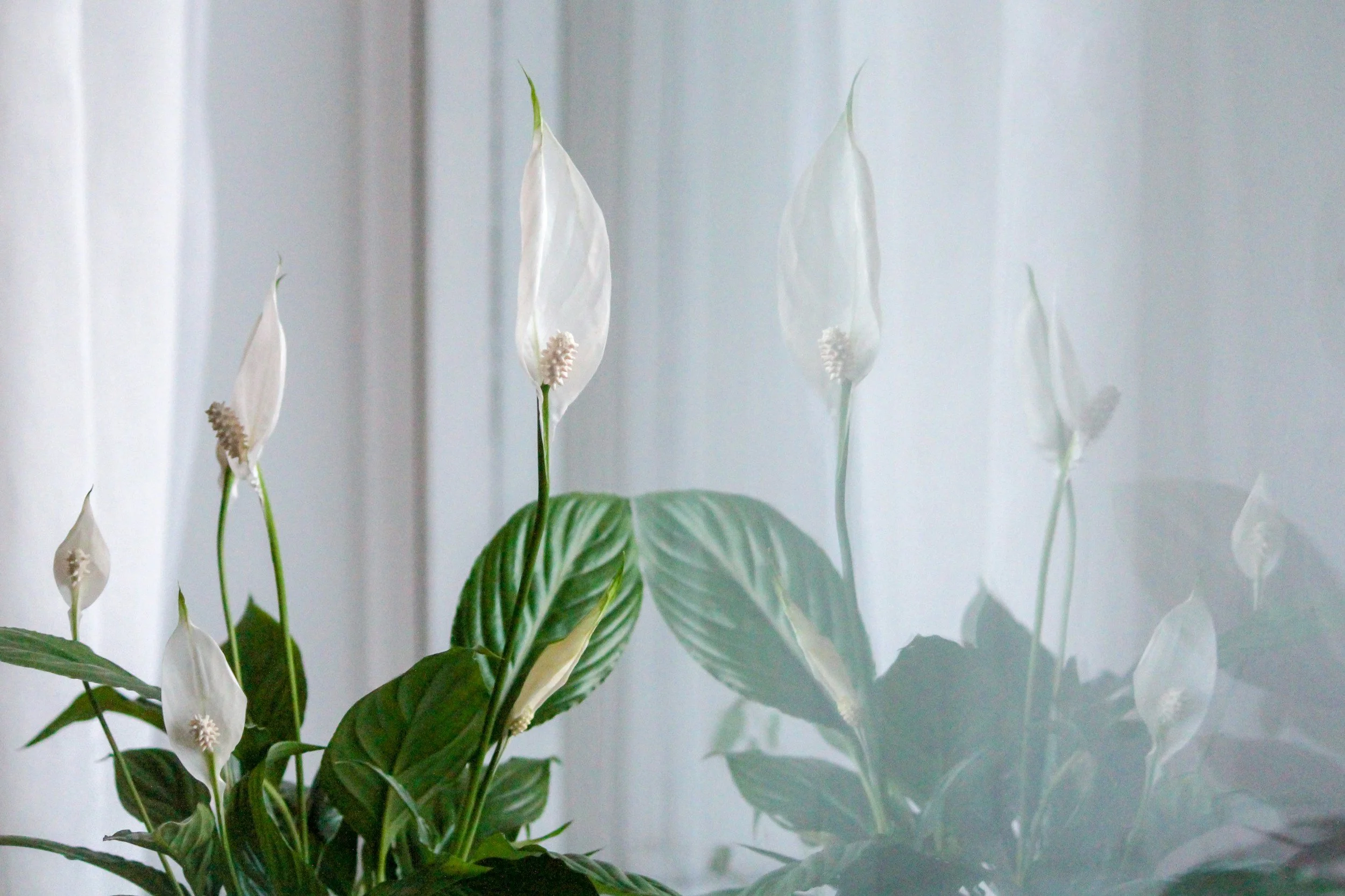
Peace lily (Spathiphyllum)
Peace lilies are often mentioned in air-quality discussions, but their real strength is being major drama queens! This is also known as moisture signaling. In other words, when they need water, they visibly droop, then recover quickly.
Winter care tip: Keep soil lightly moist, but avoid letting roots sit in water.
Scott Webb @unsplash
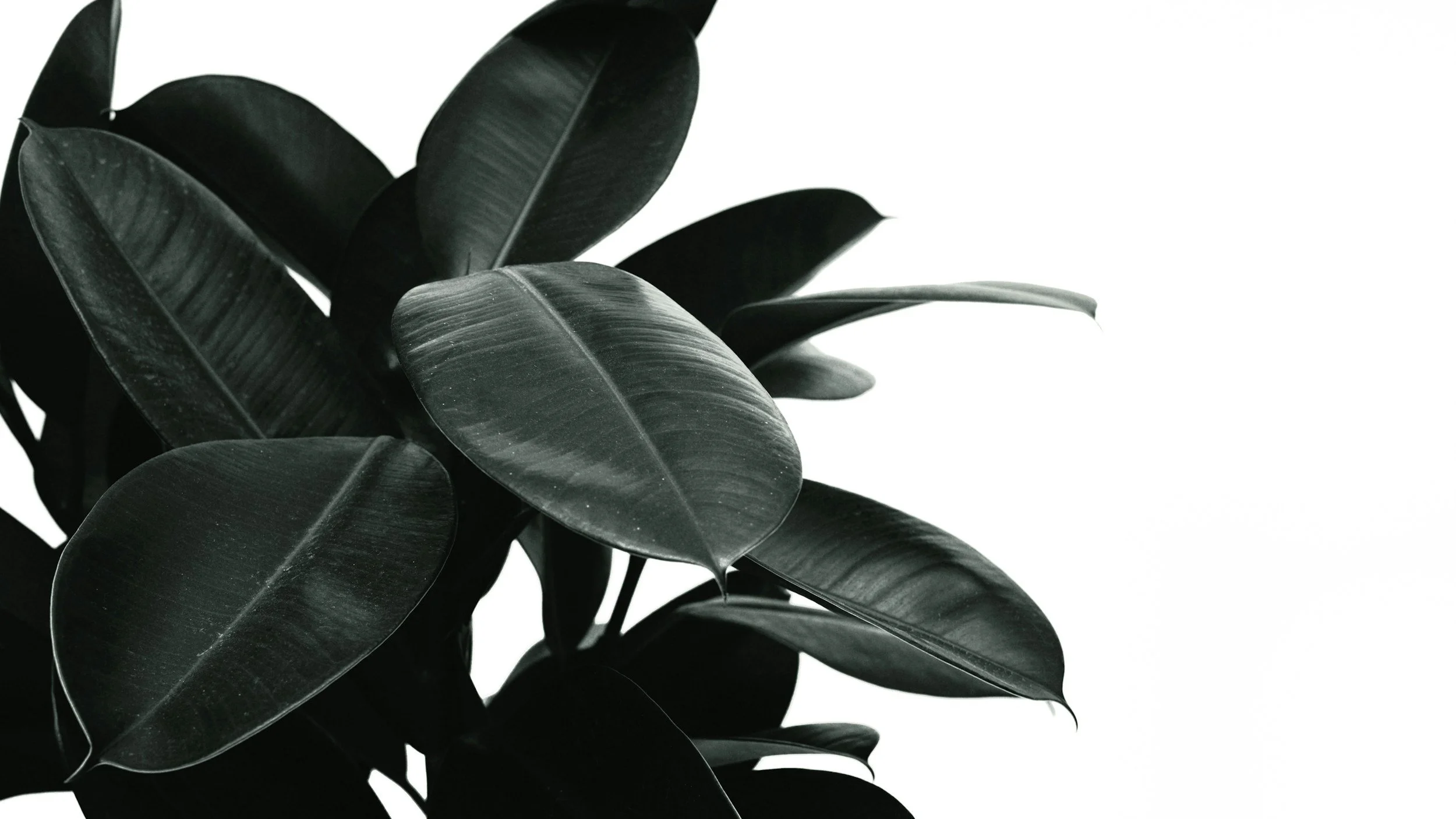
Rubber plant (Ficus elastica)
With large, glossy leaves, rubber plants excel at trapping dust. Regularly wiping leaves improves both plant health and indoor cleanliness. In their native environment they can grow up to 100 feet tall; in a large indoor planter you can grow them up to 10 feet tall.
Winter care tip: Place near a bright window, but protect from cold drafts.
Natalie Kinnear @unsplash
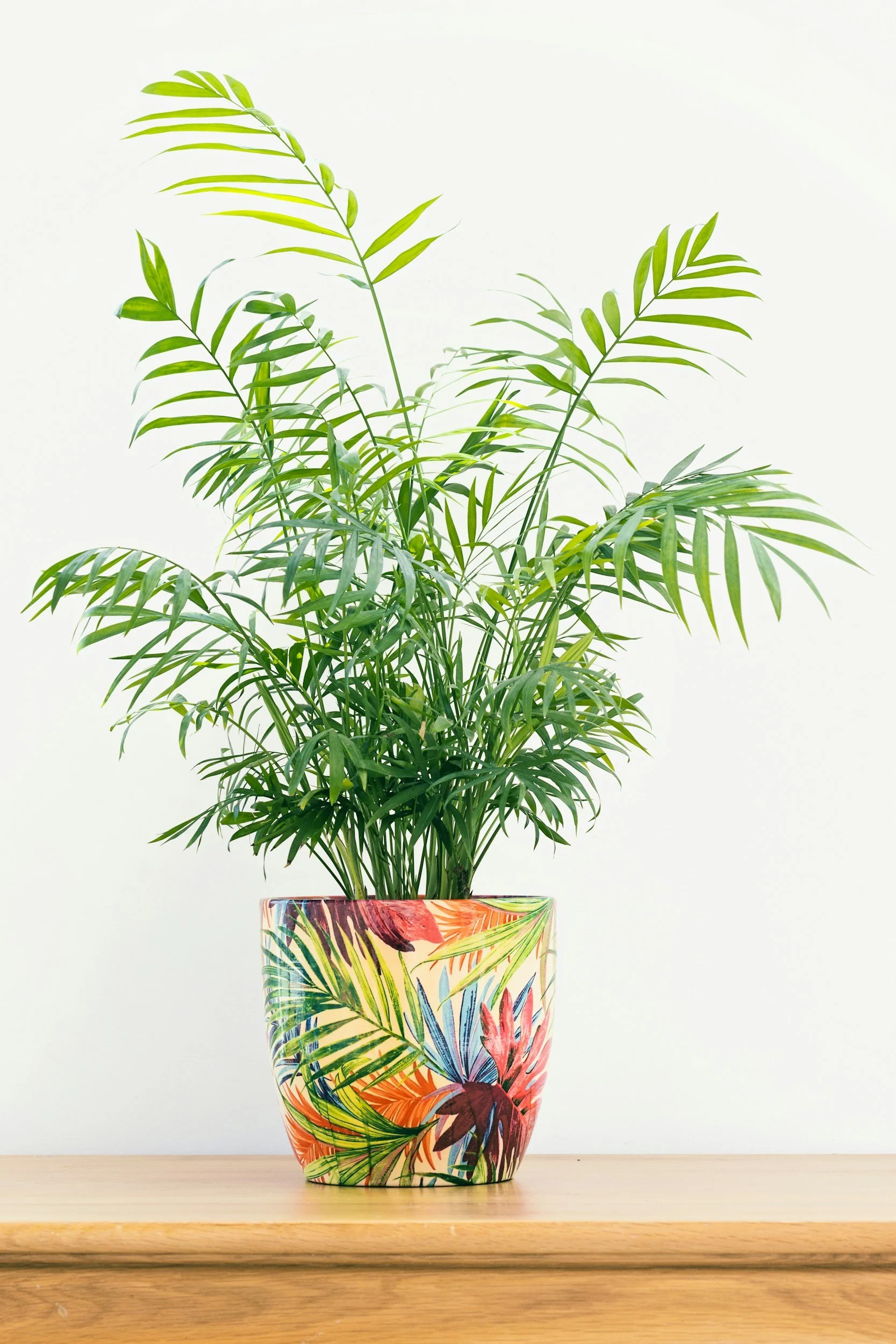
Parlor palm (Chamaedorea elegans)
Parlor palms add greenery without demanding intense light. One of the easiest houseplants to grow, they perform well in living rooms and bedrooms and tolerate winter conditions better than many palms. However, these tropical plants prefer warm temperatures between 68° and 80° F (20°-27° C). Water only when the top inch of soil feels dry.
Winter care tip: Mist the leaves regularly to keep the leaf tips from turning brown in the dry air of winter. Misting regularly also deters red spider mites.
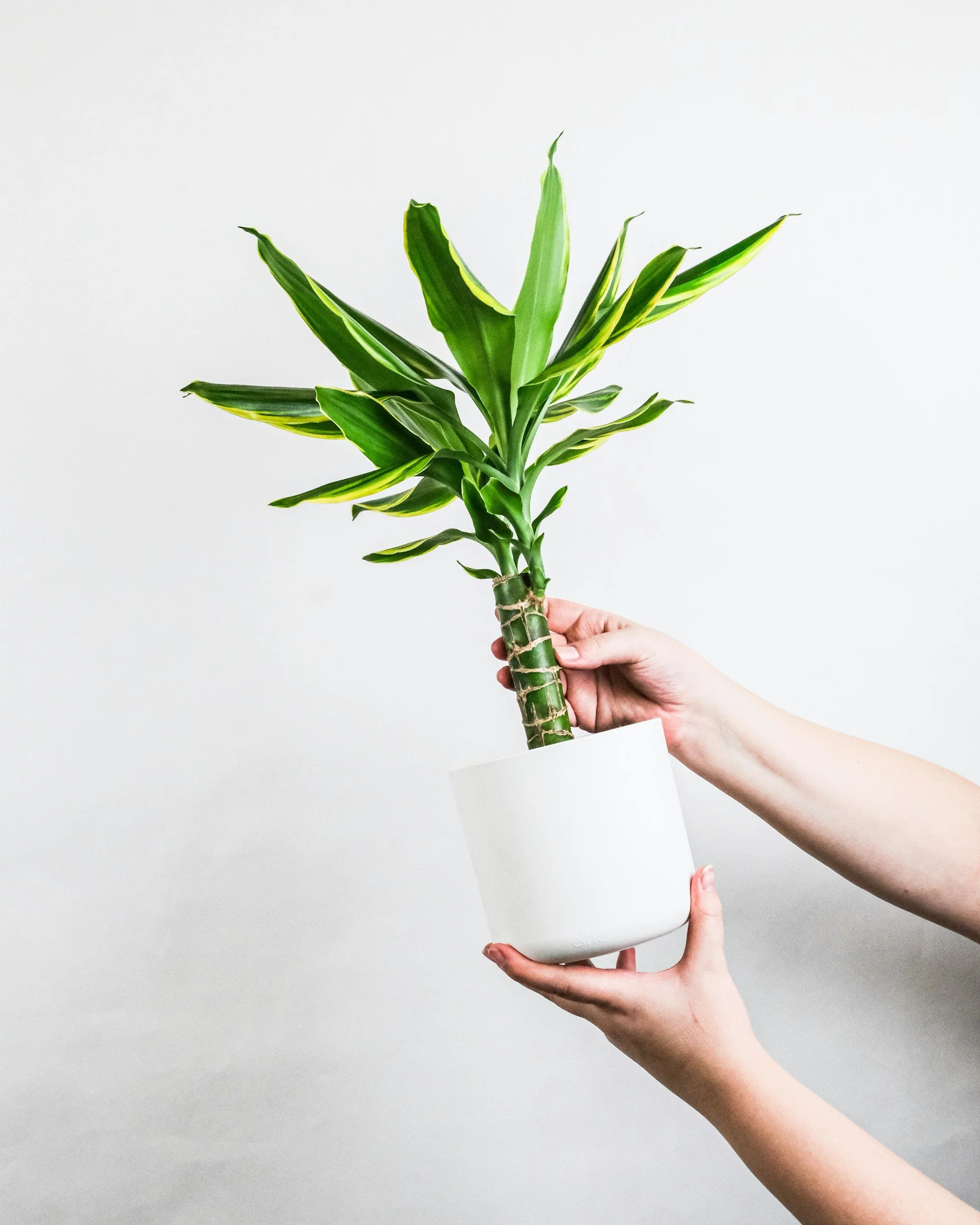
feey @unsplash
Dracaena varieties (Dracaena)
Dracaenas are common in offices for a reason. They tolerate low light, grow slowly, and require minimal care. This genus, which consists of over 190 species of perennials, trees and shrubs, are a tropical plant that is native in Africa, Australia, Central and South America, and Southeast Asia. It thrives in bright, indirect sunlight, and prefers moist, well-drained potting mix with a slightly acidic pH.
Winter care tip: Use filtered or distilled water if possible. They are sensitive to salts, fluoride and chlorine in tap water, which can turn the tips of their leaves brown.
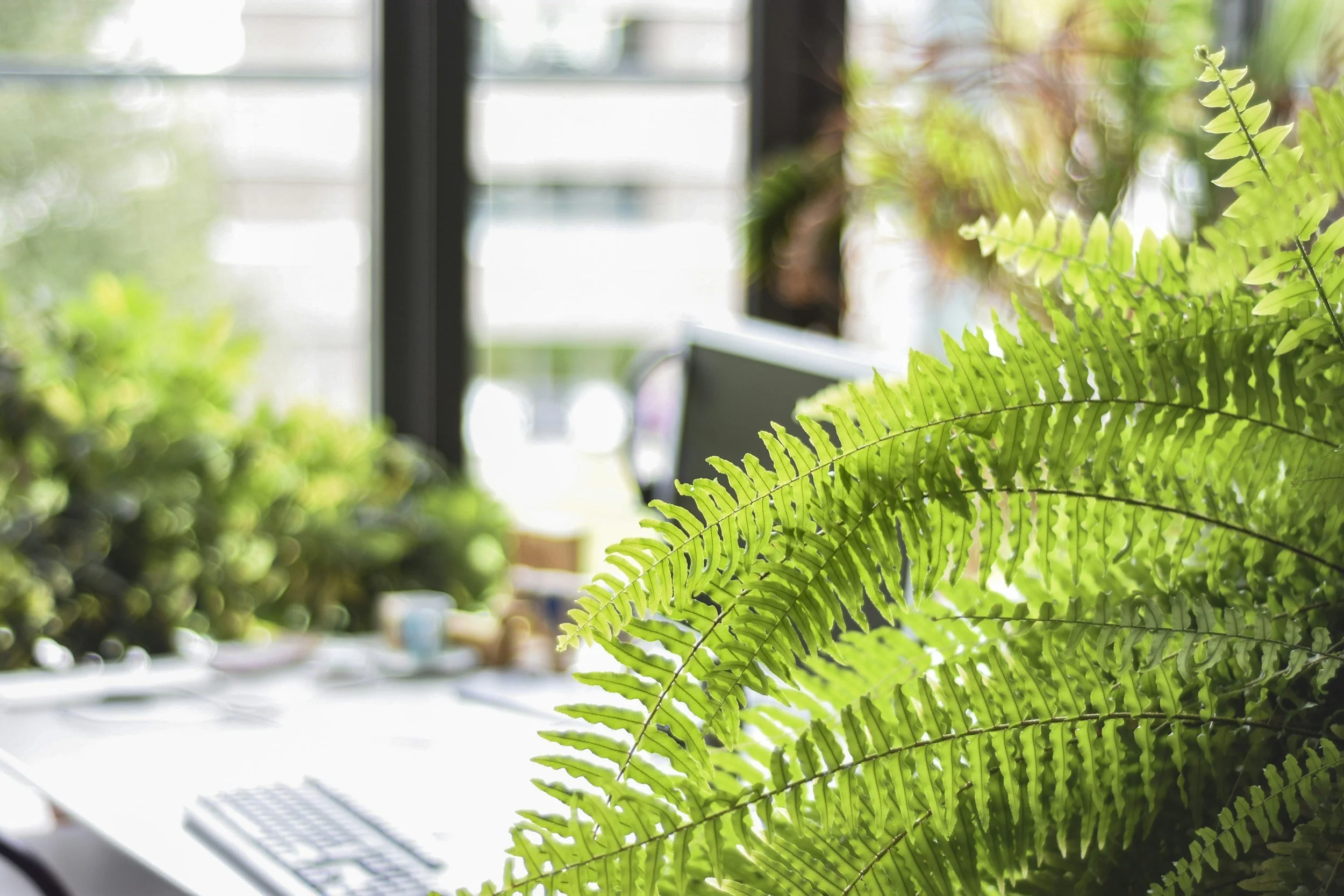
Unknown Wong @unsplash
Boston fern (Nephrolepis exaltata)
Outdoors, Boston ferns are winter hardy to USDA Zones 10-Indoors, they are easily grown in winter. They thrive in higher humidity: if the air around it is too dry, it will be susceptible to scales or spider mites. Boston ferns work well in bathrooms or kitchens with natural light.
Winter care tip: Group with other plants or use a humidifier to prevent leaf drop.
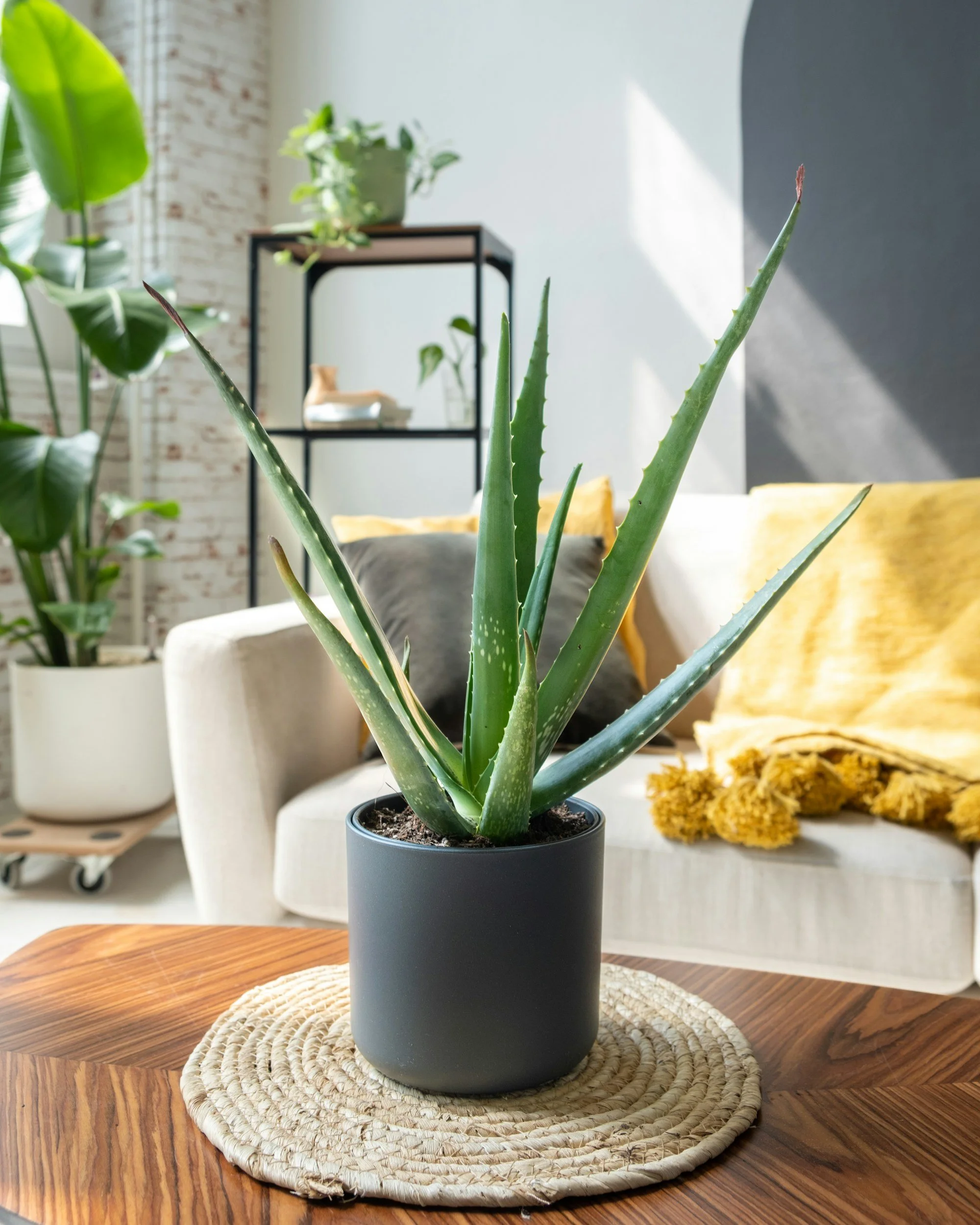
feey @unsplash
Aloe vera (Aloe vera)
Aloe prefers bright light and dry soil – water deeply but infrequently and let the top third of the soil dry out between waterings. While its air-quality role is modest, it offers practical household uses, with the gel from its leaves working as a topical remedy for skin irritation and mild burns (don’t ingest, as the leaves are mildly toxic).
Winter care tip: Reduce watering significantly during winter dormancy. In winter you should double the time between waterings: for example, if you water every 2 weeks in summer, wait 4 weeks before watering again in winter.
Where to place plants for the most benefit
For the maximum benefits of improving air quality in your home, place plants where you spend the most time:
Bedrooms and home offices
Living rooms and common areas
Entryways that collect dust
Group plants together to simplify care and improve humidity. Above all, keep them away from heating vents and cold drafts.
Winter care basics that keep plants working for you
Healthy plants support healthier air. In winter, focus on:
Light: Move plants closer to windows and rotate weekly
Water: Most plants need less water during winter dormancy
Dust: Wipe leaves down monthly to maintain leaf function
Humidity: Group plants or place them in trays filled with small pebbles and water if air is very dry

Vitaly Gariev @unsplash
Plants plus habits: the real clean-air plan
Plants are most effective when paired with simple, consistent habits:
Ventilate kitchens and bathrooms during use
Avoid heavily scented cleaning products
Vacuum with a HEPA filter
Damp-dust surfaces instead of dry wiping
These habits, combined with plants, create meaningful improvements without expensive upgrades.
Frequently asked questions
Do plants really clean indoor air?
They help modestly, but should be viewed as supportive rather than primary solutions.
How many plants per room?
Two to four medium plants per room is a practical starting point.
Are these plants safe for pets?
Some are not. Always consider placement if pets or children may chew leaves.
What if my home has very low light?
Snake plants, pothos, and dracaena tolerate the lowest light levels.

like this? please pin!
No Drastic Changes Required
Improving winter air quality does not require expensive systems or drastic changes. A few well-chosen plants, paired with thoughtful habits, can make your home feel fresher, calmer, and more comfortable during winter.
Start small. One or two hardy plants can make a noticeable difference, and they support a broader goal of sustainable living that focuses on doing less, not buying more.
You may also be interested in…
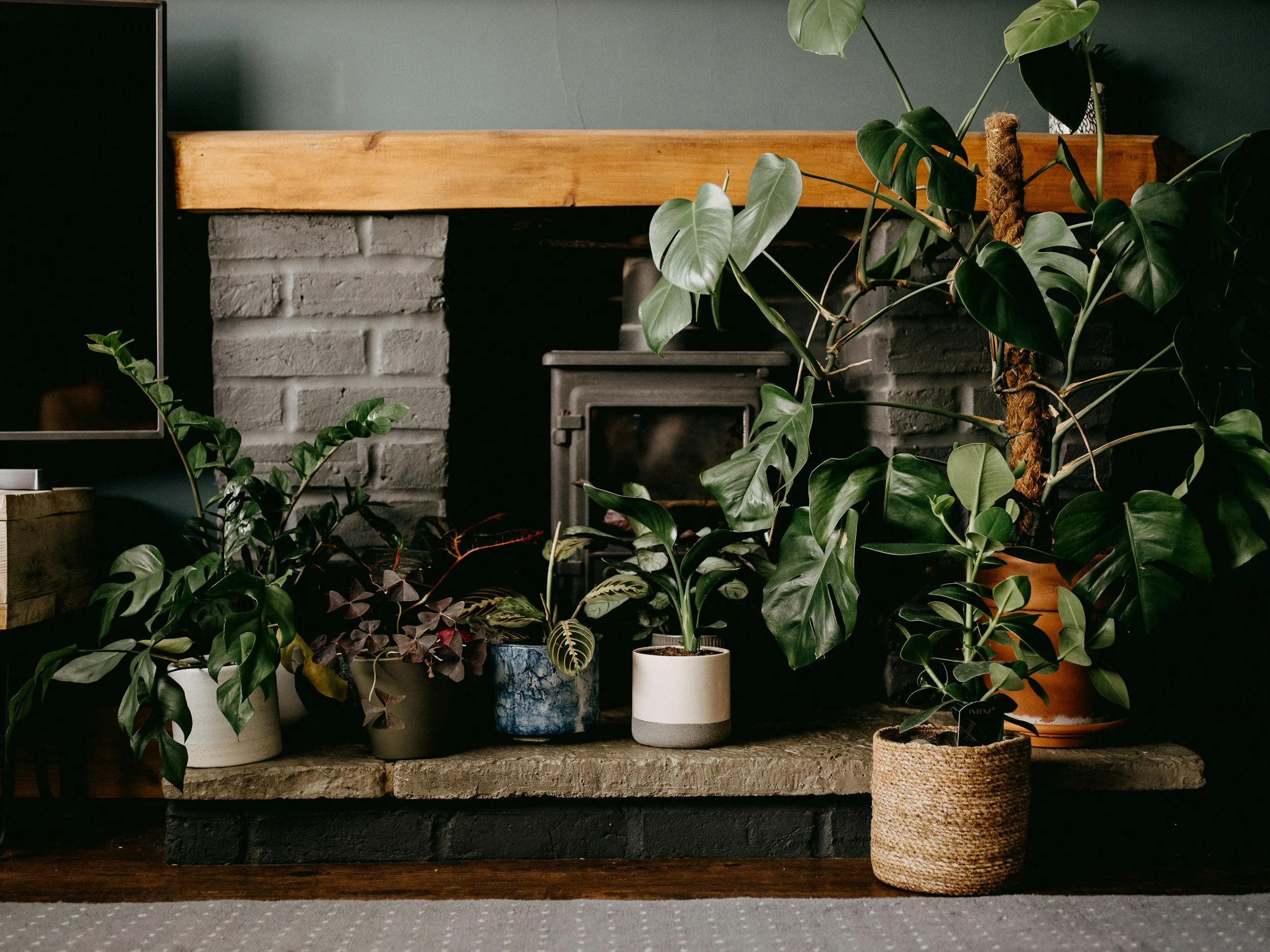




Growing edible plants indoors opens up a world of possibilities. You can start seeds earlier, grow leafy greens year-round, and keep houseplants healthy even during the darkest months of winter. But if you are new to indoor growing, you may be wondering about one of the most frequent questions that arises with indoor growing setups:
Do I really need grow lights for my plants, and if so, how do I choose one?