


Composting During Winter (Including Bokashi Bins)
/Our household only started composting in earnest about a year ago, with the addition of a Bokashi bin to our kitchen (more on that later). Until then, we mainly composted coffee grounds and eggshells, which I added to the garden beds in three seasons of the year. In winter, I stored eggshells I had dried out in the oven beforehand, and dumped coffee grounds in the soil underneath my rose and blueberry bushes. To be honest, I had often wondered what it would mean to compost all of our food scraps, and how I would manage to keep it up in the coldest months of the year. The Bokashi bin has enabled me to compost year-round and more comprehensively, but it’s not the only way you can continue to repurpose food scraps all year long.
Composting is often treated as a warm-weather activity, as something we abandon in winter and pick up again once spring arrives. But composting doesn’t need to stop just because temperatures fall. With the right expectations and a few adjustments, winter composting can be simple, low-effort, and incredibly useful for setting up a productive growing season ahead. It’s also an effective strategy for reducing household waste year round, so that you contribute less to the problem of landfills, which produce harmful greenhouse gases.
Whether you compost outdoors, indoors, or use a Bokashi bin year round, the goal remains the same: keeping valuable organic material out of landfills while building healthier soil over time for your garden. Winter composting may look slower, but it is still working in your (and your garden’s) favor.
This guide explains how composting during winter works, what you can realistically compost outdoors in the cold months of the year, and why Bokashi composting is one of the easiest indoor solutions when traditional piles are frozen solid.
Frank Thiemonge @unsplash
Does Composting Work in Winter?
Yes, composting works in winter, but it slows down significantly.
Composting is driven by microorganisms that break down organic matter. These microbes are most active when temperatures are warm. As winter sets in and temperatures drop, microbial activity slows and may temporarily pause, especially in outdoor compost piles.
This does not mean your compost has failed. It simply means decomposition is delayed until conditions improve. When temperatures rise again in spring, microbial activity resumes and materials continue breaking down.
Think of winter compost as being in “storage mode.” You are still doing the important work of collecting and balancing materials so that your compost is ready to finish decomposing when warm weather returns.
What Happens to Compost in Cold Weather?
When temperatures fall below freezing, compost piles often freeze along with the surrounding soil. This is completely normal.
In winter:
Decomposition slows or stops
Materials remain largely unchanged
Microbial populations become dormant rather than dying off
The good news is that freezing does not harm compost in the long term. Organic materials soften and break down structurally during freeze-thaw cycles, which can actually help speed decomposition later.
In practical terms, winter composting is less about producing finished compost and more about maintaining good habits and preparing future soil amendments.
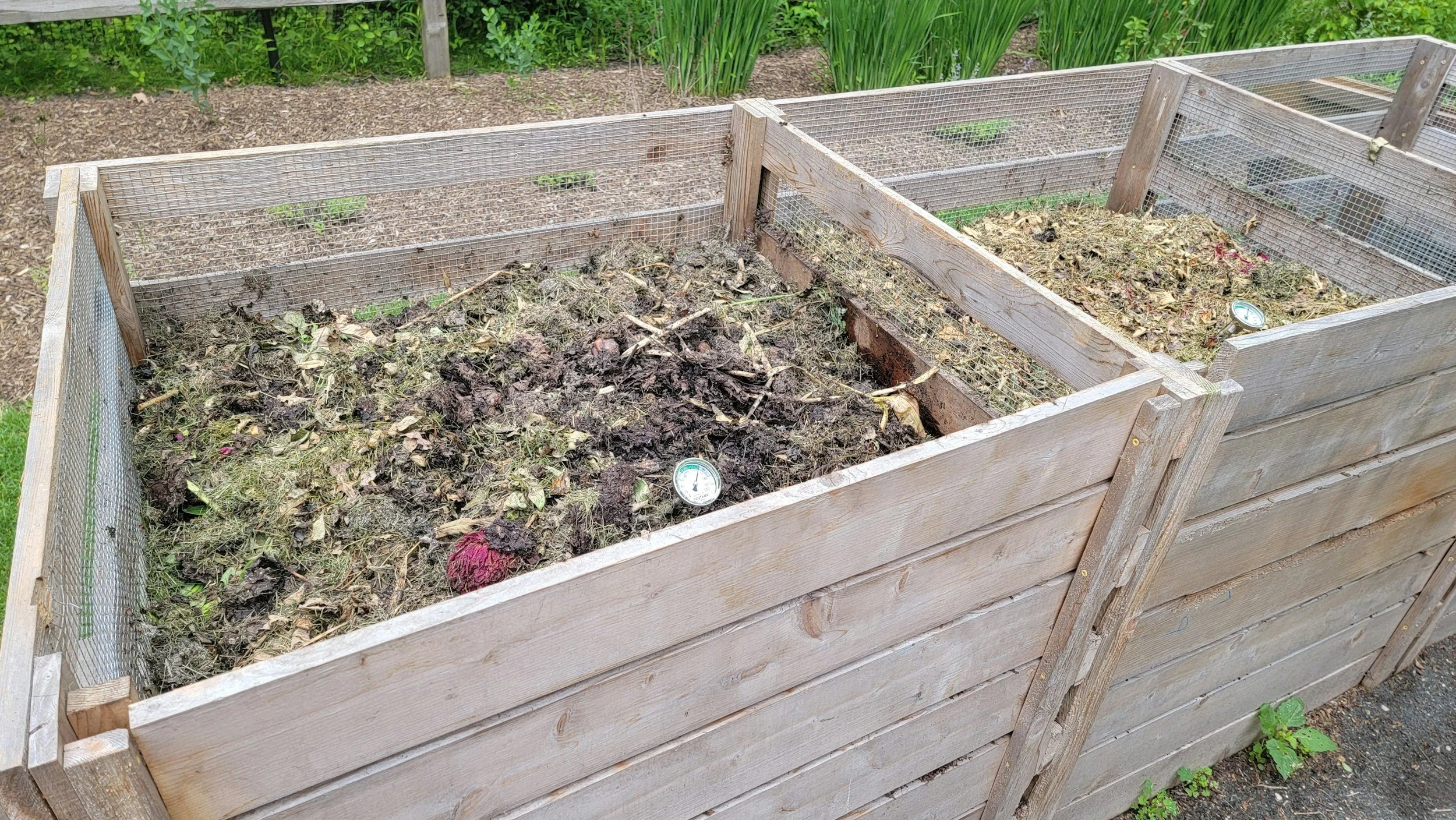
How to Compost Outdoors During Winter
Outdoor composting during winter is still possible, especially if you adjust expectations and focus on simple maintenance rather than active turning.
Choosing the Best Winter Compost Setup
Open compost piles, enclosed bins, and insulated composters can all be used during winter. Enclosed bins tend to perform slightly better because they retain heat and moisture, but even open piles of compost can work if they are properly managed.
Compost tumblers often slow down the most in winter because they lose heat quickly and are harder to insulate.
If you already have a system in place, you don’t need to change it. Winter is definitely not the season to over-engineer your compost setup!
What You Can Add to Compost in Winter
You can continue adding the same materials you compost during the warmer months of the year:
Vegetable scraps
Coffee grounds and filters
Tea leaves
Crushed eggshells (if you normally use them)
Shredded paper and cardboard
Dry leaves saved from fall
Chopping or breaking materials into smaller pieces helps them integrate into the pile more easily once decomposition resumes.
Best Practices for Winter Composting Outdoors
Add extra “browns” such as leaves or shredded paper to balance moisture levels
Avoid frequent turning once the pile freezes
Keep the pile covered to prevent excess moisture from snow and ice
If access to your compost pile becomes difficult, temporarily store kitchen scraps in a sealed container in your freezer
Winter composting outdoors is about consistency, not speed. Even adding scraps once a week is enough to keep things moving in the right direction.
Common Winter Composting Problems (and Easy Fixes)
Frozen compost piles are the most common concern, but they are rarely a problem.
Frozen pile: Completely normal. Leave it alone and resume turning in spring.
Bad smells: Usually caused by too many food scraps without enough carbon. Add shredded paper or leaves.
Pests: Winter often reduces pest activity naturally. Using enclosed bins and burying scraps at least 10 inches deep helps further.
Limited access: Snow and ice can make composting inconvenient. Indoor solutions like Bokashi bins are ideal backups.
Winter composting should feel manageable. If it becomes stressful, simplify your system rather than abandoning it altogether.
Indoor Composting Options for Winter
Not everyone can compost outdoors year-round, especially in colder climates or urban settings. Indoor composting allows you to continue diverting food waste without stepping outside.
Common indoor options include:
Freezer storage for scraps until spring
Worm composting (vermicomposting)
Bokashi composting
Of these, Bokashi composting is the most flexible option for winter, particularly for households that cook regularly. Best of all it produces a rich compost tea that you can give to your houseplants.

Gronnfremtid, CC BY-SA 4.0 <https://creativecommons.org/licenses/by-sa/4.0>, via Wikimedia Commons
What Is Bokashi Composting?
Bokashi composting is a fermentation-based system that uses beneficial microbes to break down food waste in an airtight container.
Unlike traditional composting, Bokashi:
Is anaerobic (no oxygen required)
Does not rely on heat
Works efficiently indoors
Handles materials that usually cannot be composted
This makes it especially useful during winter.
What Can Go in a Bokashi Bin?
Bokashi bins accept nearly all food waste, including:
Meat and fish(in small amounts)
Dairy products (in small amounts)
Cooked foods
Bread and grains
Vegetable scraps
This flexibility makes Bokashi ideal for winter kitchens, when cooking tends to increase and outdoor composting may be limited.
What Bokashi Produces
Bokashi does not produce finished compost right away. Instead, it creates fermented pre-compost material and a liquid byproduct known as Bokashi tea.
The fermented material must still be buried in soil for 2 weeks before planting, or added to a compost pile to finish breaking down, but this step can often be delayed until spring if necessary.
How to Use a Bokashi Bin Successfully in Winter
Using a Bokashi bin during winter is straightforward and low maintenance. You basically add Bokashi bran (made of rice or wheat that has been inoculated with beneficial microbes) to ferment food waste and contain the odor of compost.
Where to Keep a Bokashi Bin Indoors
Bokashi bins can be kept in kitchens, pantries, basements, or utility rooms. When used correctly, they should not smell unpleasant. A strong odor usually indicates air exposure or insufficient Bokashi bran.
A Simple Winter Bokashi Routine
Add a thin layer of Bokashi bran to the bottom of the bin
Add food scraps to the bin
Sprinkle Bokashi bran over each layer
Press materials down to remove air
Seal the lid tightly
Drain liquid every few days
Add water to the tea in a 1:100 ratio of Bokashi tea to water
Once the bin is full, allow it to ferment for two to four weeks before transferring contents outdoors or to another form of storage.
What to Do with Bokashi Compost in Winter
Options include:
Burying in garden beds if soil is workable
Adding to an outdoor compost pile
Storing fermented material in a sealed container until spring
Bokashi compost integrates quickly into soil once temperatures rise.
Bokashi Composting vs Traditional Composting
Bokashi and traditional composting serve different purposes, and many gardeners use both.
Traditional composting:
Produces finished compost
Requires airflow and time
Slows significantly in winter
Bokashi composting:
Works indoors
Handles a wider range of materials
Produces pre-compost rather than finished compost
Lenka Dzurendova @unsplash
Using Bokashi in winter and transitioning materials outdoors in spring can be an efficient year-round strategy.
Winter Composting Tips for Busy or Beginner Gardeners
Winter is not the season to aim for perfection. It is a time to build habits.
Compost what you can, when you can
Combine methods if needed
Focus on reducing waste rather than producing compost immediately
Treat winter as preparation for spring success
Small, consistent actions now lead to healthier soil later.
like this? please pin!
Composting During Winter Builds Better Gardens in Spring
Composting in winter is one of the simplest ways to stay connected to your garden during the off-season. Whether you maintain an outdoor pile, ferment scraps indoors with Bokashi, or do a bit of both, you are laying the groundwork for healthier soil, which is the foundation for stronger, healthier plants and a thriving garden.
If you want to go deeper and learn how composting fits into a complete, sustainable food gardening system, explore our online gardening courses, which include one free beginner course and two paid courses with in-depth lessons on composting, soil health, and eco-friendly growing practices.
Winter may slow your garden, but it doesn’t have to stop your progress. Composting through the colder months is one small step that pays off all year long.
You may also be interested in…



Healthy soil is far more than dirt. Beneath the surface of every productive garden lies a complex ecosystem of microorganisms that help plants grow, resist disease, and access nutrients. Among the most important of these organisms are mycorrhizal fungi, microscopic soil fungi that form beneficial partnerships with plant roots.