



How Eco-Focused Waste Management Can Boost Your Brand
/Several steps follow each other in the making of a green business, and yet waste management remains one of the most critical. Too many small (and even big) businesses promote themselves as “green brands,” only to fall off where it matters the most and generate too much non-recyclable waste.
You can develop a business strategy that aligns with climate goals by doing any of the following:
Switching to more sustainable manufacturing processes
Partnering with eco-conscious suppliers
Reducing fuel production by switching to an electric vehicle fleet
Using recyclable or reusable packaging for your products
Implementing energy-efficient steps in your buildings
Sigmund @unsplash
These are all excellent ideas, yet they’re pointless if your business generates too much waste because it means your carbon footprint will go through the roof anyway. What good is a sustainable manufacturing process or recyclable packaging when your business throws away too much stuff and ends up sending loads of waste to a local landfill?
It’s counterproductive, which is why eco-focused waste management is the key to unlocking a truly green brand.
What do we mean by eco-focused waste management?
Some waste management processes are more environmentally friendly than others. A traditional commercial waste service is unlikely to focus on reducing the amount of waste it takes to a landfill site. Trucks will roll up outside your premises and take a massive load of rubbish away, where it will inevitably sit or be burned, releasing greenhouse gases into the atmosphere.
An eco-focused waste management approach means everything boils down to keeping as much stuff out of landfills as possible.
Instead of offering a simple waste collection service, they provide you with alternatives to help reduce, reuse, and recycle as much of your junk as they can. This will involve separate collections for recycling, donation services to take old equipment or furniture, and so on. It means that, overall, your business produces less waste and can keep its carbon footprint to a minimum.
How to find an eco-conscious waste management partner
A couple of steps are involved in following eco-focused waste management practices, and the main one revolves around finding the right partner for your business. You need a company that will give you a host of tools and services to cut down on non-recyclable waste. Ideally, they’ll use the latest commercial waste management software to streamline their operations and make life even easier for your business.
Software like this helps them plan out routes for optimal efficiency, so they use less fuel and make their overall service more eco-friendly. It also gives you a way of managing orders so you can book specific collections on certain days, reducing cases where a truck drives down but has hardly anything to pick up.
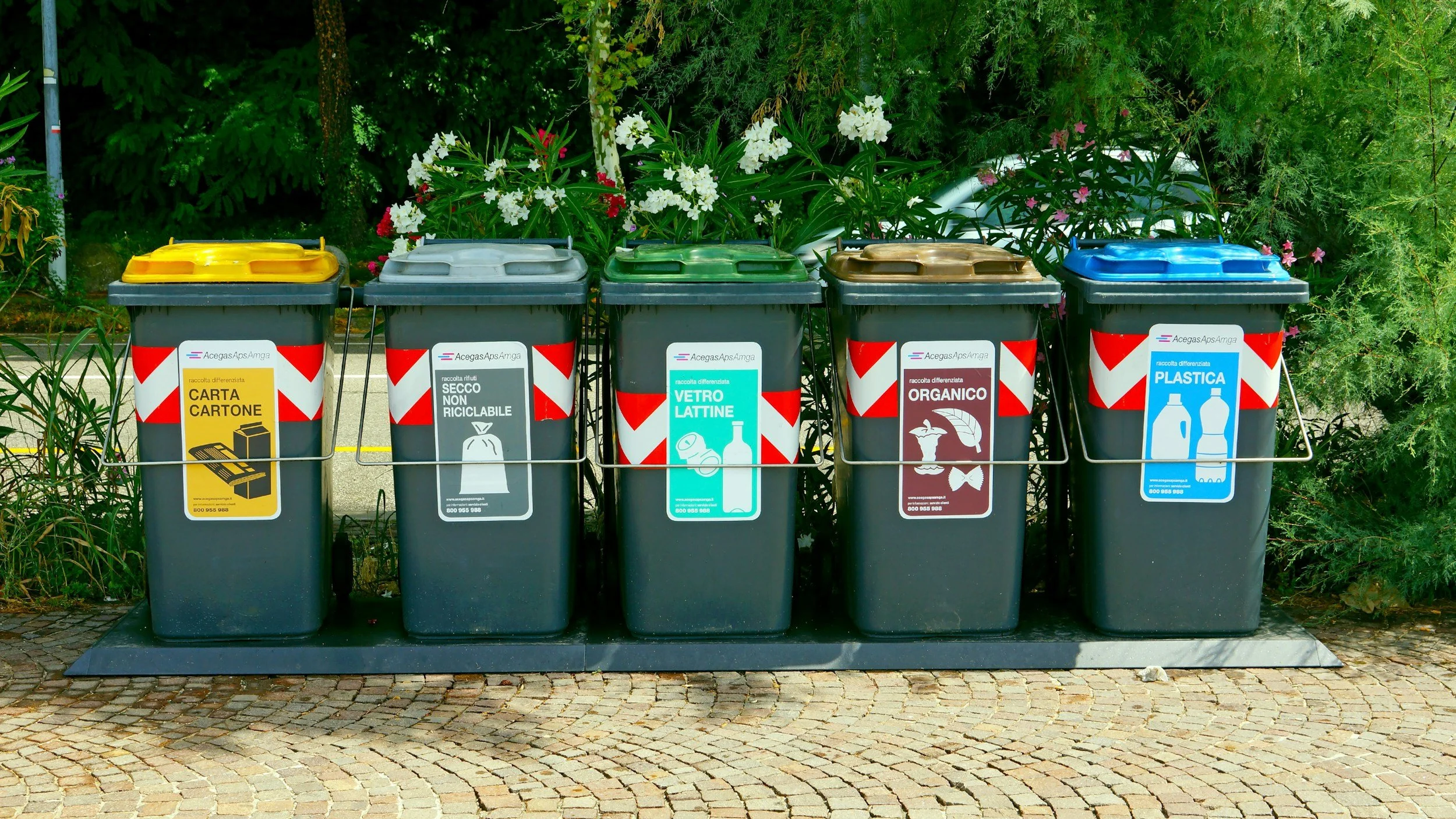
Aside from great software usage, an eco-conscious waste management partner will be able to recycle as much of your waste as possible. They should be able to take all of the following off your hands to either reuse, repurpose, or recycle without sending it to a landfill site:
Cardboard
Paper
Plastic
Metal
Electronics
Furniture
Industrial equipment
Glass
and more
boris misevic @unsplash
You should be able to look at your waste and section it off into recyclable materials for your waste management partner to take away. After doing this, you’re left with the smallest amount of non-recyclable waste ¾ which can be small enough that you don’t even fill up a huge commercial dustbin for a few weeks, instead of filling one per week.
What can you do to manage your business’s waste?
Aside from picking the right waste management partner, you can take great strides towards shifting your business from being a company that produces too much waste to one that’s as green as can be.
And here’s the interesting thing: it’s really very simple.
The problem with a lot of green-focused businesses is that they tend to look at the beginning of things, rather than what comes out at the end. For example, as we mentioned in the introduction, lots of focus goes into improving manufacturing or packaging solutions to reduce waste. Both are excellent ideas - yet you can neglect what comes out of your business during day-to-day activities around the office, etc.
So, here are some ideas that will help you generate less waste in general:
Switch to recyclable materials for things like cups around the coffee machine/water cooler
Educate your employees on how to recycle their waste in the office
Look after your equipment so you can resell or donate it when you’re due for an upgrade
Switch to a paperless business
Another cool idea could be to offer perks to people who bring their own lunch in from home in reusable tubs or boxes. It sounds silly, but it can stop people from going out and buying lunch, only to return with packaging that has to be thrown away.

Domenico Loia @unsplash
There’s also the concept of switching to a work-from-home or flexible routine that keeps people out of the office. In theory this reduces your general waste accumulation because people aren’t in the office for as long.
The benefits of eco-focused waste management for your brand
The core benefit of eco-focused waste management is that you can truly promote your business as a green company. It becomes a core focus of your branding to demonstrate that you take the environment seriously and want to cut down on your potential impact on it. Consumers (and business customers if you’re B2B) will appreciate this and become more likely to engage with your business over similar ones.
like this? please pin!
You can’t enter 2026 or beyond without some key sustainability practices in place, and waste management is at the core of everything. Your other green ideas mean nothing if your business just fills up commercial dustbins with rubbish every week and sends it off to be burned in a landfill. Work on cutting down on your waste production at work, and also partner with the right waste management company so you can recycle and reuse as much stuff as is feasible. When all’s said and done, your brand ¾ and the planet ¾ will benefit.
About the Author:
Jeremy Bowler is a full-time copywriter of 5 years specializing in business and finance. Jeremy graduated from the University of Chester with a 2:1 in business accounting and finance in 2005. He's an avid traveler, has taught English in Nepal, Malaysia, and Japan and has produced copy for Neil Patel, Entrepreneur and Metro amongst many other high-end publications in the past.
You may also be interested in…





Several steps follow each other in the making of a green business, and yet waste management remains one of the most critical. Too many small (and even big) businesses promote themselves as “green brands,” only to fall off where it matters the most and generate too much non-recyclable waste.