



Are Spotted Lanternflies Harmful to Gardens? What to Do If You See Them
/If you've spotted a brightly colored insect with black spots and red wings hopping across your garden, you’re most likely seeing a spotted lanternfly. In the US, spotted lanternflies were first detected in Berkes County, PA in 2014. They have spread rapidly across much of the eastern United States in recent years, leaving many gardeners wondering whether they should be worried.
The good news is that spotted lanternflies rarely destroy vegetable gardens or flower beds outright, so if you’re growing an edible garden, there’s no need to panic. The bad news is that they can damage trees, vines, and other plants by feeding on their sap, and large infestations can weaken already stressed plants over time. They also produce a sticky substance that attracts other pests and encourages the growth of black sooty mold.
Here's what every gardener should know about spotted lanternflies, the damage they can cause, and the best ways to manage them without relying on harsh chemicals.
What Are Spotted Lanternflies?
The spotted lanternfly (Lycorma delicatula) is an invasive planthopper native to southern China, Taiwan and Vietnam. Although they resemble moths, spotted lanternflies are actually sap-feeding insects. They use piercing mouthparts to extract nutrients from plants rather than chewing leaves or stems.
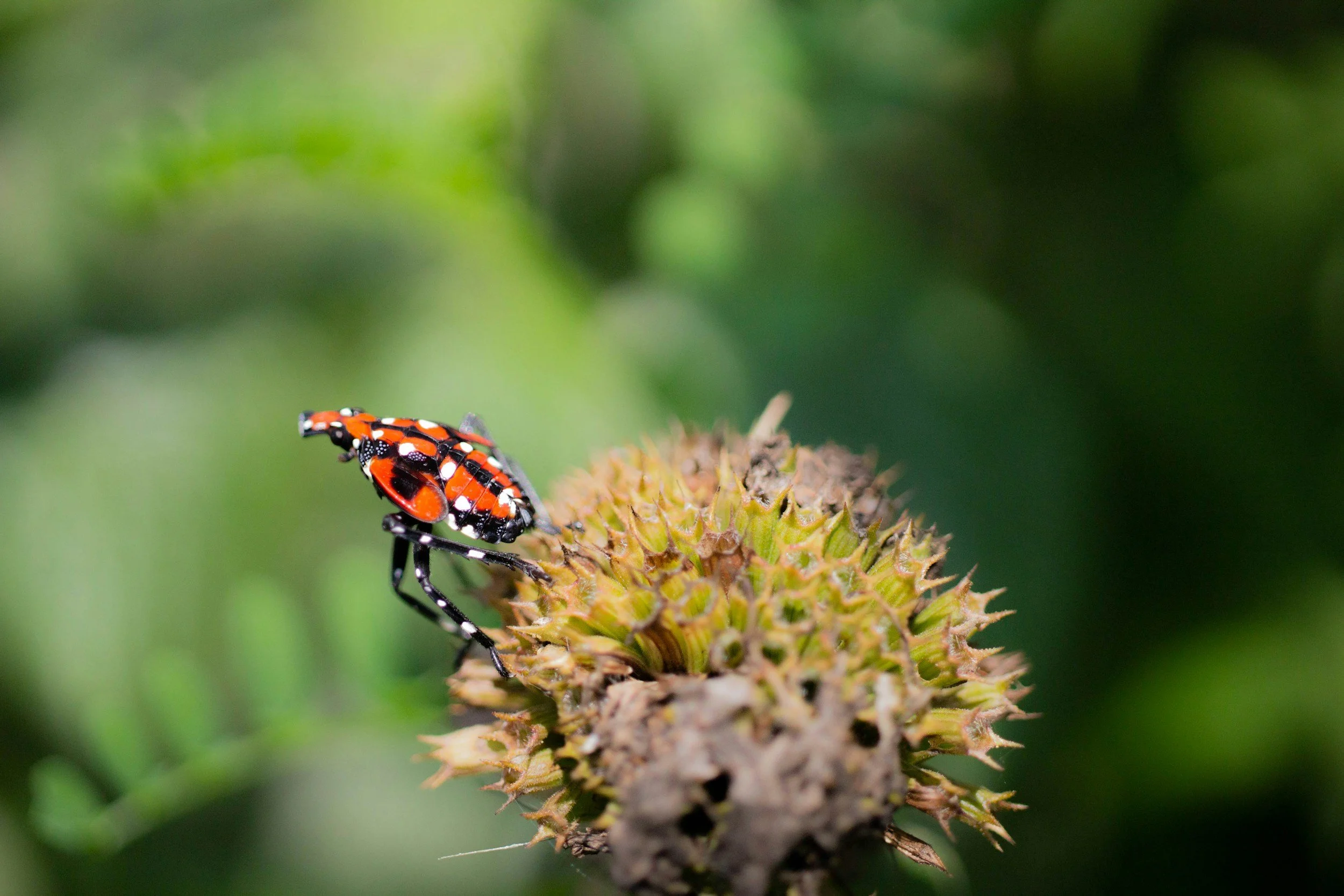
Jen Dries @unsplash
Their appearance changes dramatically throughout the year:
Egg masses (fall through spring): Gray, mud-like patches that may contain 30–50 eggs.
Early nymphs/first instar (spring): Small and black with white spots.
Mid-stage nymphs/second instar (late spring/summer): Larger versions of the first instar
Late nymphs/3rd instar (summer): Bright red with black and white markings.
Adults (late summer through fall): Gray forewings with black spots and brilliant red hindwings visible when they fly.
What attracts spotted lanternflies to my yard?
Spotted lanternflies are attracted to yards that contain their preferred host plants, especially tree-of-heaven, an invasive tree they rely on heavily throughout their life cycle. They are also commonly found on grapevines, fruit trees, maple trees, black walnut, willow, birch, and certain ornamental plants. Even if you don't have these plants, lanternflies may still pass through your yard if they're feeding on nearby vegetation or moving to new areas. In my yard, I see them congregate in small numbers on my raspberry and blackberry vines, though I can’t say that they’ve caused any noticeable damage.
During late summer and fall, adult spotted lanternflies often gather in large numbers on trees and other vertical surfaces as they feed and prepare to lay eggs. Keeping your landscape healthy, removing tree-of-heaven if it's growing on your property, and scraping off any egg masses you find during the fall, winter, or early spring can help reduce the number of lanternflies around your home. However, because these insects can fly and hitchhike on vehicles and outdoor equipment, even well-maintained yards may occasionally attract them.
Are Spotted Lanternflies Harmful to Gardens?
The answer depends on what you're growing.
Unlike Japanese beetles or tomato hornworms, spotted lanternflies don't chew leaves or eat fruit. Instead, they feed on plant sap, which can weaken plants when large numbers are present. In home gardens, they are generally more of a nuisance than a catastrophic pest. However, repeated heavy feeding can stress susceptible plants.
Plants that may be affected include these:
Grapevines
Fruit trees
Maple trees
Birch
Willow
Black walnut
Hops
Roses
Some ornamental shrubs
Vegetables typically suffer much less damage than woody plants. Tomatoes, peppers, cucumbers, squash, beans, and leafy greens are not considered preferred hosts, although lanternflies may occasionally land on them while moving through the garden.
Why Large Infestations Are a Problem
One or two lanternflies aren't usually cause for alarm. Problems arise when dozens, or even hundreds, gather on a single plant.
Large infestations can reduce plant vigor, slow growth, and increase the stress on plants during periods of drought. In severe cases, large numbers of spotted lanternflies can cause branch dieback and reduce fruit production over time.
Healthy, well-established trees can often tolerate moderate feeding, but young trees and already stressed plants are more vulnerable to damage.
Honeydew and Sooty Mold
One of the biggest problems caused by spotted lanternflies isn't the feeding itself. As they consume sap, they excrete large amounts of a sugary liquid called honeydew, a sticky, sugary waste product. This is the same substance that aphids excrete, which is why ants love to “farm” them!
Honeydew can coat leaves, cover outdoor furniture, attract ants, yellowjackets, bees, and other insects, and encourage black sooty mold to grow.
Although sooty mold doesn't infect plants directly, it can block sunlight from reaching leaves, reducing photosynthesis and making plants look unhealthy.
Their Favorite Host: Tree-of-Heaven
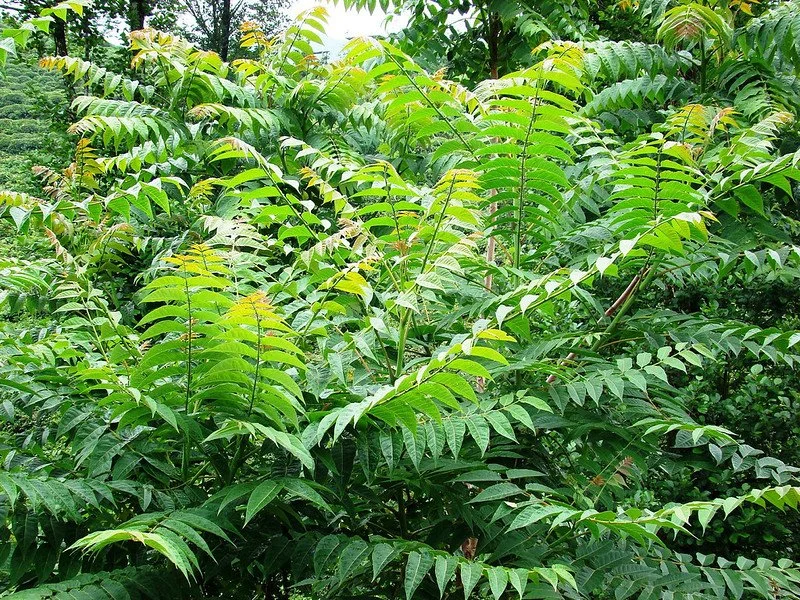
NatureServe @flickr
One reason spotted lanternflies have spread so quickly is their strong preference for the invasive tree-of-heaven (Ailanthus altissima). This fast-growing invasive tree is common along roadsides, vacant lots, and forest edges. While lanternflies feed on many plants, tree-of-heaven is one of their favorite hosts.
If you have tree-of-heaven growing on your property, removing it can help reduce suitable habitat. However, mature trees will usually resprout aggressively, so removal is most successful when combined with appropriate follow-up management.
Should You Kill Spotted Lanternflies?
Many state agriculture departments encourage homeowners to eliminate spotted lanternflies whenever practical, particularly in areas where populations are still expanding.
If you see only a few insects:
Step on them.
Swat them into a container of soapy water.
Vacuum large numbers from decks or patios if necessary.
In my own garden, I’ve tried spraying the nymphs with vinegar (which seems only to affect the first instar) or water infused with peppermint oil (which seems to get rid of them – not sure if it’s killing them, however). Fortunately, I’ve seen fewer of them in my garden this year compared to last year.
Keep in mind that spotted lanternflies are surprisingly quick jumpers. They usually jump forward, so approaching from the front often makes them easier to catch.
How to Protect Your Garden Naturally
Fortunately, most home gardens can be managed without broad-spectrum insecticides. Here are some ways you can manage their populations.
1. Destroy Egg Masses
From fall through early spring, inspect tree trunks, fences, outdoor furniture, firewood, rocks, and deck railings.
Scrape egg masses into a container filled with rubbing alcohol or hand sanitizer to kill the eggs.
2. Remove Tree-of-Heaven
If practical, eliminate young volunteer trees before they mature. Always confirm identification before removal, since tree-of-heaven is sometimes confused with native sumacs or black walnut seedlings.
3. Keep Plants Healthy
Healthy plants tolerate insect feeding much better than stressed ones.
Support your landscape by watering deeply during drought, applying mulch around trees and shrubs, avoiding unnecessary pruning during extreme heat, and maintaining healthy soil with compost (preferably homemade).
4. Avoid Unnecessary Pesticides
Broad-spectrum insecticides often kill beneficial insects along with pests. In most home gardens, they're unnecessary unless a severe infestation threatens valuable trees or vineyards. Instead, use integrated pest management methods to reduce pest populations and keep your garden healthy overall. Remember, it’s normal to have some pests in your garden.
Don't Move Them to New Areas
Spotted lanternflies are excellent hitchhikers. In fact, that’s exactly how they spread outside of the Asian countries from where they originated.

aberkov, CC BY 4.0 <https://creativecommons.org/licenses/by/4.0>, via Wikimedia Commons
Before traveling from an area in which there are known cases of spotted lanternflies, inspect your vehicles, campers, and trailers. Also be sure to inspect your outdoor furniture, firewood and lawn equipment for nymphs, flies, or eggs. Egg masses are especially easy to overlook because they resemble dried mud.
Preventing accidental transport remains one of the best ways homeowners can slow the spread of this invasive insect.
Do Birds Eat Spotted Lanternflies?
When lanternflies first appeared, many scientists wondered whether native predators would recognize them as food.
The encouraging news is that several species now do.
Researchers and homeowners have observed these animals consuming spotted lanternflies:
Chickens
Wild turkeys
Cardinals
Catbirds
Blue jays
Carolina wrens
Some spiders
Praying mantises
Although natural predators won't eliminate infestations entirely, they may gradually help reduce local populations as ecosystems adapt. So creating a wildlife-friendly garden by planting native flowers, shrubs, and trees can support the birds and beneficial insects that contribute to natural pest control.
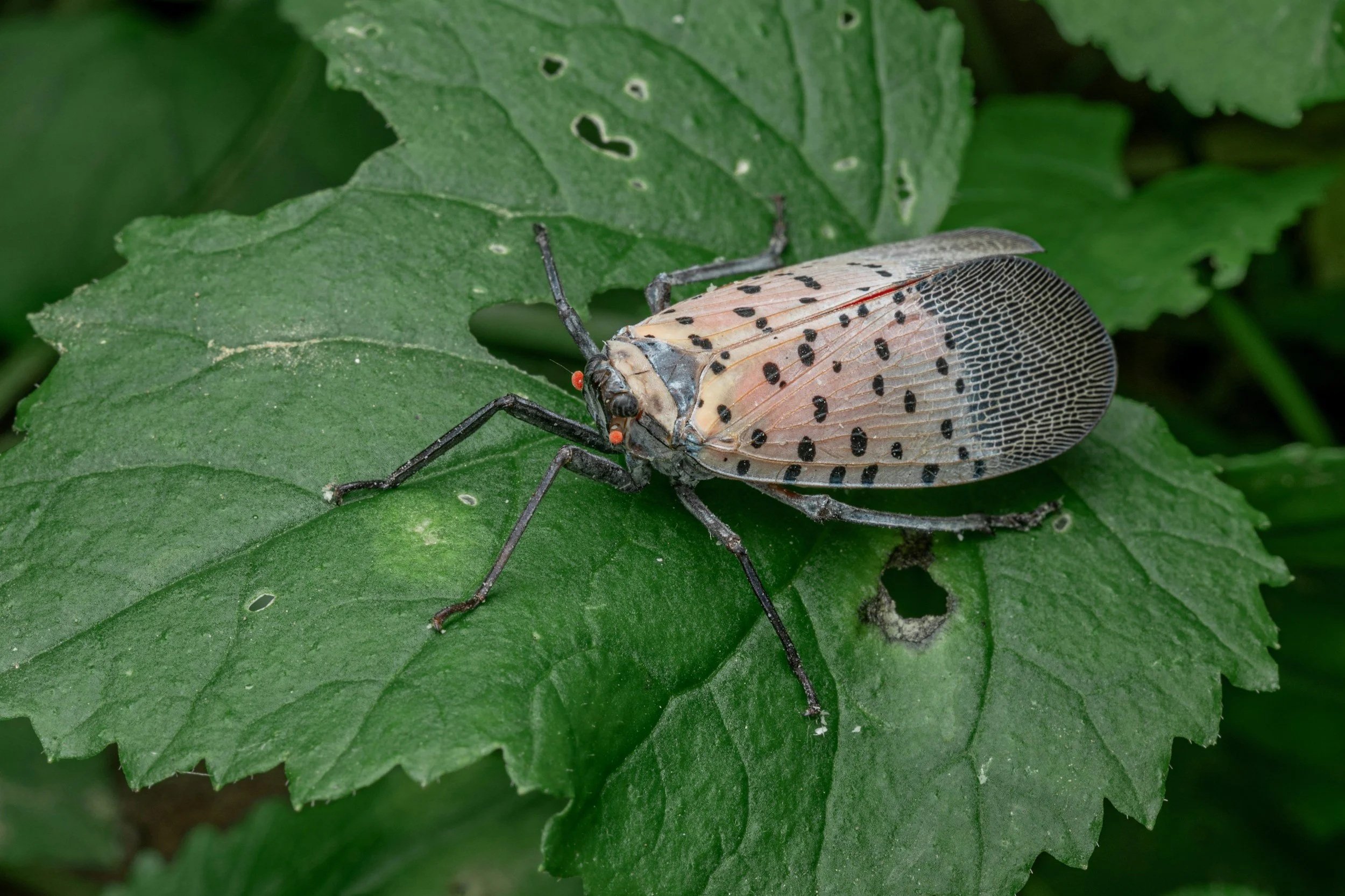
Tao Yuan @unsplash
Less Destructive to Your Garden
Finding spotted lanternflies in your yard can be unsettling, but there's no need to panic. While they can damage trees, grapevines, and ornamental plants during heavy infestations, they're generally less destructive to vegetable gardens than many other common garden pests.
The best approach is to stay vigilant. Destroy egg masses when you find them, remove invasive tree-of-heaven where appropriate, protect the health of your plants, and eliminate lanternflies when possible. By combining these simple strategies with a healthy, biodiverse landscape, you can help reduce their impact while supporting the beneficial insects and birds that keep your garden thriving.
Frequently Asked Questions
-
Spotted lanternflies are attracted to yards with their favorite host plants, especially invasive tree-of-heaven, as well as grapevines, fruit trees, maple trees, and some ornamental plants. They may also appear even if you don't have these plants, since they can fly in from nearby areas or hitchhike on vehicles and outdoor equipment.
-
Healthy mature trees usually survive spotted lanternfly feeding. However, repeated heavy infestations can weaken trees, especially when combined with drought, disease, or other stresses.
-
No. They do not bite, sting, or spread diseases to humans or pets.
-
Not usually. They prefer woody plants such as trees, grapevines, and certain ornamentals. Most vegetables are not major hosts.
-
Many states ask residents to report sightings, particularly if the insect has not yet become established in the area. Check with your state's department of agriculture or cooperative extension office for current reporting recommendations.
-
Probably not completely. Like many invasive insects, spotted lanternflies are likely to become part of the landscape in affected regions. Over time, native predators, parasites, and improved management practices may help reduce their populations.
You may also be interested in…



If you've spotted a brightly colored insect with black spots and red wings hopping across your garden, you’re most likely seeing a spotted lanternfly. In the US, spotted lanternflies were first detected in Berkes County, PA in 2014. They have spread rapidly across much of the eastern United States in recent years, leaving many gardeners wondering whether they should be worried.