


Composting in Fall: What to Add, What to Avoid, and How to Keep It Working
/Fall is a good time of year to start a compost pile or give an existing one a boost. It’s the season when gardens are being cleared, leaves are falling, and there’s an abundance of organic material that can be turned into nutrient-rich compost for this season’s or next spring's garden.
malwina nogaj @unsplash
The challenge is in knowing what belongs in the compost pile, what should stay out, and how to keep decomposition going as temperatures fall. The good thing is, fall also provides something composters often struggle to find during the rest of the year: an abundant supply of carbon-rich "brown" materials.
With a little planning, you can turn a lot of your fall garden and yard cleanup into a valuable soil amendment instead of sending it to the landfill.
Take Advantage of Fall Leaves
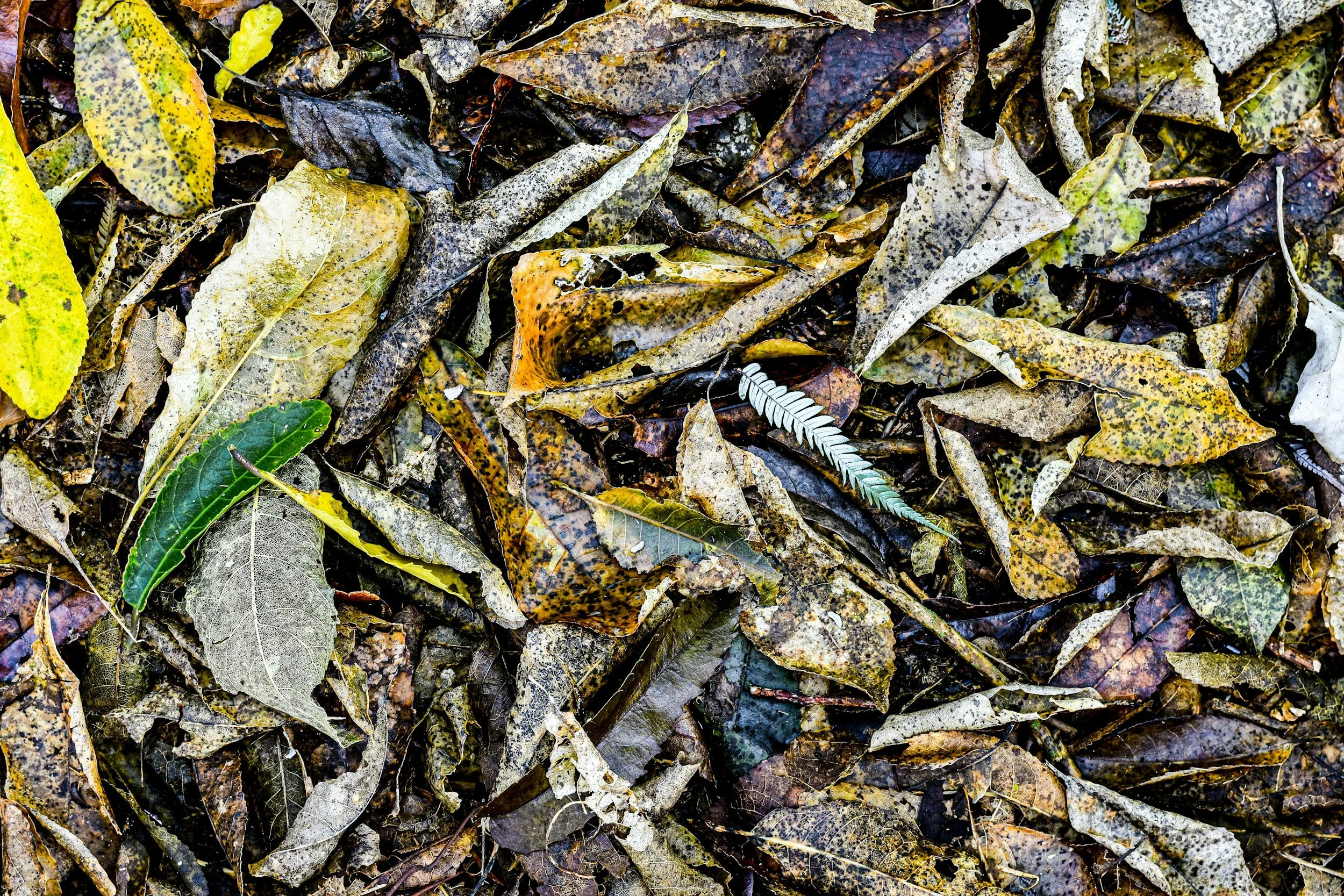
Fallen leaves are composting gold. They are rich in carbon, which helps balance nitrogen-rich materials such as kitchen scraps and fresh plant debris.
You can add leaves directly to your compost pile, but they will decompose much faster if you shred them first. Whole leaves, particularly large or tough ones, can mat together and restrict airflow. Running over them with a lawn mower or using a leaf shredder creates smaller pieces that microbes can break down more easily.
You don't need to compost every leaf immediately. Dry leaves can be stored in bags, bins, or a covered pile and gradually added to your compost throughout the winter and spring.
This is especially useful because kitchen scraps are high in nitrogen. Having a supply of dry leaves available makes it easy to cover food scraps and maintain a healthier balance between "greens" and "browns."
And remember that composting isn't the only good use for fall leaves. You can also use them as mulch or leave some beneath trees and shrubs, where they provide habitat for overwintering insects and gradually return organic matter to the soil.
What Else Can You Add to Fall Compost?
Fall garden cleanup can provide lots of additional compost ingredients.
Healthy annual plants, spent vegetable plants, flower stalks, weeds that have not gone to seed, grass clippings, and plant trimmings can generally go into the compost pile. Chopping or cutting large plant material into smaller pieces will help it break down more quickly.
You can continue adding ordinary kitchen compost materials as well, including fruit and vegetable scraps, coffee grounds, tea leaves, crushed eggshells, and other plant-based food waste.
The key is to combine nitrogen-rich materials, commonly called "greens," with carbon-rich "browns."
Greens include materials like fresh grass clippings, vegetable scraps, coffee grounds, and freshly cut garden plants. Browns include fallen leaves, straw, shredded untreated cardboard, small twigs, and other dry plant material.
You don't have to achieve a scientifically perfect ratio every time you add something. A practical approach is to make sure you are adding plenty of brown material whenever you add fresh greens or kitchen scraps. If your compost becomes wet, slimy, or smelly, that's often a sign that it needs more carbon and airflow.
What Should Stay Out of the Compost Pile?
Fall garden cleanup also produces materials that should be kept out of a typical home compost pile.
Dan Stephens @unsplash
Be cautious about composting plants that are heavily diseased. A properly managed hot compost pile can reach temperatures capable of destroying many plant pathogens, but many backyard piles never remain uniformly hot enough for long enough to guarantee that result. You you’re your compost pile to reach temperatures of at least 140⁰ F (60⁰ C), according to most agricultural extensions.
If you're unsure whether your pile reaches adequate temperatures, it may be safer to dispose of seriously diseased plant material through an appropriate local yard-waste program rather than returning it to your garden.
The same caution applies to mature weeds that have already produced seeds. Some seeds can survive the composting process and return to your garden when you spread the finished compost.
You should also avoid adding meat, fish, bones, dairy products, fats, oils, and greasy cooked foods to a conventional backyard compost pile. These materials can produce odors and attract rodents and other animals.
Pet waste from dogs and cats should not go into compost that will eventually be used around food crops.
Finally, don't add plant material that has been treated with a persistent synthetic herbicide unless you know the product will break down safely during composting. Some herbicides can survive the composting process and potentially damage plants when contaminated compost is later applied to the garden.
Keep Your Compost Moist, but Not Wet
Moisture is essential for decomposition because the microorganisms responsible for breaking down organic matter need water. A healthy compost pile should generally feel similar to a wrung-out sponge: damp, but not dripping wet.
Fall weather can complicate this. Heavy rain can leave an uncovered pile waterlogged, while dry, windy weather can remove moisture surprisingly quickly. If your pile becomes saturated, covering it with a tarp or lid can help. If it feels dry several inches below the surface, add water as you turn it.
Too much water pushes air out of the spaces between compost materials, encouraging anaerobic decomposition. That's when compost can begin to smell unpleasant. Adding dry leaves or shredded cardboard can help absorb excess moisture while restoring some structure to the pile.
Don't Forget About Air
Composting microorganisms need oxygen, which is why turning your compost pile can accelerate decomposition.
Use a garden fork or compost aerator to mix the contents periodically, bringing material from the outside toward the center. Turning also gives you an opportunity to check moisture levels and break apart clumps of leaves or grass. You don't necessarily have to turn compost constantly. If you're willing to wait longer for finished compost, a relatively passive pile can still break down. But occasional turning will generally produce compost more quickly and reduce the likelihood of unpleasant odors.
What Happens to Compost During Winter?
As temperatures fall, your compost pile will probably slow down. That's normal.
A large, well-balanced pile can retain considerable heat in its center, even when the surrounding air is cold. Smaller piles and bins tend to cool more quickly. Once the pile becomes cold enough, microbial activity slows dramatically.
That doesn't mean you need to stop composting.
You can continue adding kitchen scraps and other appropriate materials throughout winter. Cover each addition with stored leaves or another brown material. The pile may not appear to be doing much, but decomposition will accelerate again when temperatures rise.
There is no need to continuously turn a frozen or nearly frozen pile. Instead, concentrate on maintaining a reasonable balance of materials and keeping excess precipitation out.
Sebastian Schuster @unsplash
Save Some Leaves for Later
One of the smartest things you can do in fall is save a supply of dry leaves rather than putting all of them into the compost pile at once.
During spring and summer, gardeners often have an abundance of nitrogen-rich materials like grass clippings, weeds, vegetable scraps, and fresh garden trimmings but relatively few dry brown materials.
Your fall leaves solve that problem.
Store shredded leaves somewhere reasonably dry and use them throughout the coming year whenever your compost needs additional carbon. They can also serve as mulch or eventually be turned into leaf mold, another excellent soil amendment.
Fall cleanup doesn't have to mean hauling away everything the garden produced during the growing season. Much of that material represents nutrients and organic matter that can be recycled right where you live.
By combining fallen leaves with appropriate garden debris and kitchen scraps, keeping diseased plants and problematic materials out, and paying attention to moisture and airflow, you can build a compost pile this fall that will eventually return valuable organic matter to your garden.
Even if decomposition slows during winter, the process isn't over. When warmer weather returns, your compost pile will come back to life, turning this fall's garden leftovers into something your soil can use for seasons to come.