



How Hydroseeding Is Transforming Lawn Establishment and Erosion Control Across the Country
/Establishing a lush, healthy lawn or stabilizing a bare slope has never been more achievable for homeowners and land managers alike. Thanks to advances in turf technology and application methods, more people are discovering faster, more cost-effective ways to grow grass and protect soil. Among the most significant developments in this space is hydroseeding, a method that has quietly moved from commercial construction sites to residential backyards, earning a reputation for reliable results and environmental responsibility. Understanding why this technique works so well, and when it makes the most sense to use it, can help property owners make smarter decisions about their land.

Adam Kring @unsplash
What Hydroseeding Actually Is and How the Process Works
Hydroseeding, sometimes called hydraulic mulch seeding, involves mixing grass seed, water, fertilizer, and a fiber mulch together into a slurry that is then sprayed evenly across a prepared soil surface. The mulch component, typically made from wood fiber or recycled paper, plays a critical role in the process. It holds moisture around the seed, regulates soil temperature, and reduces the impact of rain or irrigation that could otherwise displace seeds before they germinate. The result is a protective layer that creates near-ideal conditions for fast, uniform germination.
Unlike dry seeding, which relies on wind or mechanical spreaders to distribute seed, hydroseeding ensures that seed, nutrients, and moisture retention materials are applied simultaneously and evenly. This integrated approach reduces the patchiness that often plagues traditional seeding methods. The slurry adheres to the soil surface, even on slopes, making it particularly effective in challenging terrain where seed runoff would otherwise be a problem.
The Environmental Case for Hydroseeding
Beyond its practical advantages, hydroseeding offers genuine environmental benefits that align with broader sustainability goals. Bare soil is one of the primary contributors to erosion, sediment runoff, and water quality degradation. When rain hits unprotected ground, it carries topsoil, nutrients, and pollutants into nearby waterways, disrupting aquatic ecosystems and reducing the agricultural value of the land. Establishing vegetation quickly is one of the most effective ways to interrupt this cycle.
The Environmental Protection Agency has long recognized the relationship between vegetative cover and watershed health, and according to the EPA, controlling stormwater runoff and erosion is a central strategy for protecting water quality across the country. Hydroseeding directly supports these goals by establishing ground cover faster than conventional seeding, reducing the window during which bare soil is vulnerable. Many municipalities and state transportation departments now require erosion control measures on construction sites, and hydroseeding has become a go-to solution for meeting those requirements efficiently.
Comparing Hydroseeding to Sod and Traditional Seeding
Property owners evaluating their options typically weigh three main choices: sod, traditional dry seeding, and hydroseeding. Each has its place, but understanding the trade-offs helps clarify when hydroseeding offers the clearest advantage.
Sebastian Schuster @unsplash
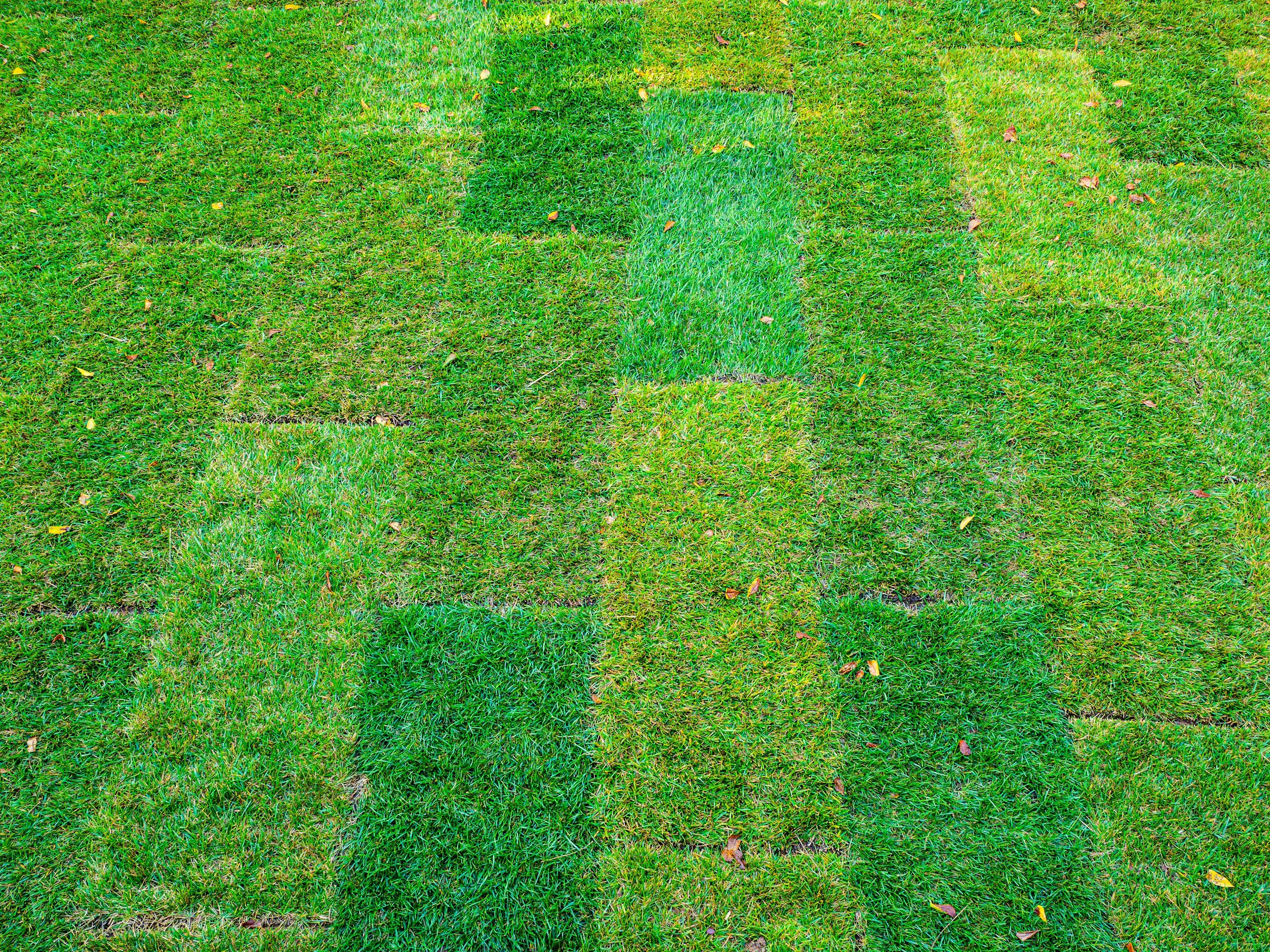
Sod delivers an instant lawn, which is its primary appeal. However, it comes at a significantly higher cost, requires intensive watering during the establishment period, and can struggle to root properly in certain soil conditions or during extreme heat. It is also limited in the grass varieties available, since sod farms grow only the most commercially viable species.
Traditional dry seeding is the least expensive option upfront, but it demands careful timing, precise soil preparation, and consistent moisture management. It is also more vulnerable to seed displacement from rain and irrigation, and germination can be uneven, leading to bare patches that require reseeding.
Hydroseeding occupies a middle ground that many find ideal. It typically costs less than sod while producing more uniform results than dry seeding. The mulch layer reduces watering frequency during the critical germination phase, and the technique accommodates a wide range of grass species and custom seed blends tailored to regional climates and soil types. For large areas or irregular terrain, the efficiency gains become even more pronounced.
Practical Applications Beyond Residential Lawns
While hydroseeding has gained popularity among homeowners, its applications extend well beyond the residential lawn. Highway departments rely on it to revegetate roadsides and embankments following road construction. Golf course developers use it to establish fairways and rough areas quickly and uniformly. Reclamation projects at former industrial or mining sites depend on it to restore native plant communities to disturbed land.
Wildfire recovery is another area where hydroseeding has proven valuable. After a fire burns through a landscape, the loss of vegetation leaves hillsides extremely vulnerable to erosion, especially during the first rainy season following the burn. Aerial and ground-based hydroseeding operations can cover large burned areas rapidly, applying seed mixes that include native grasses and erosion-control additives that give the landscape its best chance at recovery before heavy rains arrive.
Agricultural operations also benefit from hydroseeding when establishing cover crops or pasture grasses. The ability to apply seed and fertilizer in a single pass, even on uneven ground, makes it a practical choice for farms looking to improve soil health and reduce erosion between planting seasons.

Daniel Helpiansky @unsplash
Choosing the Right Provider and Preparing for Success
Getting the most out of hydroseeding depends on selecting the right seed mix for your region, preparing the soil adequately before application, and following through with proper watering during the germination period. Most established providers will conduct a site assessment and recommend a seed blend suited to your specific conditions, whether that means a drought-tolerant fescue for a dry climate or a shade-tolerant mix for a heavily treed yard.
Soil preparation remains essential regardless of the application method. Loosening compacted soil, correcting pH imbalances, and removing debris all contribute to better seed-to-soil contact and stronger root development. A reputable provider will walk clients through these preparatory steps before any application begins.
For those ready to explore this option, working with professional hydroseeding services ensures that the equipment, materials, and expertise are matched to the scale and demands of the project. Whether the goal is a new residential lawn, slope stabilization, or large-scale land reclamation, experienced operators bring the knowledge to calibrate slurry formulations and application rates for optimal outcomes.
A Quiet Innovation
Hydroseeding represents one of those relatively quiet innovations that has made a meaningful difference across a wide range of land management challenges. It is faster than dry seeding, more affordable than sod, and well-suited to both small residential projects and large commercial or environmental restoration efforts. Its ability to establish vegetation quickly on difficult terrain gives it a distinct edge when erosion control is a priority, and its flexibility in seed selection makes it adaptable to nearly any climate or land type. For property owners and land managers looking for a dependable, efficient approach to establishing healthy ground cover, hydroseeding deserves serious consideration as a first choice rather than an afterthought.
About the Author:
Sikandar Hayat is an SEO content strategist and outreach specialist with experience creating authoritative, research-backed content across healthcare, wellness, technology, and business niches. He specializes in producing reader-focused articles that simplify complex topics while following SEO best practices and Google's EEAT principles. When he's not writing, he helps brands improve their online visibility through strategic link building, digital PR, and content marketing." Connect with him on Linkedin at https://www.linkedin.com/in/sikandar-hayat09/.