



What I Wish I'd Known Before Installing a Home EV Charger
/We were ecstatic to pick up our first EV. It was a Friday afternoon brimming with anticipation, and all that excitement fizzled the morning after I plugged it into a regular wall outlet. What I didn't realize was that electric vehicles don't charge the same way as a phone. The salesperson's spiel went in one ear and out the other, and I figured I could rely on public charging stations.
I learned the difference between owning an EV and having the house set up to live with one the hard way, and now I'll explain it so you don't have to.

Zaptec @unsplash
The Outlet Was Fine Until I Needed the Car
Regular outlets you find in a household are 120 volts. In the EV space, they can provide Level 1 charging; about three to five miles of range per hour.
That can work if you're not driving the car much. At the higher end of the spectrum, you're adding forty miles of range after eight hours of charging. Again, works well enough for a short commute and that's it. A full charge from empty is a much larger undertaking. We're talking twenty-four hours or more of continuous charging. What's the point if your brand new EV spends more time charging than on the road?
Asking myself the same question, I called a few electricians, expecting a quick quote for a proper charger. Each conversation followed a similar pattern. The first question was about our panel, not the charger at all, and that alone told me this was going to take longer than fifteen minutes.
What Home EV Charger Installation Really Involves
A home Level 2 charger runs on 240 volts instead of the standard 120, and it needs a circuit all its own.
The EPA's guidance on home charging breaks down breaker sizing. The circuit has to be at least 125 percent larger than what the charger draws. For example, a 40-amp charger needs a dedicated 50-amp circuit.
All the documentation I got with the car had to do with charging it. The manufacturers assume their buyers already have the infrastructure in place, so the breaker math never crossed my mind until I spoke to an electrician.
They also explained why the circuit has to stand alone. A Level 2 charger can pull a steady load for hours at a stretch. She compared it to running a space heater and a hair dryer off the same outlet, except the charger can keep drawing for six or eight hours instead of a few minutes.
That's when the dedicated circuit requirement started to click.
The Panel Changed the Scope
Here's where the quote got complicated. Our house was built in 1994, and the panel was original to the house. It didn't have any room for a new 50-amp breaker. To add one, we would need to get rid of something else or upgrade the panel itself.

Evnex Ltd @unsplash
The electrician walked me through both options with the panel door open, pointing out which breakers mattered more, in his words, than the ones left over from appliances we didn't even own.
What started as a simple garage job (in my mind) quickly ballooned into an electrical panel job that just happened to end at the garage.
My electrician ended up installing a Level 2 EV charger after a panel upgrade, because killing two birds with one stone made more sense for my family.
Why I Left the Wiring to an Electrician
Part of me wanted to buy a charger online and handle the wiring myself. Not one of my brightest ideas, and I'm thankful my electrician talked me out of it fairly quickly.
A Level 2 charger draws enough current for long enough that any mistakes pose serious fire and safety risks. That's why most jurisdictions require a permit and inspection. We had to get the dedicated circuit right before moving forward with the charger installation. No other outlets or fixtures could share it.
Our town also required a separate permit for the panel work itself, on top of the one for the charger. We needed two inspections scheduled on two different afternoons before we were cleared to use the thing at all.
Where the Installation Cost Went
The charger itself was actually the cheapest part of the project. Labor and materials for the circuit upgrade came next, then the panel itself. I'd only set aside a few hundred dollars because that's what I expected a simple charger installation to cost, especially after dropping so much money on the EV itself. But then it became a four-figure project.
The whole experience really opened my eyes to home charging. Roughly 80 percent of EV charging happens at home rather than at public stations, according to this document, created from ENERGY STAR's research on EV-ready homes.
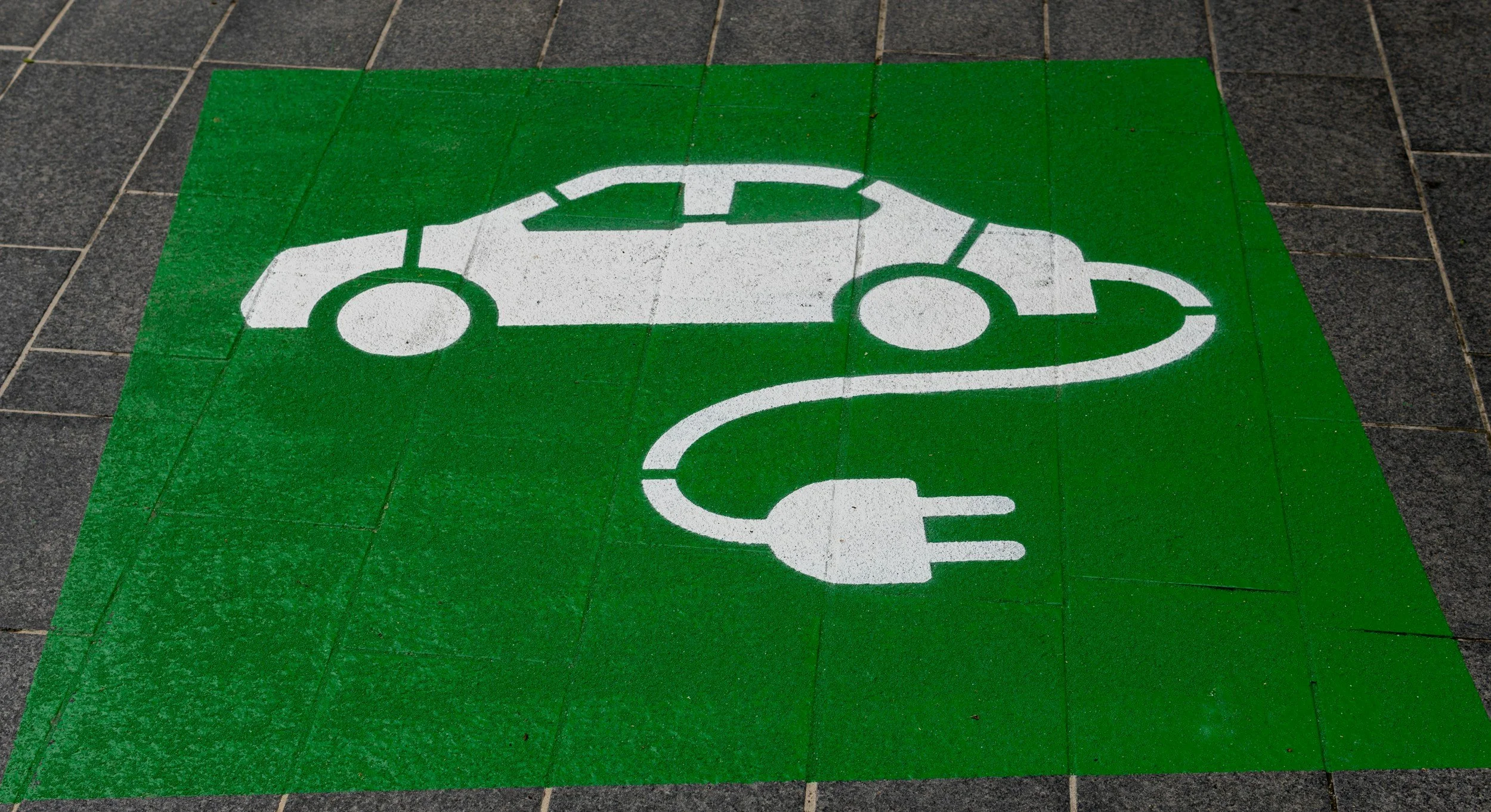
Michael Marais @unsplash
What I'd Tell Anyone About to Do This
If there's any one thing you should take away from my plight, it's that you should always make sure your panel can handle a new EV charger. The charger itself is the easiest part, actually. It's just a box mounted on the wall. The hard part is making sure the electrical system behind it has the circuit space and capacity to feed that box safely.
Our install ended up costing more than I planned for and took longer than I expected, mostly because of a permit delay.
The county took almost three weeks to schedule the panel inspection, and we drove the gas car we hadn't sold yet the whole time. They left us in the lurch, and it felt like a weird kind of limbo.
These days the EV just charges overnight. I don't do the mental math anymore about whether we'll have enough range for tomorrow.
My spouse still teases me about the spreadsheet I made comparing charger brands, back when I thought the charger itself was going to be the hard part of this decision.
I still haven't figured out whether we'll add a second EV before or after we finish paying off the panel upgrade. Given how this one went, I'm in no hurry to find out.
About the Author:
Anna writes regularly about home electrification and everyday sustainability projects from northern New Jersey, usually after learning things the hard way first.