



A Greener Laundry Room: How Washer Maintenance Saves Water, Energy, and Appliances
/A washing machine in the Sycamore Creek area of Buford, Georgia, had developed a noticeable problem: it shook during the spin cycle.
That might sound like little more than an irritating laundry-room noise. From an environmental perspective, however, a washer that cannot spin properly can create a chain of unnecessary consumption. Clothes may leave the drum wetter than expected, the dryer may need to run longer, and the homeowner may repeat a cycle after assuming the load was not washed correctly.
According to a local Appliance EMT service record, the response to the Sycamore Creek washer included leveling the machine, balancing its load system and inspecting the suspension components. The appliance was diagnosed rather than automatically discarded and replaced.
That Buford example illustrates an often-overlooked part of sustainable living: maintaining an appliance can be just as important as choosing an efficient one.

LOLA AZIZADA @unsplash
What a shaking washer has to do with sustainability
A washing machine’s final spin is designed to remove as much water as practical before the clothing enters the dryer or is placed on a drying rack.
ENERGY STAR recommends selecting a high spin speed when appropriate because reducing the moisture left in clothing decreases the time and energy needed for drying. Whirlpool similarly notes that slow spinning leaves more water in a load.
That means the shaking washer in Sycamore Creek was not necessarily just a noise problem. If excessive movement prevented the machine from reaching or maintaining its intended spin speed, the household could have experienced:
Wetter clothing at the end of the cycle
Longer drying times
Repeated attempts to run a drain-and-spin cycle
Additional wear on the washer’s suspension system
Greater stress on hoses and internal components
A higher risk of the machine moving out of position
The exact environmental effect would depend on the washer, load and underlying failure. However, the broader principle is clear: when a washer cannot complete its cycle correctly, other appliances and household resources often have to compensate.
The water used in a Buford laundry room is a local resource
The City of Buford receives its water from Lake Sidney Lanier, immediately north of the city, and purchases an additional portion from the Gwinnett County Water Plant. The city includes running washing machines and dishwashers only when full among its indoor water-conservation recommendations.
That gives washer maintenance a direct local context. Water lost through a leaking supply connection, an unnecessary rinse or a repeated wash cycle is treated water that has already traveled through the local utility system before reaching the laundry room.
Consider an illustrative Buford household that runs six loads of laundry each week. That equals 312 loads per year, which is close to ENERGY STAR’s estimate of approximately 300 annual loads for the average American family.
ENERGY STAR reports that a full-size certified washer uses approximately 14 gallons per load, compared with about 20 gallons for a standard machine. At 312 loads, that six-gallon difference would equal approximately 1,872 gallons in one year.
Maintenance cannot transform an inefficient washer into a certified high-efficiency model. It can, however, help prevent additional water use caused by poor rinsing, leaks, incomplete draining and repeat cycles.
Lesson: check stability before assuming the machine is failing
The Sycamore Creek service record is useful because the technicians did not attribute the shaking to a single cause without an inspection. They leveled the unit, addressed the load-balancing system and inspected the suspension components.
Those are separate parts of the diagnosis.
Check the load first
A washer may become temporarily unbalanced when one heavy item collects on one side of the drum. Common examples include:
A waterlogged bathmat
A comforter
A blanket
Several towels wrapped around one another
One large item washed without anything to balance it
Pause the cycle when the manufacturer’s instructions permit it, separate the items and redistribute the load. Avoid forcing bulky bedding into a machine that does not have the required capacity.
Loading the washer correctly does not always mean filling it to the top. A full load should still have enough room to move in the manner intended by the machine’s design.
Check whether the washer rocks
When the machine is empty and turned off, press gently on its corners. The cabinet should remain stable rather than rocking from one foot to another.
Samsung identifies unsecured leveling feet, uneven loads and unremoved shipping bolts in newly installed front-load machines as common causes of severe shaking. The company recommends service when vibration continues after the basic installation and loading checks have been completed.
A washer that repeatedly walks across the floor, strikes the wall or shakes during ordinary mixed loads may have a problem involving suspension rods, springs, shock absorbers, bearings or other internal components. Continuing to run it can turn a correctable problem into additional mechanical wear.
Lesson two: too much detergent can waste both water and time
Suppose the Sycamore Creek homeowner had responded to the wet clothing by adding more detergent to the next load. That would be a logical but potentially counterproductive reaction.
High-efficiency washers use less water and are designed for low-sudsing HE detergent. Detergents are also sold in different concentrations, including 2x, 4x and 8x formulas. A capful from one product may represent a very different dose from the same volume of another.
Whirlpool warns that non-HE detergent or more than the recommended amount can produce excessive suds. The washer may then reduce its spin speed and add rinsing time while attempting to remove those suds. The result can be a longer cycle and clothing that remains unusually wet.
Possible signs of detergent overdosing include:
A “Sud” or “Sd” code
Foam remaining late in the cycle
Slippery or stiff clothing
Detergent residue in the drum
Repeated additional rinses
Loads that take longer than they once did
Wet clothing despite completion of the cycle
The greener solution is not to select an extra rinse for every load. Check the detergent label, confirm that the product is suitable for an HE washer and measure it according to its concentration, the load size and the soil level.
Lesson three: the washer must be able to remove the water it takes in
A washer can fill normally and tumble normally but still waste time and energy if it cannot drain correctly.
Water generally leaves the machine through the drain pump, an internal drain path, the external drain hose and the household standpipe. Some front-load models also have a homeowner-accessible pump filter that catches coins, lint, buttons, hair and other debris.
Whirlpool explains that debris in an applicable pump filter can interfere with the pump and lead to slow draining or a failure to drain. The company also warns that incorrect drain-hose placement can allow water to siphon back into the machine.
Warning signs include:
Water remaining in the drum
A drain-related error code
A humming sound without visible draining
Clothing that is much wetter than normal
A cycle that repeatedly stops before the final spin
Water returning to the drum after it drains
Homeowners should consult the manual before attempting to open a pump-filter access panel. Not every washer has a homeowner-serviceable filter, and residual water may be released when an accessible filter is removed.
The visible drain hose can still be inspected without disassembling the appliance. Look for crushing, sharp bends, loose connections or a hose inserted into the standpipe differently from the manufacturer’s installation instructions.
Lesson four: a small leak is not a harmless leak
A shaking washer may gradually shift from its installed position and place strain on its supply or drain hoses. Leaks can also develop independently at the door, dispenser, inlet connections, pump or internal tubing.
The timing and location of the water provide useful diagnostic clues.
The puddle does not always appear directly beneath the source. Water can follow a cabinet seam, hose or slight slope in the floor before becoming visible.
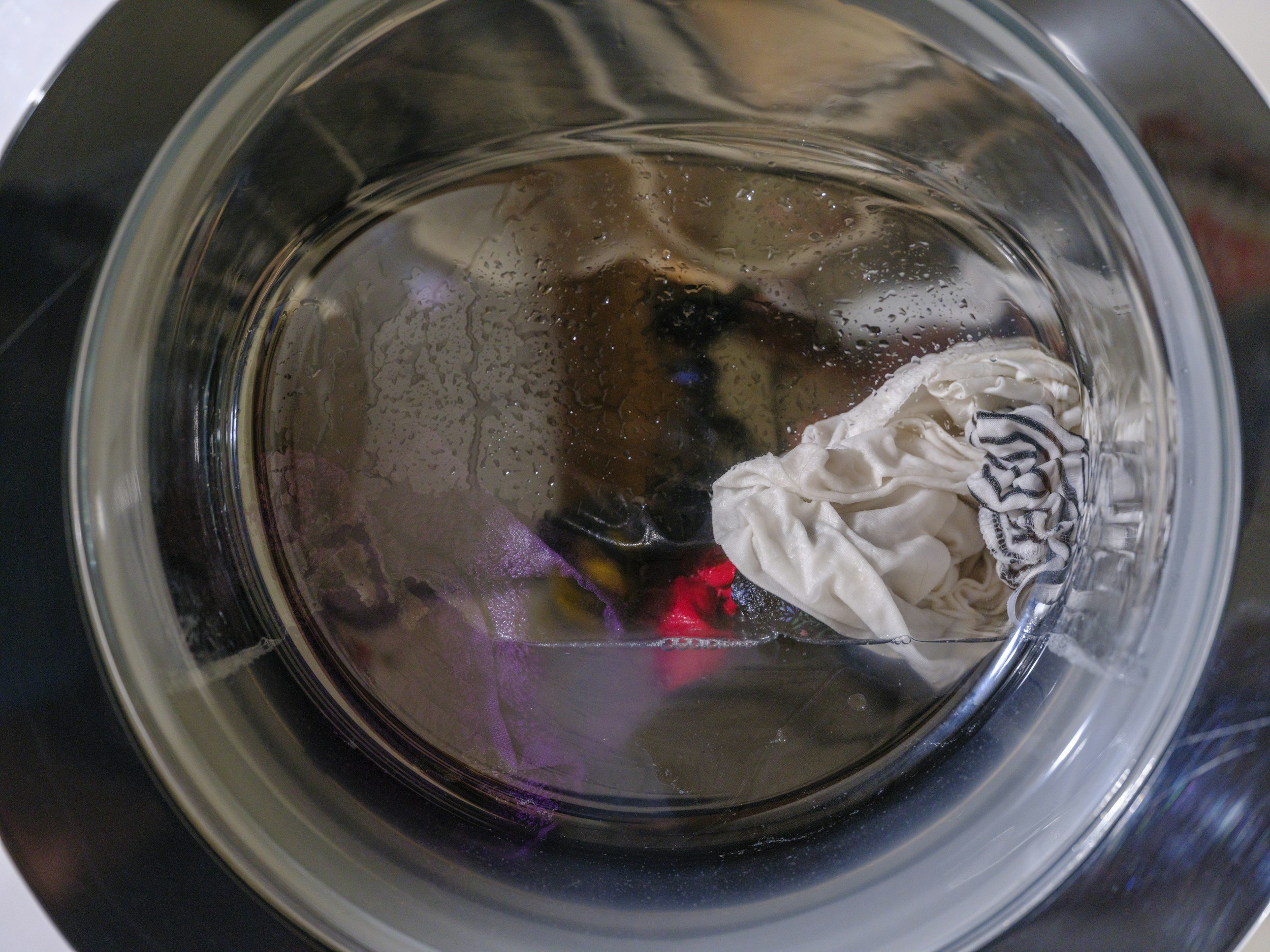
engin akyurt @unsplash
LG notes that dirt and foreign material caught in a front-loader’s door gasket can allow water to leak. Whirlpool also identifies excessive suds as a possible cause of leaking and drainage problems.
Inspect visible supply hoses for dampness, bulging, cracking, rust or mineral deposits around the connections. Shut off the washer’s water valves when an active leak is discovered.
A severe leak, burning smell, sparking, damaged electrical cord or repeated breaker trip requires immediate attention. Stop using the machine and disconnect it when that can be done safely.
Lesson five: moisture should not remain trapped after every load
A front-load washer needs an airtight door seal while it operates. After the cycle, that seal can trap moisture in the drum and gasket folds.
ENERGY STAR recommends leaving a front-loader’s door ajar for an hour or two after use so moisture can evaporate, provided children cannot access or climb into the machine.
After the final load of the day:
Remove clothing promptly.
Check the lower gasket folds for water, hair and small objects.
Wipe visible moisture with a soft cloth.
Clean the detergent dispenser as directed by the manufacturer.
Leave the door slightly open for a limited drying period when it is safe.
Use the manufacturer-approved tub-cleaning cycle at the recommended interval.
These steps help prevent odor and buildup, but they also make it easier to notice a developing gasket tear or slow leak before it damages flooring or nearby materials.
When a washer problem requires more than maintenance
The Sycamore Creek example also shows the limit of do-it-yourself maintenance. A homeowner can redistribute a load or check whether a machine rocks. Determining whether the suspension system is worn requires a more technical inspection.
Professional diagnosis is appropriate when a washer:
Shakes during ordinary, correctly sized loads
Continues moving after it has been leveled
Will not drain or spin
Leaves water in the drum repeatedly
Leaks from beneath the cabinet
Makes grinding, scraping or heavy knocking sounds
Produces a burning smell
Trips a breaker
Displays the same error after basic troubleshooting
Has a damaged gasket, pump, valve or internal hose
At that stage, homeowners can arrange qualified professional washer repair service in Buford to identify whether the problem involves leveling, suspension components, a drain obstruction, a failed pump, an inlet valve, a door seal or the machine’s controls. The local service page specifically lists leaking, failure to drain and failure to spin among the washer problems addressed in Buford.
The purpose of the diagnosis is not necessarily to keep every appliance running indefinitely. It is to obtain enough information to make a responsible repair-or-replace decision.
Repair can prevent waste, but it is not always the right answer
The EPA’s sustainable materials-management framework considers the complete life cycle of a product, including raw material extraction, manufacturing, use, maintenance and end-of-life management. Its waste hierarchy gives preference to source reduction and reuse before recycling and disposal.
For a washing machine, that means repairing a serviceable appliance can sometimes prevent the materials and energy associated with prematurely manufacturing, transporting and disposing of a replacement.
Repair may be reasonable when:
The problem is limited to a replaceable component
The machine remains structurally sound
Replacement parts are available
It has otherwise operated reliably
Its water and energy performance remain acceptable
A technician confirms that it can operate safely
Replacement may make more sense when:
Several major systems are failing
The tub or cabinet has extensive corrosion
Essential parts are unavailable
Electrical damage makes continued operation unsafe
The machine has become substantially inefficient
Breakdowns are frequent and unrelated
Its capacity no longer meets the household’s needs
A shaking machine should not be thrown away solely because it shakes, just as it should not be kept in service without investigating a serious mechanical problem.
A maintenance routine for a Buford laundry room
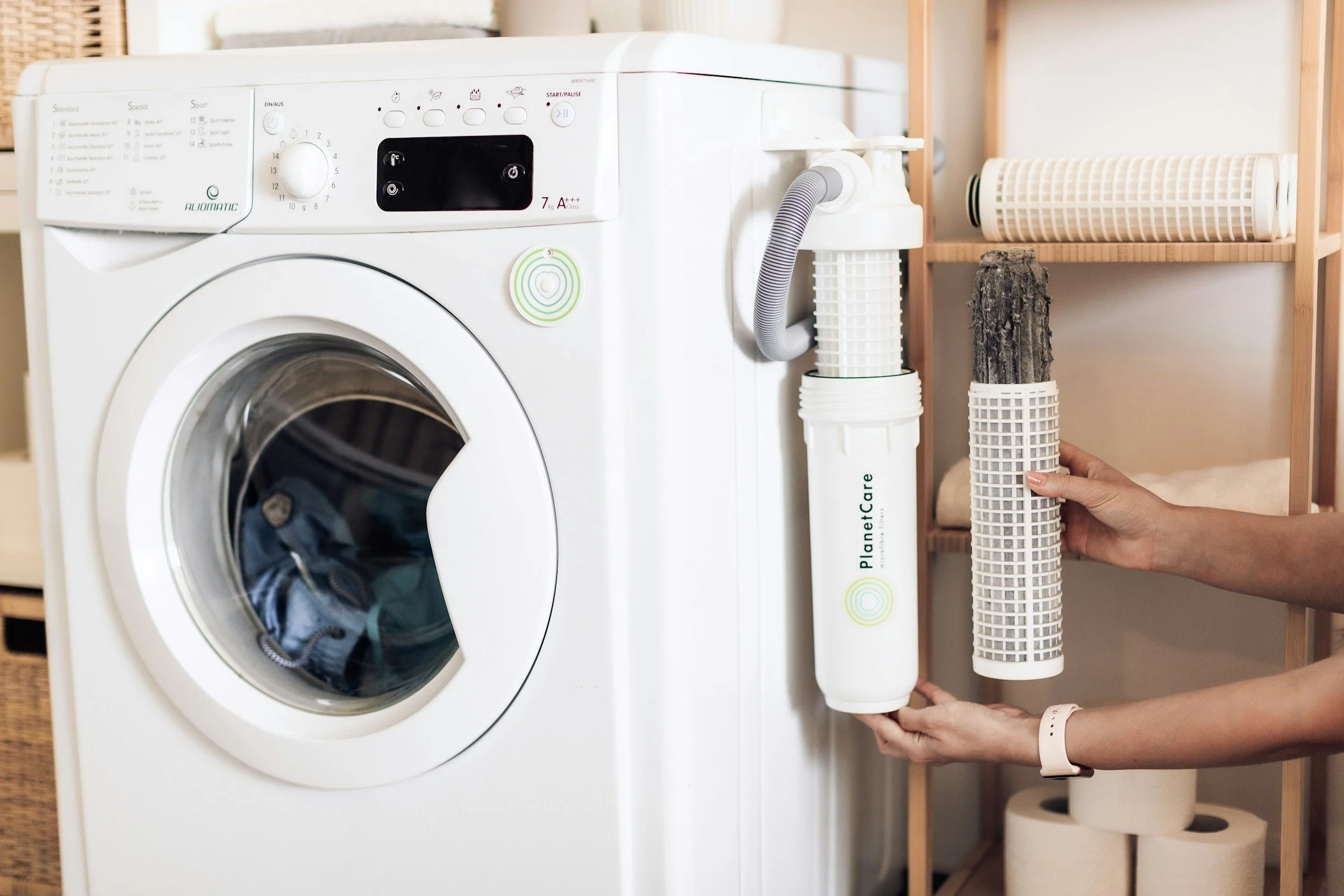
PlanetCare @unsplash
After each laundry day
Remove clothing promptly, inspect the gasket, wipe visible moisture and allow a front-loading machine to dry safely.
Once a month
Clean the dispenser and gasket according to the owner’s manual. Run the approved tub-cleaning cycle. Check the floor, baseboards and wall behind the appliance for moisture.
Every few months
Inspect visible water and drain hoses. Confirm that the washer remains stable and level. Clean an accessible pump filter only when the manual provides a homeowner procedure.
When performance changes
Write down the error code, selected cycle, load type, sound and point in the cycle when the problem occurs. “The washer knocks during the final spin with normal towel loads” is more diagnostically useful than “the washer is broken.”
The greenest response begins with the correct diagnosis
The shaking Kenmore washer in Buford’s Sycamore Creek area provides a better sustainability lesson than a list of generic laundry tips.
The problem was approached through leveling, load-system balancing and suspension inspection, not an automatic trip to the landfill.
For Buford households, washer efficiency also has a clear local connection. The water reaching the laundry room is supplied through a system drawing primarily from Lake Lanier, while the electricity used for washing and drying increases when loads must be repeated or clothing remains excessively wet.
A greener laundry room therefore depends on more than cold water and eco-friendly detergent. It depends on recognizing when shaking, slow draining, excessive suds or a small leak is preventing the washer from doing its job properly.
Maintain what can be maintained. Diagnose what cannot be explained. Repair what remains safe and serviceable. Replace only after considering the condition and performance of the entire machine.
Frequently asked questions
-
Indirectly, yes. If the washer cannot complete an effective spin, more moisture may remain in the clothing. The dryer then has to remove that additional water. ENERGY STAR recommends an appropriate high-speed spin to reduce drying time.
-
ENERGY STAR states that a full-size certified washer uses approximately 14 gallons per load, compared with around 20 gallons for a standard machine. Actual use varies by model, cycle and load.
-
Excess suds can cause the machine to add rinsing time and reduce its spin speed. That can produce longer cycles, poor rinsing and wetter clothing.
-
Minor movement while the washer balances a load can be normal. Repeated banging, walking or severe vibration during ordinary loads should be investigated. Common causes include an uneven load, unsecured leveling feet, shipping bolts or an internal suspension problem.
-
No. Repair can extend the useful life of a serviceable machine, but replacement may be more responsible when the washer is unsafe, badly deteriorated, inefficient or experiencing several major failures.
About the Author:
Marcus D. is an appliance repair technician with 7 years of experience who lives in Gwinnett County, GA. When he is not helping people fix their appliances, he lives in his sustainable farmhouse with his 2 dogs, cats and chickens.