



Heat Pump Maintenance Checklist for Lower Bills and a Longer Life
/Heat pump maintenance comes down to a few habits and one appointment. Check the air filter every month and change it when it is dirty, keep the outdoor unit clear of leaves, snow and ice, keep indoor registers open, and book a professional tune-up at least once a year. Because a heat pump heats and cools, many technicians recommend a visit in both spring and fall.
A heat pump is one of the most efficient ways to heat and cool a home, but only while air moves freely across clean coils and the refrigerant charge is right. Small problems such as a clogged filter or a leaf-packed outdoor coil make the system run longer for the same comfort, which shows up on the energy bill and shortens the life of the compressor.
Why heat pump maintenance matters
A heat pump moves heat instead of making it, and it does that by pushing air across two coils, one inside and one outside. Anything that blocks that airflow, from a dirty filter to grass clippings on the outdoor coil, forces the system to run longer to reach the thermostat setting. Longer runtime means higher energy bills and more wear on the compressor and fan motors.
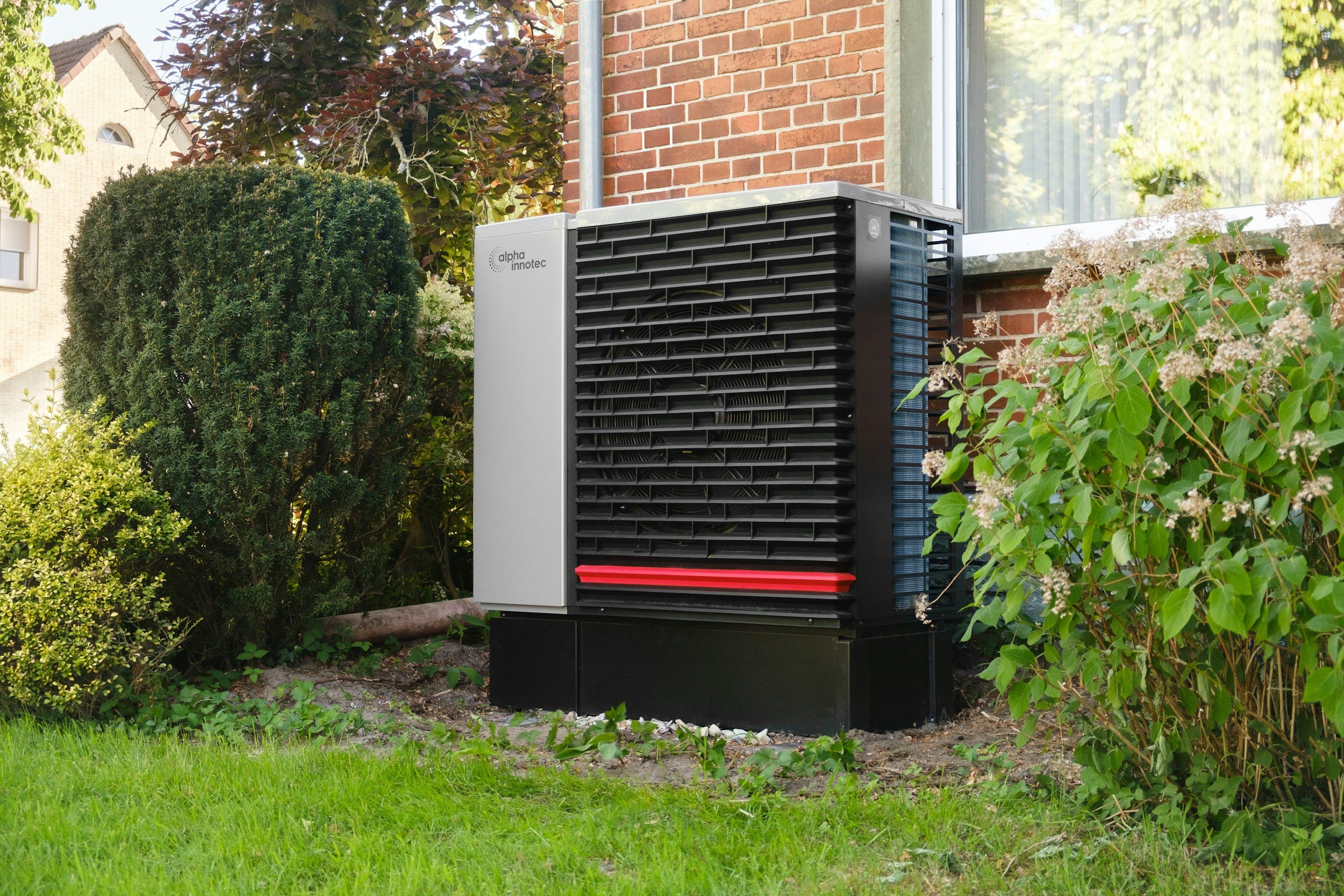
alpha innotec @unsplash
Refrigerant is the other reason. A heat pump only performs as designed with the right charge, and a slow leak lowers both comfort and efficiency long before the system fails. Most refrigerants are also greenhouse gases, so finding and fixing a leak early is good for the climate as well as the budget.
Heat pump maintenance checklist by season
The table splits the year into the jobs you can do yourself and the ones a technician handles on a tune-up. If you only book one professional visit a year, choose the season before your heaviest use.

What homeowners can do
Most heat pump maintenance between tune-ups takes a few minutes. ENERGY STAR's heating and cooling maintenance checklist recommends checking the filter every month and changing it at least every three months, more often in dusty homes or homes with pets.
Check the air filter monthly and replace it when it looks grey or clogged.
Keep at least two feet of clear space around the outdoor unit, or the distance your manual gives, and remove leaves, grass clippings and snow.
Keep indoor supply registers and return grilles open and free of furniture and rugs.
Check that the condensate drain line is flowing during the cooling season.
Set the thermostat once and avoid large swings, which can trigger expensive backup heat.
What a technician checks on a tune-up
A professional tune-up covers the parts you cannot safely reach. The technician measures the refrigerant charge and looks for leaks, cleans the indoor and outdoor coils, and checks airflow across the indoor coil. They tighten electrical connections, test capacitors and contactors, lubricate motors where the design calls for it and clear the condensate drain.
On the heating side, they test the defrost control and the reversing valve, which switches the system between heating and cooling, and confirm that the thermostat reads the room temperature accurately. A good technician leaves a short written report, so you know what was found and what to watch.
Most HVAC companies sell this as a maintenance plan with two visits a year. They usually schedule the spring and fall visits in advance and send a reminder a few days before, often straight from their HVAC CRM, so the appointment happens without you having to remember it. If your company does not remind you, put both visits in your own calendar.
Winter care, ice and the defrost cycle
In cold, damp weather, a thin layer of frost on the outdoor coil is normal. The heat pump clears it with a defrost cycle, briefly running in reverse. You may see steam rising from the unit and hear the fan stop for a few minutes, which is expected.
Thick ice that does not clear is a different matter. Never chip ice off the coil with a tool, because the fins and tubing bend and puncture easily. Clear snow from around and on top of the unit, check that gutters are not dripping onto it, and call a technician if the coil stays encased in ice. Also watch the emergency or auxiliary heat light. Backup electric heat is far less efficient, and if it runs often in mild weather, something needs attention.
Ductless heat pump maintenance
Ductless mini-splits need the same care in a different form. The indoor heads have washable mesh filters that should be rinsed and dried about once a month in heavy use. The indoor coil and blower wheel collect dust and can grow mold over time, so they need a professional deep cleaning every year or two. Outside, the condenser needs the same clear space and debris removal as any other heat pump.
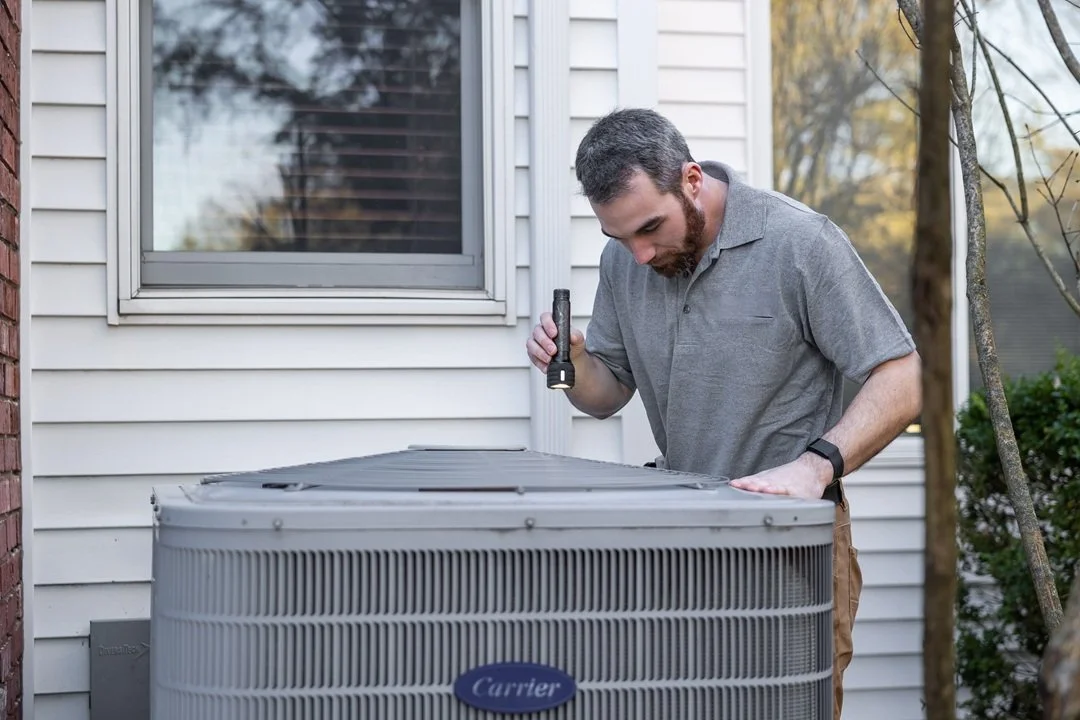
Kathleen Austin Kuhn @pexels
Signs your heat pump needs service
Call for service when the system turns on and off every few minutes, when ice stays on the outdoor coil after a defrost cycle, when you hear grinding or banging, or when the air from the registers feels lukewarm in heating mode. A steady rise in energy bills with no change in weather or settings is often the first sign of a dirty coil or a refrigerant leak.
When you choose a company, look for one that explains its maintenance checklist and plan prices on its website, so you can compare before you call. For HVAC businesses, publishing that kind of practical guidance is also the foundation of HVAC SEO, because homeowners search these exact questions before they book.
FAQ
-
Yes. A heat pump runs in every season, so it builds up dust and wear faster than a system used only in summer or winter. Regular maintenance keeps efficiency up, catches refrigerant leaks early and protects the warranty, since many manufacturers expect proof of annual service.
-
The price depends on the number of indoor units, the type of system and whether you buy a single visit or a yearly plan. Maintenance plans usually cost less per visit and often include priority scheduling and repair discounts, so ask local companies for both prices.
-
Yes. Heat pumps are designed to run for long stretches at lower output in cold weather, which is more efficient than turning on and off. Long runtimes become a concern only if the house never reaches the set temperature or backup heat runs constantly.
About the Author:
Ihor Lavrenenko is the founder of the software company Smarfle. He has spent seventeen years marketing local businesses, and is the author of a practical SEO guide for owners who do their own marketing. He answers support himself, which is why requests tend to get built rather than logged.