light, space, style, and scale
Lesson 1 at a glance:
How to assess light exposure and match crops to available sunlight
Garden layout options: in-ground beds, raised beds, and containers
Choosing a garden style that fits your space and experience level
Planning garden size to balance productivity and maintenance
Setting realistic goals for a manageable, sustainable food garden
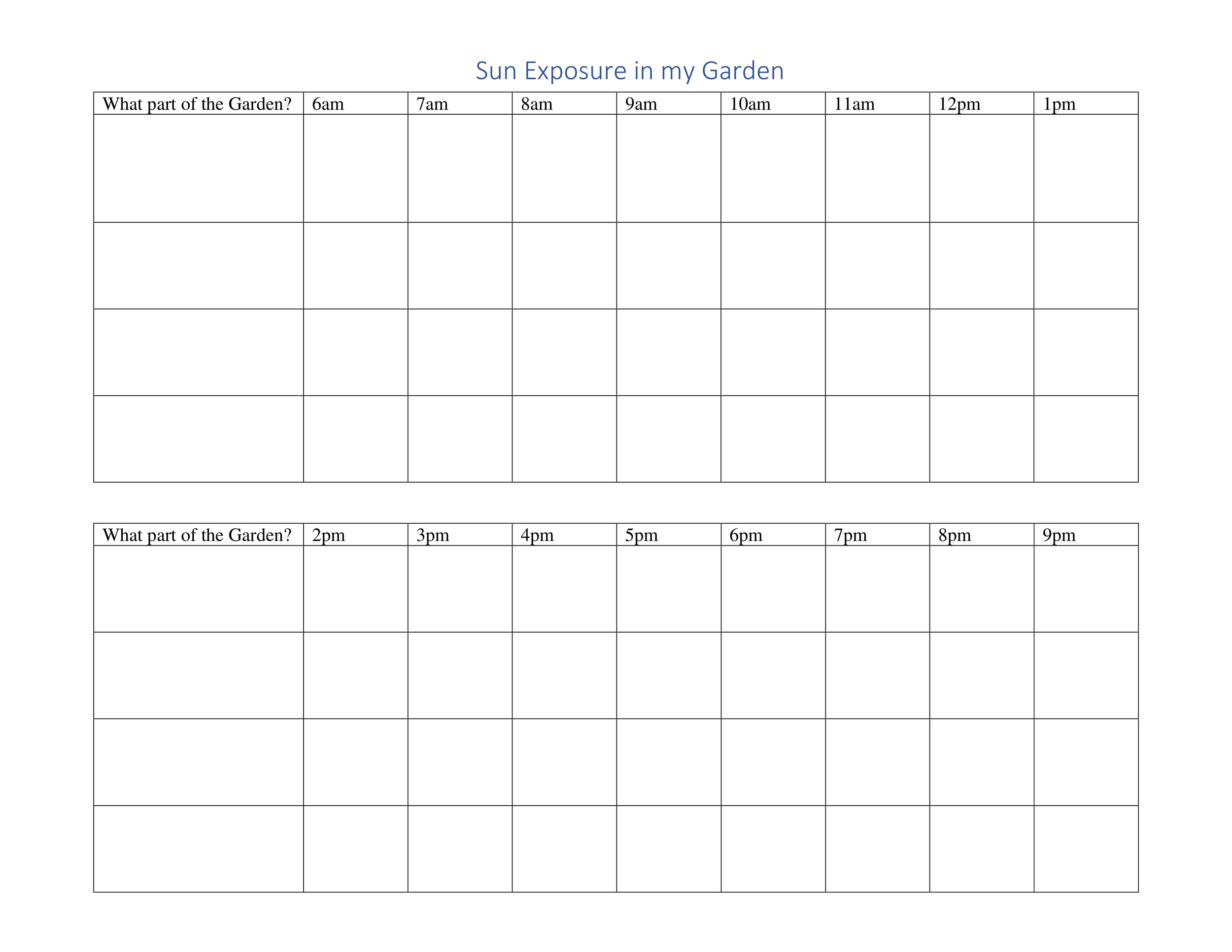
Sun Exposure template: click image for printable .pdf file
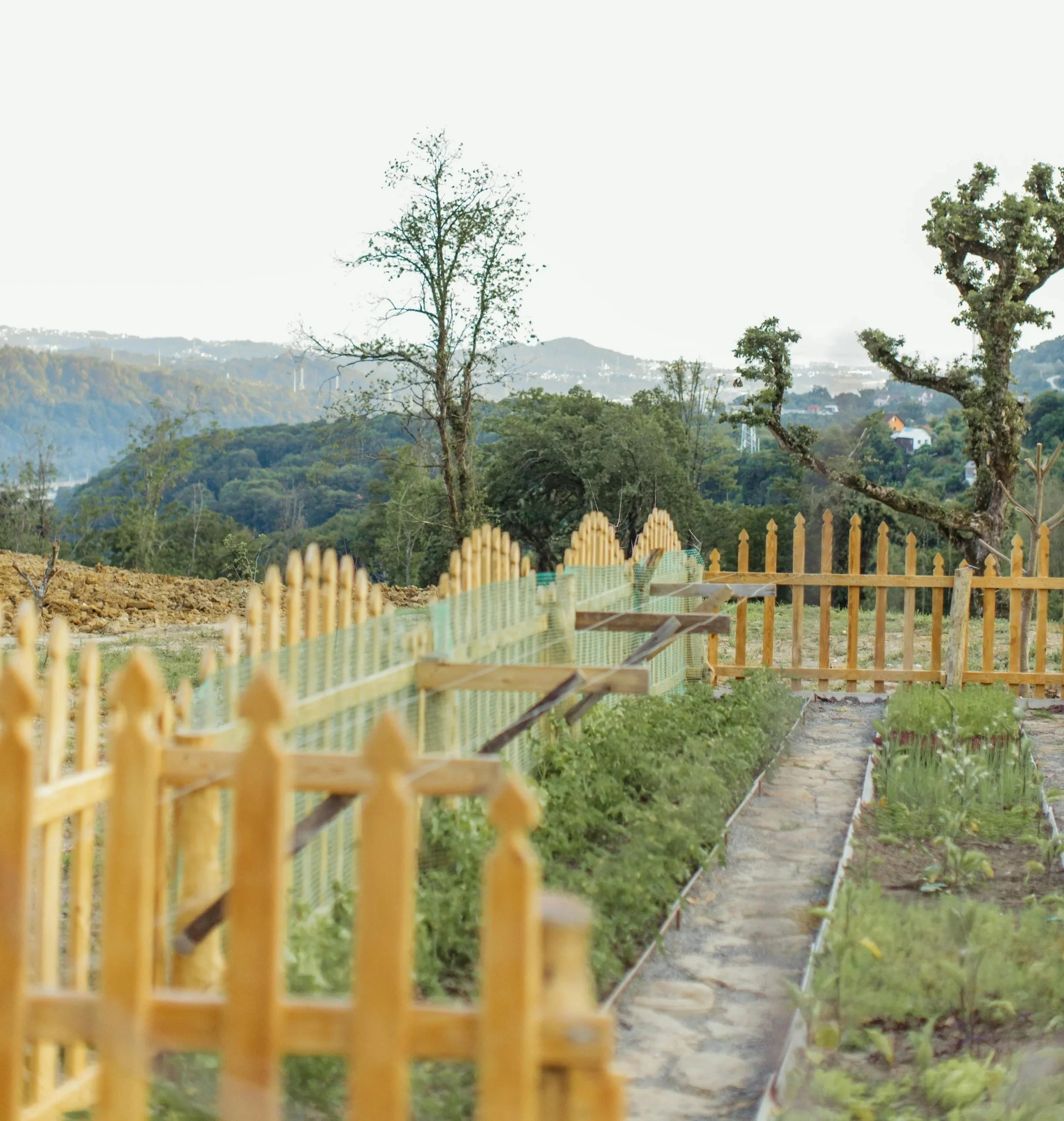
Click the image of the garden to download the .pdf file of this lesson or read the lesson below
Light: how much and what kind does your growing space get?
Here’s an easy rule to remember whenever you are planning to grow edible crops: if the food that grows from the plant comes from a flower (like tomatoes, peas, peppers, and fruits), it will need direct sunlight. On the other hand, if you’re eating the leaves or roots of the plants, they will tolerate a partially or mostly shady growing space. No vegetable or fruit will grow in total shade, so you’ll need a space that has at least 2-3 hours of sunlight a day, preferably direct sunlight.
How do you figure out the kind of light you get in your growing space? The best way to do this is to record the sunlight streaming into it during the day. Write it down, and don’t rely on your memory alone – this is where a lot of gardeners go wrong. Instead, take notes each day. Ask yourself: where does my space get direct sunlight, and during which hours of the day? Are there areas that get only dappled sunlight (for example, if the sunlight is coming through a fence or through the leaves of a tree in your garden). How many areas are fully shaded, and how many get partial shade or partial sun?
You can use the template above to record the light in your space.
Finally, here’s a quick reference to help you understand how much sunlight plants need, according to the instructions on the seed packet or seedling you purchase at the store or nursery:
Full sun –at least 6 hours of direct sun daily
Part sun –between 3 and 6 hours of direct sun per day
Part shade –between 3 and 6 hours of sun per day, but plants will also need protection from the intense mid-day sun
Full shade –less than 3 hours of direct sun per day
Space: how much do you have to work with?
If you have a big yard to work with, great! If that yard is fenced in, to keep deer and other animals out of your garden, even better! Having a big yard with plenty of light gives you the most options for growing a food garden, but here a word of caution: start small! If this is your first time in growing food crops, you’ve done minimal food gardening in the past, or you don’t have a lot of time to tend to a large garden, I strongly advise you to begin with a few simple, easy-to-grow vegetables or fruits. Get to know the needs of each plant, and over time, it will become intuitive and you’ll spend less time trying to figure out why your crops aren’t thriving.
Not everyone has the luxury of a large, sunny yard, though, so there are other options you can consider: in-ground planting, raised beds, containers, or some combination of these. Here are the pros and cons of each:
In-ground gardens:
Pros: larger yields (often, but not always); a variety of plants can be grown; you can use the existing soil; less permanent than raised beds (you can move your garden space the next season, or you can rotate crops more easily); easier to water, and less start-up work is involved.
Cons: you’re subject to the whims of the weather; soil may become compacted (because of foot traffic); harder to keep animals out (fences don’t deter moles, rats, rabbits, or groundhogs); the existing soil may not be suitable for growing food
Raised bed gardens
Pros: easier to maintain; easier on your back; prevents soil compaction ( because less foot traffic); less weeding and maintenance; better drainage; can be built to fit many plants; can keep some animals out, can be placed in a variety of spaces (from compacted soil to hills and slopes to parking lots!); heats up quickly; enables you to extend your growing season
Cons: may be expensive to construct and fill; needs more frequent watering; plants subject to more heat and drought stress if not properly maintained; poorer air circulation among tightly packed plants
Containers
Pros: easier to maintain; easier on your back; prevents soil compaction ( because less foot traffic); less weeding and maintenance; better drainage; can be built to fit many plants; can keep some animals out, can be placed in a variety of spaces (from compacted soil to hills and slopes to parking lots!); heats up quickly; enables you to extend your growing season.
Cons: may be expensive to construct and fill; needs more frequent watering; plants subject to more heat and drought stress if not properly maintained; poorer air circulation among tightly packed plants
Choose which one of these works for you, and if you have a big yard and gardening experience, you might be able to choose all three at the same time!
Different styles of garden
Here's a breakdown of the different styles of garden and finding the one that suits your space best. I’ll keep this section short and to the point.
There are many styles of garden, many more than I can write about in this lesson. The main point here is to choose a style that works for your space. Here are 3 steps you can take to find your ideal garden style:
1. Look around you.
Check out what is growing well in your neighbor’s yards. Wander through public gardens or nurseries. These are the places that will give you a better idea about what grows happily in your area. Forget high-end gardening and landscape magazines. The gardens in them are likely designed and maintained by professionals, so they’ll be unattainable for the average gardener.
2. Figure out which type of garden speaks to you personally.
This is beyond simply choosing whether to plant vegetables or flowers. Think in terms of styles and themes that you find most appealing. Can you remember the first garden that made an impression? It may have been your grandparent’s tiny vegetable garden, a farm where you ran through rows of corn, or perhaps a formal garden where the grounds were sculpted into awe-inspiring designs. Often, our favorite garden lies in our childhood memories.
3. Seek out information from your own space.
Think about where you want to focus attention in your space and how you would like family and friends to make their way through your garden. You can use containers and raised beds to channel interest towards paths, sitting areas, gates, or other areas of interest. Mark your main entrance with a standout container. Mix and match containers with the size and style of your home. Do you only have a balcony or deck to work with? Using a variety of containers – some tall, some attached to shepherd’s hooks and hung from the railing of your deck, and others attached to a windowsill or set upon a table can beautify your space as well as provide you with a steady crop of food to harvest throughout the growing season.
Size and Maintenance
Again, I want to caution you: start out small if you don’t have much experience growing a food garden. It’s easy to get excited when the weather starts to warm, and the enthusiasm of shoppers in your local nursery or garden supply can be infectious. Don’t make the mistake that many newbie food gardeners do and bring home more plants than you can reasonably take care of! You want to spend the maximum amount of time enjoying your garden, not trying to get rid of pests or repair damage caused by neglect or ignorance of the conditions your plants need to thrive.
Begin with a plot or container that’s manageable for you. An 8 by 8 feet in-ground garden plot will provide 64 square feet of growing space, which is plenty to produce a good yield. The same goes for raised beds. A single raised bed that’s 6 by 4 feet will give you 24 square feet to grow in, which you can use to plant enough eggplant, kale, and Swiss Chard to feed a family of 3. More to the point, maintenance won’t take up every spare minute of your time. Planning to container garden? A few large containers – 24 inches in diameter – will enable you to grow a few indeterminate (i.e. multiple harvest-producing) tomato plants, or a combination of 1 tomato plant, one eggplant, and one or two string bean plants. Combine those with a couple of smaller pots for herbs or vegetables like bok choy or swiss chard and you’re well on your way to a satisfying growing experience that won’t overwhelm you.
Here’s a tool you can use to determine what you can grow in the amount of space you have (for in-ground or raised bed gardens: just plug in the number in your family, the crops you want to grow, and the calculator will tell you how many square feet you need to grow those crops:
https://morningchores.com/vegetable-garden-size/
Even experienced gardeners make mistakes – that comes with the territory – but you can prevent a lot of wasted effort by taking some time to think about your goals for your garden. Do you want to have fresh herbs to pick and cook with? Do you eat a lot of leafy greens, some of which you’d like to grow yourself? Do you want to have an abundance of tomatoes you can enjoy all year (by canning them for use in the winter months)? Do you love the taste of freshly-picked berries? Do you aim to get your children to eat more vegetables by involving them in the growing process?
My goal for the coming season is to grow enough fruits and vegetables to give away. Now that I have a much bigger space to work with, and many years of experience growing food under my belt, I want to grow more than I have before, though I don’t envision having a homestead now or anytime soon.
Whatever your goals, make sure they are reasonable and manageable for you.
AND NEXT…
The second lesson is coming to your email in two days: it’s all about the planting medium(s) you need, soil amendments, and why some crops may fare better in soil-less planting mediums. In the meantime, I have some homework for you:
Use the “Sun Exposure” template above to begin recording the light you get in your garden. Then make a list of the plants you want to grow. Want to share your information with me? I’d love it! Please email me directly at